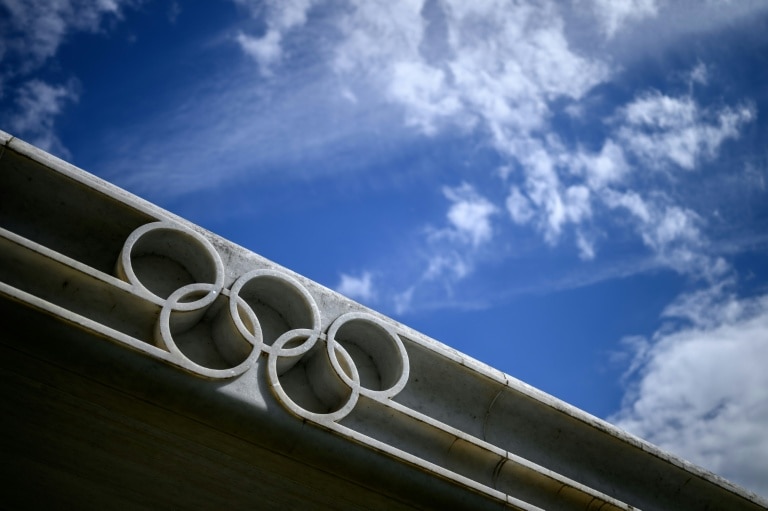
More than four years after Russia launched its full-scale invasion of Ukraine, the International Olympic Committee (IOC) announced a landmark policy shift on Tuesday, rolling back some of the longstanding restrictions on Russian athletes to clear their path to compete in team events and qualifying tournaments for the 2028 Los Angeles Olympic Games.
In remarks delivered during an IOC meeting in Lausanne, committee president Kirsty Coventry underscored the guiding principle behind the decision, noting that the governing body has long prioritized ensuring no athlete is penalized for the actions of their home government.
While the IOC opened the door to expanded participation, it opted to retain the existing ban on the Russian national anthem and national flag for the time being. The committee also added a strict new stipulation: any Russian athlete seeking to return to international competition must pass multiple anti-doping screenings before being cleared to take part, a measure designed to address lingering distrust stemming from Russia’s decades-long history of state-sponsored doping programs.
The announcement drew immediate pushback from Ukraine, whose own Olympic committee condemned the IOC’s move as premature and unfounded amid the ongoing war that has now stretched into its fifth year. In an official statement, Ukraine’s NOC emphasized that Russia’s full-scale armed aggression against Ukraine remains ongoing, with Russia continuing to violate core principles of international law, peace and global security, making the IOC’s decision out of step with current realities.
Under the framework of new rules laid out by the IOC, individual international sports federations retain the autonomy to decide whether to allow the display of the Russian flag and performance of the anthem at their own standalone events, as well as whether to host competitions on Russian territory. For the 2028 LA Games themselves, which are still two years away, the IOC said it will revisit the question of flags, anthems and national identifiers at a later, more appropriate date.
Russia, for its part, welcomed the IOC’s adjusted policy. In a post on the messaging platform Telegram, Russian Sports Minister Mikhail Degtyarev framed the decision as a clear signal that the global Olympic movement should remain free from political interference, adding that Russia is fully prepared to send athletes to compete in the Los Angeles qualifying process. Notably, Russia’s reintegration remains more restricted than that of Belarus, which the IOC readmitted fully in early May without any curbs on its national anthem or national symbols.
The original restrictions on the Russian Olympic Committee (ROC) were first imposed in October 2023, 18 months after the invasion of Ukraine, after the ROC moved to absorb sports governing bodies from Ukrainian territories annexed by Russia. In its latest statement, the IOC confirmed that the ROC has now committed that it will not conduct any activities in those disputed territories now or in the future, and the committee will maintain close ongoing monitoring of the situation to ensure compliance.
Despite the IOC’s policy shift, the global sports community remains deeply divided on the question of Russian athlete participation. IOC Sports Director Pierre Ducrey acknowledged this split, noting that reintegration will unfold across a “fractured landscape” with different rules applying to different sports.
For example, World Athletics, the global governing body for track and field, reaffirmed its hardline stance just days before the IOC announcement, maintaining a total ban on all Russian and Belarusian athletes, citing the absence of any tangible progress toward peace negotiations between the two countries. By contrast, the international governing bodies for judo and swimming already moved to fully reinstate Russian and Belarusian athletes last November and April respectively, following the lead of the International Paralympic Committee, which approved full participation for the 2026 Milan-Cortina Winter Games.
Russia’s suspension from full Olympic participation actually predates the 2022 invasion. The country has been barred from competing under its own national colors and symbols since 2016, when the first revelations of a widespread state-run doping program emerged. Just weeks after the conclusion of the 2022 Beijing Winter Olympics, Russia’s invasion of Ukraine, backed by Belarus, triggered a new wave of sweeping sports sanctions that expanded existing restrictions.
After a period of full exclusion following the invasion, the IOC began a gradual process of reintegration starting in March 2023, allowing Russian athletes to compete as neutral individuals under strict conditions, but barring them from all team events for the 2024 Paris Olympics and 2026 Milan-Cortina Games. For months leading up to Tuesday’s announcement, Coventry had publicly signaled support for broader reintegration, repeatedly emphasizing that sport should remain a neutral space where all athletes can compete freely regardless of the political divisions of their governments.
This principle was formally codified into the Olympic Charter during the IOC’s 142nd session in Lausanne in late June, which explicitly enshrined the organization’s mandate to maintain neutrality at all times, free from pressure from national governments, cultural divides, societal differences or economic interests. As a further step toward reintegration, the IOC Executive Board already recommended last December that Russian and Belarusian junior athletes be allowed to return to junior competition, including team events, competing under their own national flags and anthems.