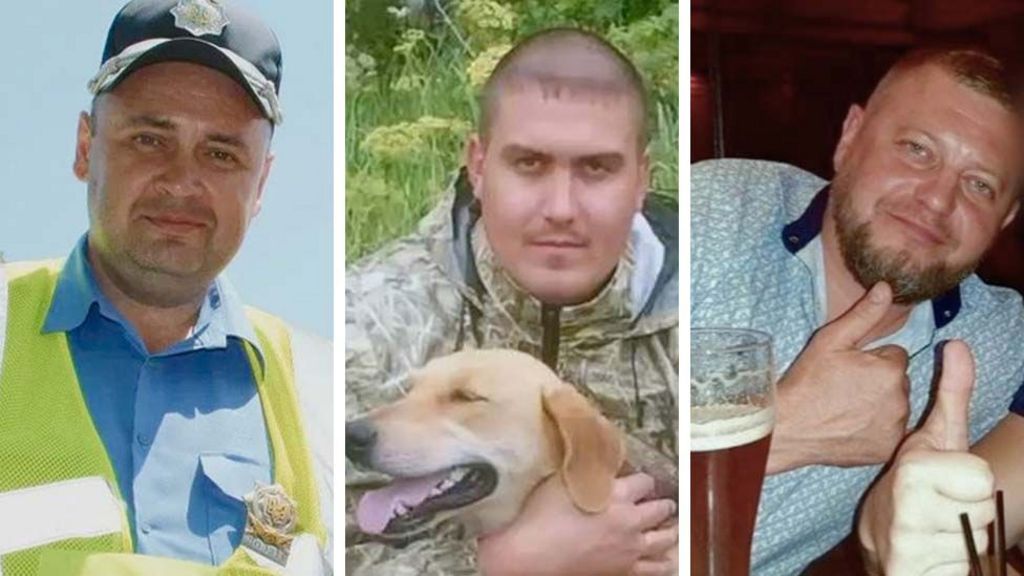
Three years of unthinkable captivity left 64-year-old Liudmyla Huseinova with permanent physical and emotional scars — and a relentless mission to see the men she accuses of brutal abuse held accountable for their actions. Her harrowing account, at the core of a new BBC World Service investigation, has helped unmask three alleged perpetrators who now live seemingly ordinary lives in Russia and occupied Ukraine, shedding rare light on a shadowy detention system that has operated beyond the reach of global justice for nearly a decade.
Liudmyla’s nightmare began on an early October morning in 2019, when she left her home in Novoazovsk, a Donetsk region city that had fallen under Russian-backed paramilitary control after Russia’s 2014 annexation of Crimea and invasion of eastern Ukraine. Working as a safety engineer at a local poultry farm, Liudmyla had quietly supported Ukrainian forces and cared for local orphans under occupation; she believes a photo of a Ukrainian flag she shared with trusted friends tipped off separatist authorities, leading to her abduction. A group of masked men seized her bag, threw her into the back of a waiting car, and delivered her to Izolyatsia — a former factory and modern art centre that had been converted into one of the most notorious detention sites in the occupied region, where widespread accounts of torture have emerged from survivors for years.
The first days inside Izolyatsia were defined by unrelenting cruelty and terror. Liudmyla recalls being surrounded by men who subjected her to dehumanizing verbal abuse immediately upon arrival. Detainees were forced to stand continuously from 6 a.m. to 10 p.m. each day, and bright lights were kept on around the clock to prevent sleep. “I have never heard such terrible screams before,” she told the BBC, describing the constant sounds of abuse echoing through the facility’s walls. Two weeks after her arrival, she was taken to a second-floor room where the worst of her abuse unfolded. A man known to prisoners only as “Koval” sexually assaulted her, she says — while Yurii Temerbek, a former Ukrainian traffic policeman who had joined the Russian-backed separatists, stood by laughing and making sarcastic comments.
The BBC’s investigation, carried out in partnership with two Ukrainian open-source investigators working with local non-profit Truth Hound, has confirmed Temerbek’s identity and uncovered his current circumstances. Now 56, Temerbek is a husband, father, and grandfather who studied Ukrainian language at university. Pre-2014 social media posts confirm he worked as a local traffic officer in the Donetsk region before joining the separatist Ministry of State Security (MGB). Ukrainian prosecutors have already launched criminal proceedings against him for participation in a terrorist group, and Liudmyla says he repeatedly threatened her during her captivity, including a late 2021 encounter where he called her a slur and threatened to send her to Siberia. Investigators found Temerbek and his family now reside in Russia’s Rostov region, just across the border from Ukraine, living an ordinary life far from the detention centre where he allegedly abused detainees.
The investigation also unmasked a second Izolyatsia guard, known to prisoners as “Yermak”: 46-year-old Ruslan Yeriomichev, a law graduate from Donetsk National University who was first identified by investigative group Bellingcat and former Izolyatsia detainee and journalist Stanlislav Aseyev. Liudmyla says Yeriomichev once ordered her to eat uncooked food mixed with dirt and rubbish; when she spat most of it out, he beat her for refusing to comply after she answered “I’m for justice” to his question “Are you for Ukraine?”. The trauma of that incident still haunts her today: she cannot bear the smell of cooking food and struggles to maintain a normal diet. Social media posts show Yeriomichev still lives in occupied eastern Ukraine, taking family holidays in Russian-annexed Crimea and sharing photos of trips with friends and family as recently as 2024. Like Temerbek, he holds both Ukrainian and Russian citizenship, and faces multiple charges from Ukrainian prosecutors including cruel treatment of civilians and prisoners of war.
Beyond the Izolyatsia case, the investigation mapped the full scale of the secret detention network run by Russian and Russian-backed forces across occupied Ukraine and Russia itself. Cross-referencing testimony from survivors, human rights reports, and open-source data, the BBC confirmed 93 active detention sites holding civilians and prisoners of war in occupied Ukraine between 2023 and 2025 — nearly a third of which are unofficial, operating out of repurposed buildings ranging from tax offices to hotels and private garages. An additional 102 detention sites were identified on Russian territory. None of these facilities have been open to unmonitored access by international human rights organizations.
A second survivor, 42-year-old Kherson-based cargo sailor Oleksii Sivak, shared his own account of abuse to the BBC. After Russia captured Kherson in 2022, Oleksii quietly resisted occupation by cooking for elderly residents and distributing pro-Ukraine leaflets. He was arrested and taken to a former police station repurposed as a detention centre, where he says guards tortured him with electric shocks to the genitals and beat him with blunt objects. When Ukrainian forces retook Kherson in late 2022, Russian-backed forces fled the city, taking most detainees with them; Oleksii escaped only because the departing convoys did not have enough space to hold him.
The BBC identified the commander of the Kherson detention facility as Andrey Spivak, a 40-year-old former prison guard from Russia’s Omsk region. Ukrainian prosecutors have charged Spivak with cruel treatment of civilians and violations of international war law. Investigators found Spivak has since returned to Omsk, where he works as a taxi driver and posts photos of his outdoor hobbies including fishing, hunting, and cross-country travel on social media.
The United Nations Office of the High Commissioner for Human Rights (OHCHR) has documented that torture, sexual violence, arbitrary detention, and cruel treatment are systematic and widespread across this network of detention centres. Former detainees have consistently reported beatings, electric shock torture, mock executions, and sexual assault, and families of the detained are rarely given any information about their loved ones’ fates. Ukraine’s general prosecutor’s office says more than 16,000 Ukrainian civilians have been captured or disappeared since 2014, and over 400 cases of conflict-related sexual violence against detainees have been documented since Russia’s full-scale 2022 invasion. The Kremlin has repeatedly dismissed these allegations as biased and “groundless lies”, and added Russia to the UN’s global blacklist of countries accused of using sexual violence in conflict in 2024. When contacted by the BBC about the allegations against Temerbek, Yeriomichev, and Spivak, none of the three men responded. The Russian Embassy in London stated that Russia “consistently advocated respect for international law and the rule of law” and that all allegations of abuse are investigated.
Liudmyla was released in a prisoner exchange in October 2022, three years and 13 days after her abduction. When she was welcomed home by friends, she found she could not cry: years of abuse had frozen her emotions, a condition she still lives with today in Kyiv, where she resides with her husband. She now runs a support organization for other female former detainees, and operates a secret network to deliver parcels from Ukrainian families to their loved ones still held in Russian-backed detention facilities.
To date, Ukrainian prosecutors have opened proceedings against dozens of alleged abusers, but very few have been arrested. Most are convicted in absentia, and only one senior former Izolyatsia commander has been sentenced to prison in Ukraine. The Izolyatsia facility itself remains operational under Russian-backed control, according to Ukrainian authorities. For Liudmyla and other survivors, unmasking the identities of the men who abused them is a critical first step toward accountability. “If the men I accuse aren’t found and imprisoned, then justice for me will be their names as criminals, and torturers, will be known to their children,” she said. “For me, justice is not revenge. For me, justice is confirming that these people intentionally, deliberately did what they did. I want them to be punished by law.”