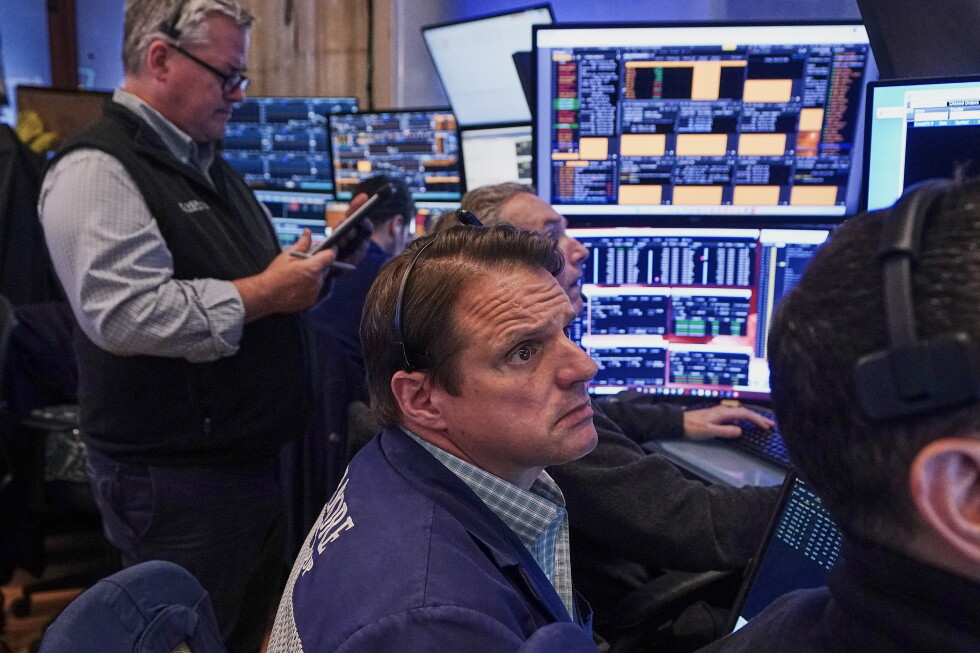
On a quiet post-Independence Day trading session on Monday, Wall Street found its main benchmark propped up by a sudden rebound in artificial intelligence stocks, even as most equities across the market traded in negative territory. As of 9:35 a.m. Eastern Time, the S&P 500 notched a 0.5% gain, while the tech-heavy Nasdaq Composite outpaced broader markets with a 1.1% rise, driven by renewed buying interest in AI-focused firms. By contrast, the Dow Jones Industrial Average bucked the trend of the leading indexes, sliding 160 points, or 0.3%, amid broad losses for non-tech sectors.
The recent bounce for AI stocks comes on the heels of weeks of extreme volatility, sparked by growing investor anxiety that valuations for the sector have outrun fundamentals after months of a AI-fueled price rally. Market participants have increasingly questioned whether the massive flood of capital flowing into AI chip manufacturing, data center construction, and generative AI development will ultimately deliver the outsized productivity gains and profit growth needed to justify current valuations.
Broadcom led the upward momentum among large-cap AI names on Monday, climbing 5.3% to recoup steep losses from the end of last week. The semiconductor giant had dropped more than 2% on both Wednesday and Thursday before markets closed for the Fourth of July holiday. Memory chip maker Micron Technology also gained ground, rising 4.2% as investors dipped back into AI hardware plays.
Later this week, the global investor appetite for AI assets will face a major stress test, when South Korean memory chip producer SK Hynix launches its $28 billion U.S. initial public offering (IPO), set to list on the Nasdaq. The offering would rank as one of the largest U.S. IPOs in history, trailing only SpaceX’s $75 billion IPO that launched last month. SK Hynix’s Seoul-listed shares have already tripled in value this year on the back of the global AI boom, driven by surging demand for high-bandwidth memory chips critical for running generative AI models. But like other AI stocks, the firm has seen sharp volatility in recent weeks, including a single-day 14.6% drop last Thursday.
SpaceX, which owns AI venture xAI, has also seen volatile trading following its high-profile IPO. The company’s stock rose 1.2% in its last trading session ahead of its scheduled addition to the Nasdaq 100, the index tracking the largest non-financial companies listed on the Nasdaq. The inclusion will require index-tracking funds such as the popular QQQ exchange-traded fund to purchase billions of dollars worth of SpaceX stock to align their holdings with the updated index, providing automatic near-term support for its share price.
Outside of large-cap AI hardware, smaller AI-focused firms also got a boost on Monday. Cryptocurrency miner-turned-high-performance computing firm TeraWulf jumped 12.5% after announcing that AI developer Anthropic had signed a 20-year agreement to use the company’s under-construction data center in Kentucky. TeraWulf projects the deal will generate roughly $19 billion in cumulative revenue over the two-decade term, marking a major milestone in the firm’s transition away from Bitcoin mining toward AI infrastructure services.
Beyond equities, the oil market saw muted movement after OPEC+ announced Sunday that seven of its member nations would collectively expand oil production by 188,000 barrels per day starting in August. This marks the fifth consecutive month the bloc has agreed to raise output. International benchmark Brent crude edged up just 0.1% to $72.22 per barrel, a level near where prices traded before the U.S.-Israeli strike on Iran in late February sent oil prices spiking.
In bond markets, U.S. Treasury yields edged slightly lower, with the 10-year Treasury yield dipping to 4.48%, down one basis point from its closing level last Thursday. A new economic report released Monday showed that growth in U.S. service sectors, including recreation and finance, came in roughly in line with economist expectations. The Institute for Supply Management survey also noted that some businesses reported falling fuel prices for gasoline and diesel, helping ease ongoing inflationary pressures across the economy.
Global markets mostly traded lower on Monday, with modest declines recorded across most European and Asian benchmark indexes. Hong Kong’s Hang Seng Index was a rare outlier, climbing 1.1% to buck the regional downward trend.
AP Business Writers Yuri Kageyama and Matt Ott contributed to this reporting.