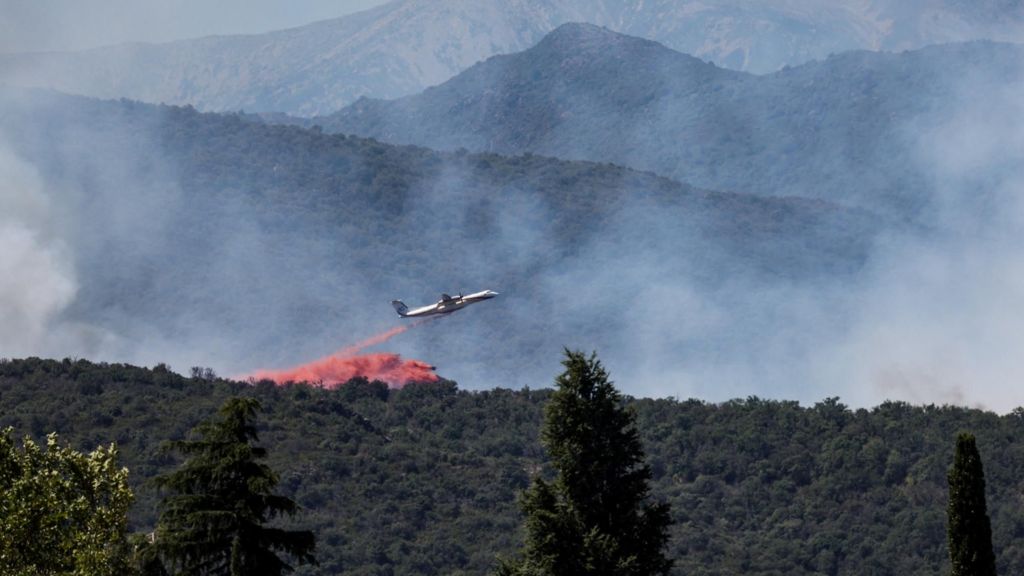
As an early summer heatwave continues to parch much of Western Europe, a rapidly spreading wildfire in the French Pyrenees has forced more than 10,000 residents to evacuate over a dozen small communities near the Spanish border, triggering a cross-border emergency response and disrupting the annual Tour de France cycling race.
The blaze, centered near the village of Trévillach not far from the southern French city of Perpignan, has already scorched at least 4,600 hectares of land, local prefect Pierre Regnault de la Mothe confirmed in a post to social platform X. Firefighting efforts faced worsening conditions on the morning after the evacuation order was issued, with French Interior Minister Laurent Nunez warning that dangerous conditions were extending the battle against the flames. Authorities have repeatedly highlighted that gusty strong winds are expected to fan the fire further, pushing it closer to populated areas.
Local resident Patrice from Trévillach described the terrifying speed of the fire’s advance in an interview with AFP, noting the blaze came within 300 meters of local homes. “We were shocked by how fast it spread, it was staggering – bordering on panic,” he said.
The wildfire has also impacted one of the world’s most high-profile annual cycling events. The third stage of the 2026 Tour de France, a 195.9-kilometer route that starts in the Spanish city of Granollers and was scheduled to finish in the French Pyrenean town of Les Angles, has required drastic last-minute adjustments. Tour organizers have urged all spectators and non-essential personnel to avoid the final 40 kilometers of the stage to clear access routes for emergency response vehicles, and have cut the size of the official team motorcade to a minimum.
“An exceptional fire calls for exceptional measures for the Tour,” said race director Christian Prudhomme. “We invite the public not to come to the edge of the race or to the finish site.”
The wildfire crisis is not limited to France. Neighboring Spain has also seen multiple blazes burn across its northeastern regions. More than 2,200 hectares of the Les Gavarres natural reserve have already been destroyed by fire, though Catalan regional authorities reported Saturday evening that the blaze there had stabilized and was on track to be fully extinguished within the week. Further south in Spain’s Castellon province, 500 residents were evacuated after a separate wildfire spread into the Sierra de Espadan national park.
The European Union has mobilized additional resources to support the emergency response. European Commission President Ursula von der Leyen announced that four water-bombing aircraft based in Cyprus and Sweden would be deployed to the region to aid French firefighting teams.
This latest round of wildfires comes as Southern Europe grapples with a second early-season heatwave, following a record-breaking heat event in June that pushed national average temperatures to all-time highs across France. Forecasters warn temperatures could again climb as high as 40°C across southwestern France this week, after already surpassing that mark in parts of Spain and Portugal. “Although this heatwave is unlikely to break records in the way June’s did, it will still be exceptional for the time of year,” said BBC Weather Lead Forecaster Matt Taylor. “With the heat expected to persist into next week and little widespread rain forecast, the risk of further wildfires will remain elevated.”
The June heatwave left a devastating human toll, with official counts recording at least 2,025 excess deaths in France, 1,222 in Belgium, and roughly 480 in the Netherlands. Climate scientists have repeatedly linked the increasing frequency and intensity of European heatwaves and wildfires to manmade climate change. Data from the Copernicus Climate Change Service confirms Europe is warming twice as fast as the global average, a trend that has led to longer, hotter summers, strained freshwater supplies, and a sharp rise in the risk of large-scale, uncontrolled wildfires across the continent.