In a striking convergence of historical moments, two defining global events unfolded in the same week: the long-awaited burial of Iran’s slain supreme leader Ayatollah Ali Khamenei, and the United States’ 250th anniversary of national independence. Against a backdrop of a fragile 60-day ceasefire that paused a bitter US-Israeli initiated war to open negotiations for a permanent peace deal, both sides have leveraged their respective commemorative events to lay claim to victory in the conflict.
Khamenei was deliberately targeted and killed in a US-Israeli airstrike on the very first day of the war, February 28. Islamic tradition requires prompt burial of the deceased, often within a day of death, but Khamenei’s remains were preserved for more than four months. Sustained US-Israeli bombardment across Iran made large-scale public commemorative gatherings impossible, forcing Iranian authorities to delay the farewell ceremony until the security environment allowed for a fitting tribute.
Iran’s Islamic government aimed to push back against the invading force before holding a formal, elaborate state burial. An intermittent ceasefire took effect on April 8, which could have allowed for an earlier service – an event that would have carried the same level of security risk as the ceremony held this week, making the deliberate timing clear.
The alignment of Khamenei’s burial with the US’ high-profile independence jubilee is no random coincidence, according to regional analysts. While some dismiss the overlap as accidental, a far more plausible reading frames the timing as a calculated move by Iran’s leadership to draw global attention away from the US celebration and assert the Islamic Republic’s continued relevance on the world stage.
Iran’s new post-Khamenei leadership, headed by Khamenei’s son Mujtaba – who has remained out of public view after reportedly being wounded in the strike that killed his father – was fully aware of months of public planning for the US anniversary. US President Donald Trump, who partnered with Israeli Prime Minister Benjamin Netanyahu to launch the offensive against Iran, has spent months hyping the 250th independence celebration, promising to showcase what he calls America’s “Golden Age”. He used the event to once again formally claim total victory in the war against Iran.
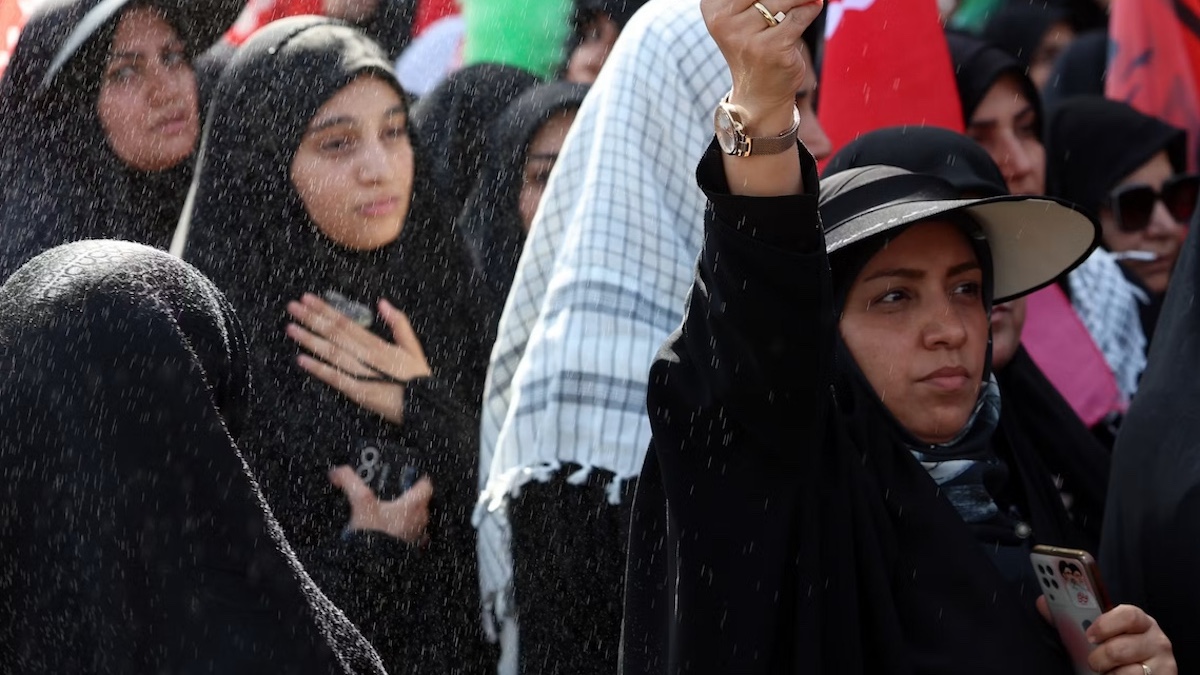
The evidence strongly suggests Tehran deliberately scheduled Khamenei’s burial to counter the US festivities. Iranian officials choreographed the mourning events to draw mass public participation and welcome dozens of foreign political and religious delegations from allied and friendly nations across the globe, a turnout that overshadowed much of the US celebration.
The ceremony also honored Khamenei’s four decades of uncompromising rule as a marja, a leading source of emulation within the Shia Islamic religious hierarchy. Beyond honoring the late leader, the overlapping events sent a series of clear messages to both domestic and international audiences:
– The Islamic Republic has survived a full-scale foreign invasion and emerged more unified and stronger than it was before the outbreak of war
– The Iranian regime is far less unpopular and internationally isolated than the US and Israel, its main adversaries, have repeatedly claimed
– The republic retains the resilience and capability to defend itself against both internal unrest and foreign military aggression
– The Iranian government remains steadfast in its opposition to its enemies, and positions itself as the ultimate victor in the recent conflict
The massive public turnout for mourning processions and the large number of foreign delegations in attendance even caught US leadership off guard: Trump had previously claimed that the Iranian people “hated” the former supreme leader, and did not anticipate the scale of public and international support on display.
Going forward, Khamenei will be enshrined in Iranian history as a transformative religious authority, political thinker, and leader who built the Islamic Republic into a formidable, defensible regional power. While the Islamic system remains firmly entrenched in Iran, observers warn that urgent structural reform remains an unaddressed priority. Widespread public demands for expanded political and social freedoms, and improved economic living conditions, have not faded – instead, these grievances simmer beneath the surface of post-war unity.
Uncertainty also hangs over the ongoing US-Iran negotiations, and the future political and economic trajectory of the country. If the two sides manage to reach a lasting comprehensive settlement that resolves core disputes – including Iran’s nuclear program, security in the Strait of Hormuz, the Israeli occupation of southern Lebanon, the lifting of international sanctions, the unfreezing of Iranian sovereign assets, and the reintegration of Iran’s economy into the global market – it would create space for the Iranian government to address longstanding public demands.
Iran’s new President Masoud Pezeshkian and National Assembly Speaker Bagher Ghalibaf have both publicly signaled a willingness to pursue reform and change. However, the most powerful political actor to watch remains the Islamic Revolutionary Guard Corps (IRGC), which gained additional influence after the war thanks to its new control over the Strait of Hormuz, granting the group expanded veto power over major domestic and foreign policy decisions.
For the moment, both Tehran and Washington can each claim a symbolic victory from their dueling, simultaneously held commemorative events. But the permanent agreement that negotiators work toward in the coming weeks will carry profound, long-lasting consequences for both nations, and for global security and stability.
This analysis is from Amin Saikal, emeritus professor of Middle Eastern Studies at the Australian National University, The University of Western Australia, and Victoria University.