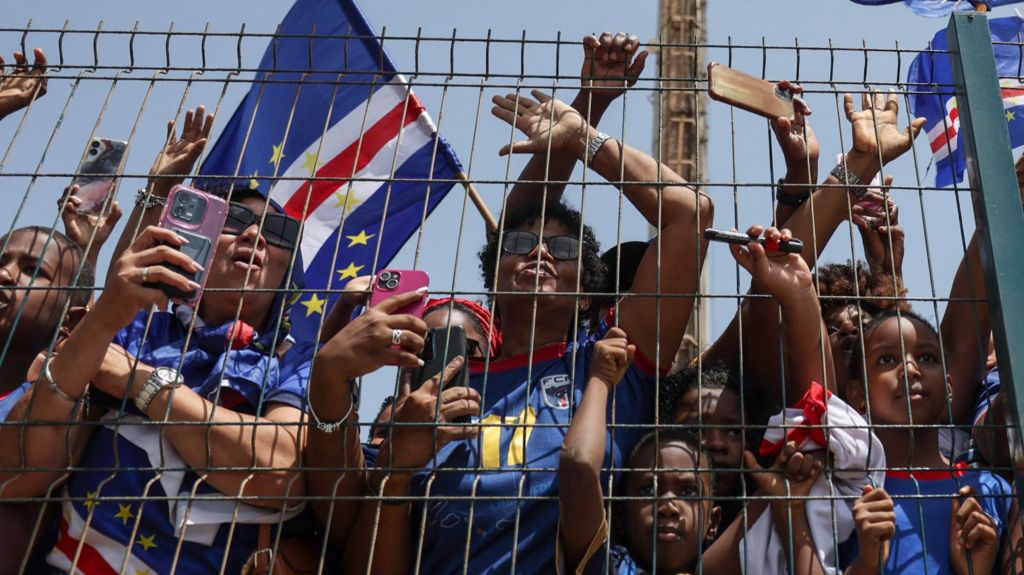
The small West African island nation of Cape Verde is celebrating two milestones this weekend: 51 years of independence from Portuguese colonial rule, and the unprecedented World Cup campaign that captured global football fans’ hearts. Tens of thousands of jubilant supporters packed the grounds of Praia’s international airport on Sunday to welcome home their beloved Blue Sharks, the lowest-ranked and second-smallest nation ever to compete at the men’s World Cup, after a historic run that ended just short of the knockout stage.
Cape Verde, ranked 67th in the world heading into the tournament, defied every pre-tournament prediction to hold its own against global powerhouses. The side earned three draws across group stage play, including a stunning 0-0 shutout of European champions Spain in their opening World Cup match ever. Those results set up a dramatic final group clash with defending champions Argentina, where the underdog Blue Sharks pushed the heavily favored side to extra time before a late cruel deflection knocked them out of contention.
In that thrilling match, Lionel Messi put Argentina ahead early, but Cape Verde equalized to level the score at 1-1 by full time. A second Argentina goal put them ahead once again in extra time, only for a stunning strike from Sidny Lopes Cabral to level the match for a second time. The game ended 2-2, but a deflection off Cape Verde defender Diney Borges from Cristian Romero’s late header sealed Argentina’s progression to the knockout round, ending Cape Verde’s dream run.
Despite the heartbreaking exit, the mood back home was nothing short of celebratory when the team touched down in Praia. The entire airport area was transformed into a spontaneous carnival, with fans dancing, beating drums, chanting player names, and waving the national blue flag, turning the venue into a solid sea of the country’s signature color. Fans called out for star players including standout goalkeeper Vozinha — whose sharp performances drew global attention — and defender Pico Lopes, who notched several key plays across the tournament. Players, including captain Ryan Mendes, spent hours signing autographs and posing for photos with supporters who lined the arrival area for hours.
Speaking to reporters after arriving, Vozinha, whose full name is Josimar José Évora Dias, said that while the team had hoped to advance further than the group stage, the moment of celebration with fans was not diminished. “We wanted something bigger but we didn’t go to the next stage. Now we just enjoy the moment and celebrate with our people,” he said, wearing a white tee printed with Cape Verde’s name.
One local supporter who joined the homecoming crowd explained that she came to honor the team for what they achieved against far more highly ranked opponents. The Blue Sharks proved that even the second-smallest nation at the tournament, a side making their World Cup debut, could compete with the sport’s biggest names, including Spain and Uruguay, holding their own across 270 minutes of group play.
Head coach Pedro Leitão Brito, widely known by his nickname Bubista, shared that pride, noting the team came within 10 minutes of forcing Argentina into a penalty shootout that could have produced the biggest upset in World Cup history. “We showed that we may be a small country but we can play against the best teams in the world,” he said. “That’s a reason for pride. We made history for our country. They can be proud for representing our country.”
The timing of the homecoming, overlapping with Cape Verde’s annual independence day celebrations, added an extra layer of national pride to the event, turning a regular homecoming into a landmark moment of unity and national celebration for the island nation.