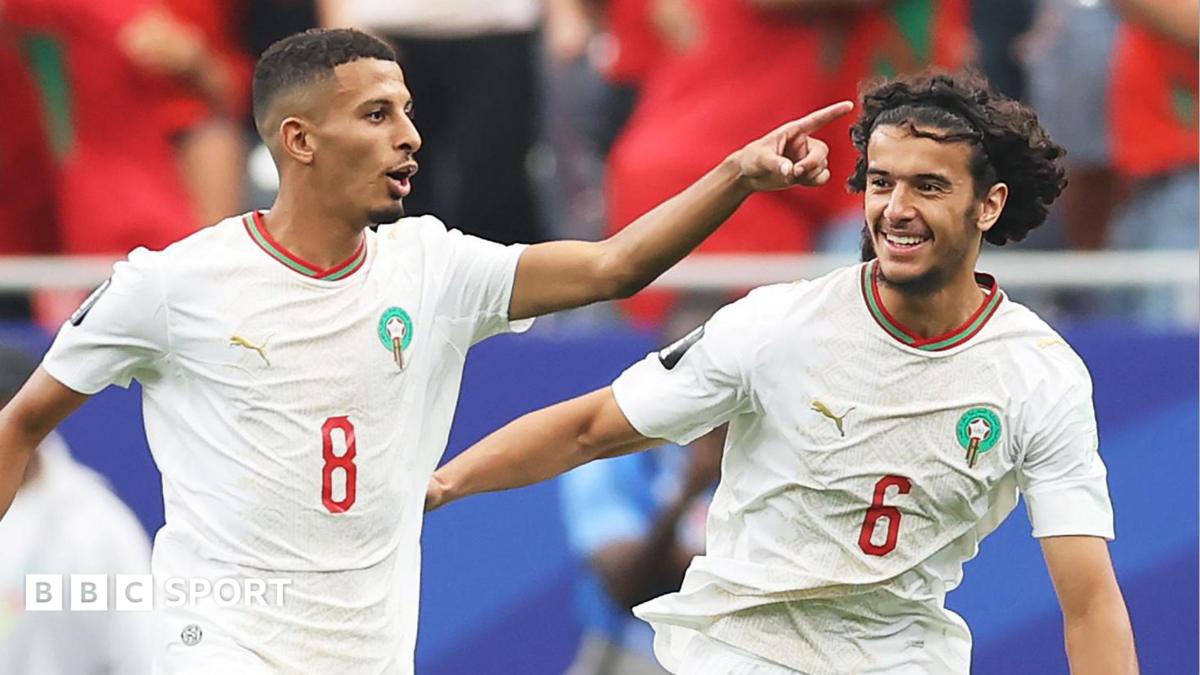
In a gritty, hard-fought 2026 FIFA World Cup round of 16 clash in Houston, Morocco earned a 3-0 victory over co-host Canada to punch their ticket to the quarter-finals, extending one of the most remarkable unbeaten runs in international men’s football and cementing their status as genuine title contenders. Unlike the dramatic, dreamlike run that carried them to a historic semi-final finish in Qatar 2022, this win was far from a display of free-flowing attacking beauty – it was a masterclass in winning when not at their best, a hallmark of championship-caliber sides.
Morocco managed to secure the three-goal win despite registering only five total shots on target, the lowest number recorded by any winning side in a men’s World Cup knockout match in tournament history. To add to the game’s unusual dynamic, the opening 45 minutes became the first half in World Cup history to see more yellow cards issued than shots on goal. The North African side spent the opening 15 minutes without even registering a touch inside Canada’s 18-yard box, the second consecutive match where they have started slowly in that regard.
Canada, fielding one of the most talented generations in their men’s football history, made the most of Morocco’s slow start, earning two early clear scoring opportunities. Star forward Jonathan David saw a low shot saved by Moroccan goalkeeper Yassine Bounou, and striker Tani Oluwaseyi also failed to convert his follow-up chance. Injured star Alphonso Davies could only watch from the sidelines, unable to impact the game, and Morocco’s organized defense quickly shut down Canada’s key playmakers: neutralizing playmaker Stephen Eustaquio’s dangerous distribution and cutting off all service to David, leaving the Canadian attack stagnant for the rest of the match.
Once Morocco found their rhythm, they never relinquished control. Their captain Achraf Hakimi, widely regarded as the best right-back in world football, was a constant threat both going forward and in pressing, disrupting Canada’s build-up at every turn. Playmaker Brahim Diaz delivered a standout performance, notching two assists to bring his total World Cup assist tally to four – the most of any African men’s player in tournament history.
Speaking after the match, Morocco head coach Mohamed Ouahbi emphasized the team’s resilience and commitment to their core identity through tough stretches. “The first half was very intense. There were a few adjustments to be made at half-time. We were never safe from pressure,” Ouahbi told reporters. “What matters is we didn’t change our identity, we didn’t change our game philosophy. We are playing the World Cup which means there will be difficult moments. What matters is when we are not at our best, we have to be resilient. We have to remember who we are playing for and what we are playing for.”
The result pushes Morocco into its second consecutive men’s World Cup quarter-final, matching the five-match progression they achieved in Qatar 2022. With four total knockout stage wins across the last two World Cups, Morocco has now matched the total number of knockout wins earned by every other African men’s national team combined. One more win will see them equal their historic 2022 run, when they became the first African men’s side ever to reach a World Cup semi-final.
Morocco’s current run extends their remarkable unbeaten streak to 34 matches across all competitions, dating back to a 1-0 loss to Kenya in the 2025 African Nations Championship, a tournament limited to domestic league players. While the streak carries a minor asterisk, due to a retroactively awarded 2026 Africa Cup of Nations final win over Senegal that is currently being challenged in court, the run’s consistency remains unprecedented for an African side.
Analysts and pundits have noted that Morocco has yet to face a full 90-minute test of their capabilities at this tournament. They opened with an impressive draw against Brazil, secured a hard-fought win over Scotland after scoring inside two minutes, and beat an already eliminated Haiti side 4-2 in the final group stage match. In the round of 32, they outplayed Netherlands but needed a stoppage-time header to avoid elimination. Their performance against Canada, while ultimately comfortable, did little to quiet doubters ahead of a potential quarter-final clash with defending champions France.
BBC 5 Live pundit Chris Sutton pointed out Morocco’s slow start and lethargy in the first half, warning that a repeat performance against top opposition would end their run. “Morocco were just not at their very best, and there are tougher tests to come. They surprised me with their lethargy at the start. I don’t know whether there was a bit of arrogance in dismissing the Canada team. Something was amiss with their performance,” Sutton said. “They are devastating on the counterattack. But if France get through and Morocco perform like they did in the first half against a team like France, they will be crushed.”
Even with questions over their form, no one can deny that Morocco has a better chance of becoming the first African men’s team to win the World Cup than any side in history. This success is no overnight fairytale: it is the product of more than 15 years of deliberate, heavy investment backed by King Mohammed VI. A national academy opened in 2009 and a $65 million training facility opened in 2019, both named for the king, have laid the foundation for Morocco’s rise to the top of African football. After 20 years of failing to qualify for the World Cup between 1998 and 2018, the infrastructure overhaul turned the program around, and also allowed the federation to recruit top talent from the Moroccan diaspora in Europe – including Hakimi and Diaz, both born in Spain.
Ouahbi emphasized that this long-term investment is the backbone of the team’s current success. “Everything that is happening right now in Moroccan football is thanks to Mohammed VI. He has invested a lot in the last few years, especially this academy,” he said. The coach added that Morocco is no longer seen as a surprise underdog, and the program’s growth is a source of national pride. “It’s not a surprise, we are no longer a surprise as of today. When people talk about Morocco they talk about a real contender, a major footballing nation and it’s a great source of pride. It’s only the beginning and I hope we can continue to have similar World Cup runs for many years. We want to keep going, we don’t want to stop.”
Morocco will face their next test in the quarter-finals on Thursday, 9 July, with kickoff scheduled for 21:00 BST in Boston.