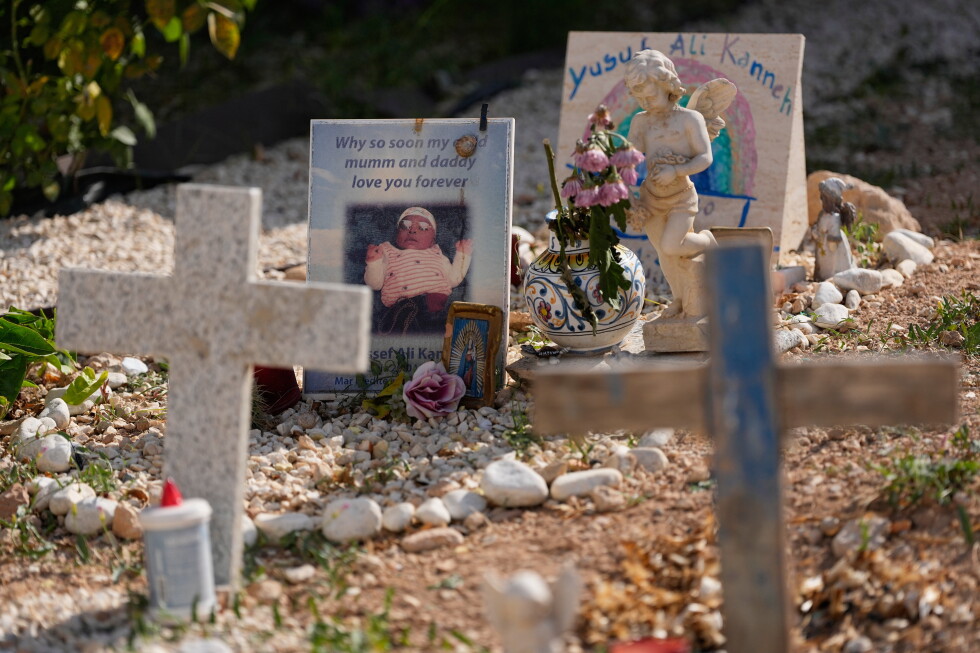
On the same day Americans across the globe gathered to celebrate the 250th anniversary of the U.S. Declaration of Independence, history’s first American-born pope made a deliberate, symbolic journey to Lampedusa — the tiny Sicilian island at the heart of Europe’s decades-long migration crisis — to honor the tens of thousands of migrants who have lost their lives seeking safety and opportunity on the continent.
Pope Leo XIV, who has repeatedly clashed with the Trump administration over its hardline immigration crackdown including mass deportations in his native Chicago, spent July 4 praying at the island’s migrant cemetery, unveiling a plaque honoring his predecessor Pope Francis, and celebrating a solemn Mass for the hundreds of recent migrant arrivals who have crossed the Mediterranean to reach European soil. The trip followed an earlier visit last month to the Canary Islands, another key European migration entry point, where he rebuked political leaders for turning away desperate migrants and condemned human smugglers for profiting from vulnerable people, warning they will face divine judgment for their exploitation.
Lampedusa, a 5.6-mile strip of rocky land located closer to North Africa than the Italian mainland, has served as the primary entry point for hundreds of thousands of migrants traveling by smugglers’ boats from Libya and Tunisia since the onset of Europe’s modern migration crisis. It has since become the global symbolic epicenter of debates over border security, asylum obligations, and humanitarian responsibility, as European nations grapple with balancing border control against legal and moral commitments to welcome people fleeing conflict, climate disaster, and extreme poverty.
Data from the International Organization for Migration (IOM) confirms more than 35,000 migrants have been recorded missing or dead in the Mediterranean Sea since 2014. Independent analysts estimate the actual death toll is far higher, as countless unreported shipwrecks leave victims counted among the “invisible” losses that never make official records. Salvatore Sortino, IOM’s head of mission for Italy and Malta, noted that while total migrant arrivals along the central Mediterranean route have dropped this year, the proportional number of deaths at sea has actually risen, a trend that underscores the persistent extreme vulnerability of people making the crossing. “The diminishing numbers of arrivals hasn’t resulted in a lower number of deaths at sea,” Sortino explained, adding that Pope Leo’s visit to Lampedusa serves as a critical reminder of this ongoing humanitarian cost.
In a special letter addressed to the American people released to coincide with the 250th Independence Day anniversary, Pope Leo framed the call to welcome migrants as inseparable from the broader defense of all human life — a core tenet of Catholic social teaching. “Protecting the unborn and all human life also means welcoming, protecting and assisting immigrants, whose hopes, sacrifices and contribution have formed part of the history of this country from its very beginning,” he wrote. The pontiff added that extending compassionate, generous welcome to migrants is not only an act of Christian charity, but a fundamental recognition of the inherent dignity that belongs to every person. He also reminded the U.S. that the nation itself was founded by immigrant communities seeking a new life of freedom.
Tareke Brhane, an Eritrean migrant and president of the October 3rd Committee, a nonprofit founded by family members of the 368 victims of a 2013 Lampedusa shipwreck, called the pontiff’s visit a powerful display of solidarity for families still seeking recognition of their lost loved ones. To date, Brhane noted, no official comprehensive registry of migrants who have died crossing the Mediterranean exists, a gap his organization has spent years fighting to close. “It is a strong sign for our battle with Italy and with Europe in order to register the deaths,” he told the Associated Press, adding that the visit brings comfort to grieving relatives who have waited years for acknowledgment of their loss.
Pope Leo’s trip follows the path forged by Pope Francis, who made migrant solidarity a defining priority of his pontificate. Just months after his 2013 election, Francis made his first trip outside Rome to Lampedusa, where he tossed a memorial wreath into the sea and famously decried what he called the “globalization of indifference” toward displaced people. For the global Catholic Church, welcoming the stranger is a core obligation rooted directly in Gospel teaching.
The pontiff’s visit comes just two weeks after the European Union began rolling out a sweeping new migration and asylum pact that sets binding rules for the bloc’s 27 member states. The new framework requires mandatory border screenings of all new arrivals lasting up to seven days, fast-tracks asylum assessments for people from countries deemed “safe” or flagged as security threats, and mandates automatic return orders for rejected asylum seekers to speed up both voluntary and forced repatriations. Human rights advocates have sharply criticized the new rules, arguing they undermine the fundamental right to seek asylum by rushing life-or-death assessments, open the door to racial profiling, deny protection to people with legitimate claims, and will likely lead to a sharp increase in prolonged, inhumane detentions at EU borders.
In Italy, far-right Prime Minister Giorgia Meloni’s government has ramped up deportation efforts as part of its campaign to crack down on irregular migration and the smuggling networks that profit from the trade. Italian Interior Ministry data shows 14,464 migrants have arrived in Italy so far this year as of July 4, a sharp drop from 30,598 arrivals in the same period in 2024 and 26,202 in 2023. At the same time, total deportations — both forced and voluntary — have increased compared to recent years, in line with Meloni’s policy agenda.
The International Rescue Committee estimates 118 million people are currently forcibly displaced worldwide, a figure that reflects growing global pressures from conflict, climate change, and widening economic inequality. Pope Leo’s high-profile visit to Lampedusa on the U.S. Independence Day holiday deliberately ties together conversations around migration policy on both sides of the Atlantic, urging the U.S. and European nations alike to live up to their stated values of human dignity and welcome for those seeking a better life.
Reporting was contributed by Nicole Winfield from Rome. The Associated Press’ religion coverage is supported through a collaboration with The Conversation US, with funding from Lilly Endowment Inc. The AP retains full editorial control over all content.