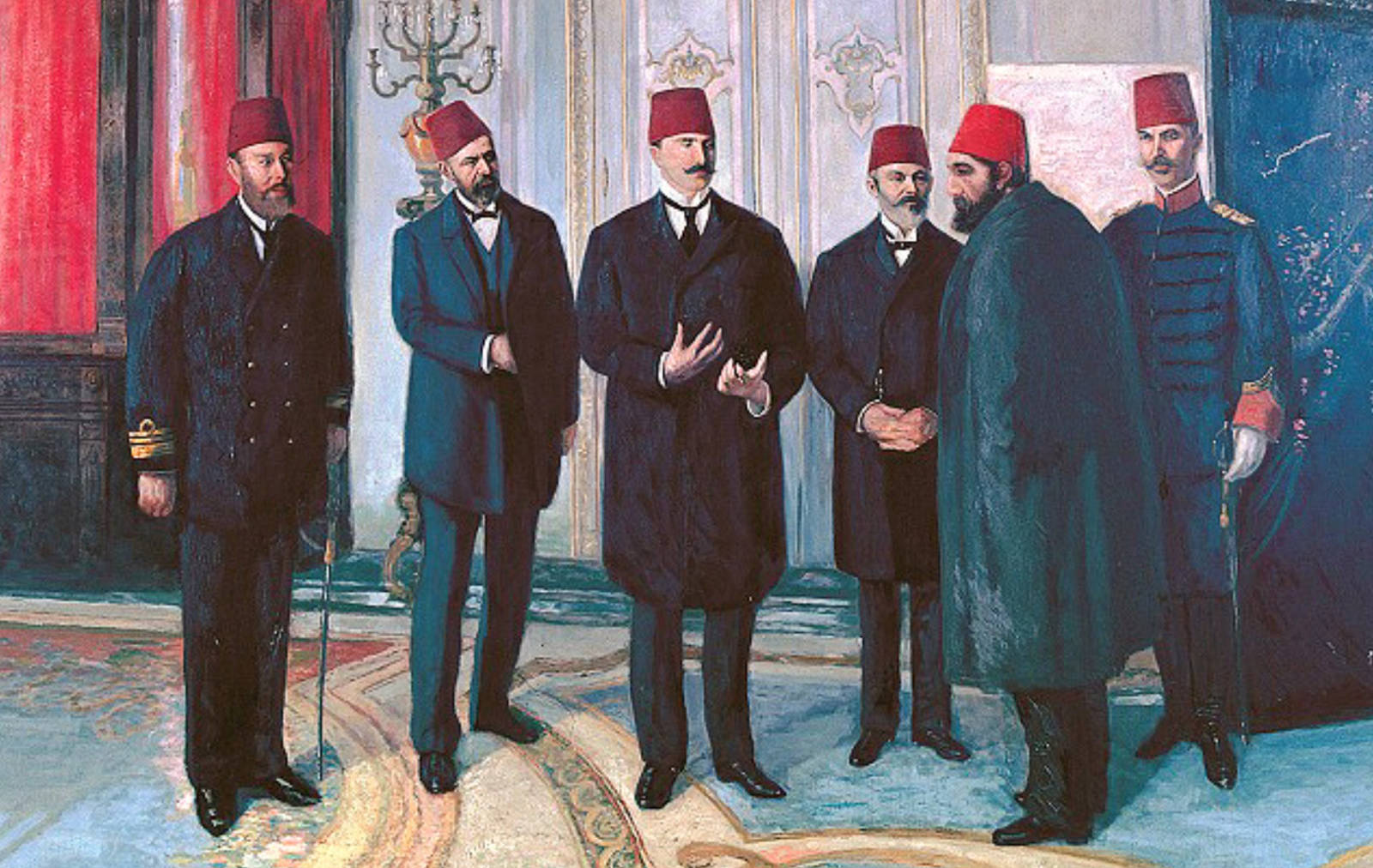
For history enthusiasts and casual readers alike, few experiences match the excitement of gaining exclusive, behind-the-scenes access to the hidden inner workings of one of humanity’s most influential imperial dynasties. That rare opportunity has arrived with the July 3 release of *Palace in the Mist*, a new work by Ayse Osmanoglu — a professional writer, and a direct member of the House of Osman, the ruling family of the Ottoman Empire.
Osmanoglu, who currently resides in England, carries unmatched ancestral context for this project: she is a direct descendant of two Ottoman sultans, Murad V and Mehmed Resad, and her grandfather was an imperial prince forced into exile from Istanbul in 1924, when Turkish Republic founder Mustafa Kemal Ataturk formally abolished the Ottoman caliphate. This unique lineage puts her in an unparalleled position to chronicle the final, turbulent era of the Ottoman Empire.
Set against the transformative upheaval of the 1908 Young Turk Revolution, *Palace in the Mist* tells the deeply personal story of Osmanoglu’s own ancestors within the imperial palaces of Istanbul. The work occupies a rare middle ground between narrative fiction and rigorous academic history: every central figure in the book is a real historical person, and Osmanoglu went to extraordinary lengths to ensure all portrayals adhere strictly to the historical record. While this commitment to avoiding unsubstantiated embellishment occasionally leaves supporting characters feeling less developed than they might be in a conventional novel, critics note this small trade-off is more than justified by the book’s extraordinary accuracy and authentic voice.
Osmanoglu draws on one-of-a-kind source material that no outside scholar could easily access: obscure contemporary memoirs written by people who lived through the era, plus oral histories of the imperial family passed down directly to her through generations. In the book’s opening, she explains that during her childhood, her paternal grandparents and great-aunts and uncles shared countless stories of the dynasty’s final decades, and she committed these intimate anecdotes to memory to preserve them for future readers. “They gave me a precious insight into what life was like for the people who lived in the Ottoman palaces at the turn of the 20th century,” she writes.
To ground the narrative, Osmanoglu begins by recapping the decades of political tension that led to the revolution: In 1876, a reformist faction called the Young Ottomans launched a coup against Sultan Abdulaziz, deposing him and installing his liberal nephew Prince Murad — Osmanoglu’s direct ancestor — as the new sultan. Plagued by paranoia that others would accuse him of conspiring against Abdulaziz, Murad suffered a severe nervous breakdown, was deemed unfit to rule, and was replaced by his younger brother, who took the throne as Sultan Abdulhamid II in September 1876.
Though Abdulhamid initially accepted a constitution and established a parliament, he soon grew authoritarian, dissolved the legislative body, arrested political dissenters, and even imprisoned members of his own family who he saw as threats. That included Murad and his son Prince Mehmed Selahaddin, who were confined to the so-called “gilded cage” of Istanbul’s Ciragan Palace for 28 years.
*Palace in the Mist* picks up its narrative in the final years of Abdulhamid’s iron-fisted rule, with Osmanoglu reconstructing this history through vivid prose and meticulous attention to sensory detail. She paints a clear portrait of the sultan, noting his “crisp white linen shirt and navy-blue trousers” and the gold buttons of his custom jacket, and captures his growing paranoia in a small, revealing moment: “The world moves against me,” he whispers, waving a pistol through an empty room.
Betrayal and popular revolt stand as the book’s central themes. Young Turk revolutionaries, including key protagonist Captain Hafiz Ismail Hakki, grapple with the moral weight of betraying the sitting sultan to build a democratic constitutional monarchy. Political intrigue permeates every chapter, seen in one iconic scene where masked rebels gather around a table holding “the Qu’ran and the revolver, gleaming ominously in the golden light.”
Beyond high politics, Osmanoglu devotes significant attention to the often-overlooked private lives of women in the Ottoman imperial family, many of whom lived in forced confinement. Readers meet Princess Rukiye, Murad’s granddaughter, who secretly reads the Sherlock Holmes novels that Arthur Conan Doyle gifted to Abdulhamid, and the tragic Princess Hadice, Murad’s daughter, whose illicit romantic correspondence with a young officer named Kemaleddin Pasha leads to her public disgrace and his exile; when he finally returns to Istanbul decades later, she refuses to meet him.
Osmanoglu also brings the opulence of late imperial palace life to life, describing glittering parties held under high ceilings where “chandeliers dripped with countless crystals.” In this rarefied, privileged world, “the scent of oud and musk clung to the tailored frock coats” of princes and politicians sipping sherbet and “cardamom-scented coffee,” all to the accompaniment of the “soft melodies of the Imperial orchestra.”
The book’s turning point arrives in July 1908, when Young Turk forces compel Abdulhamid to reinstate the 1876 constitution and reconvene parliament. At the most critical moment, the empire’s highest religious authority, the sheikh-ul-islam, sides with the revolutionaries. When asked to issue a religious ruling declaring the insurgency illegal, he tells a stunned Abdulhamid that “the Constitution accords with Sharia… To refuse it would be to defy Divine law.” With that ruling, the sultan’s absolute power is broken, and parliament gains the authority to hold the monarchy accountable.
The political shift frees Murad’s imprisoned family from their long confinement, but the new era of reform proves short-lived. Osmanoglu introduces readers to Ali Kemal, a liberal journalist and ancestor of former British Prime Minister Boris Johnson, who declares boldly, “They may silence a man, but never an idea. If ink is treason, let the gallows be our pressroom.”
Many leading Young Turks, however, favored a centralized, bureaucratic state over the decentralized model reformers had initially promised. Prince Sabahaddin, the revolutionary son of Abdulhamid’s sister, argued unsuccessfully that “it is essential that the provinces be given autonomy if the Empire is to survive,” and lost the internal debate. Ultimately, the revolution is betrayed from all sides: an uprising led by disgruntled soldiers and madrasa students erupts, the Young Turk leadership consolidates power into a new authoritarian regime and crushes the rebellion, and Abdulhamid is accused of appeasing the mutineers, deposed, and exiled from Istanbul. “Allah and history will bear witness that I have served the State faithfully,” he insists before leaving. Osmanoglu’s ancestor, Mehmed Resad, is installed as the new sultan, with far more chaos and bloodshed still waiting for the empire in the years ahead.
Critically, the work is widely praised as beautifully written and carefully constructed, moving seamlessly between high-stakes imperial politics and intimate family drama to create an extraordinary literary achievement. Osmanoglu has delivered a truly insider account of the dynasty’s final years, and the work is considered essential reading for anyone with an interest in Ottoman history. *Palace in the Mist: The Ottoman Dynasty Chronicles* by Ayse Osmanoglu is available in both paperback and hardcover editions starting July 3.