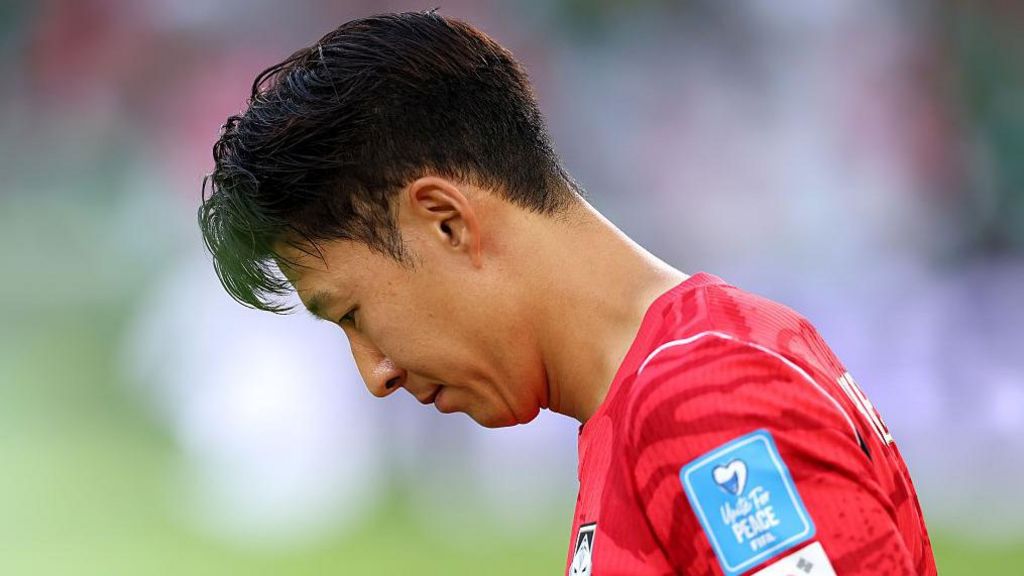
An unexpected early group-stage exit from the 2026 FIFA World Cup has plunged South Korean football into crisis, triggering widespread fan anger, the resignation of head coach Hong Myung-bo, and renewed demands for sweeping systemic reform of the country’s top football governing body.
When the national team touched down at Seoul’s Incheon Airport following their 1-0 knockout loss to South Africa, hundreds of furious supporters gathered to confront the delegation. Blasting drums and chanting for Hong to step down immediately, the crowd made their frustration unmistakable — with some followers tracking the coach all the way to his vehicle, even as a smaller group of fans gathered to cheer on the players trailing behind. One fan captured the collective mood, telling the BBC that criticism of Hong had been simmering long before the tournament kicked off, with constant calls for him to step aside even in the pre-World Cup buildup.
Hong, once one of South Korea’s most beloved football icons — he captained the 2002 co-hosted national side to a historic fourth-place finish, the country’s best ever World Cup result — had been a controversial figure from the moment he took the senior head coach role in 2024. This marked his second tenure leading the national team, and many supporters never forgave his underperformance at the 2014 World Cup, where a 4-2 thrashing by Algeria went down as one of the most humiliating results in the country’s football history — a mark only surpassed by this year’s early exit. His appointment came after the dismissal of former head coach Jurgen Klinsmann, who was sacked just shy of one year on the job following a disappointing run at the 2023 AFC Asian Cup. Reports at the time indicated multiple high-profile international candidates, including current Canadian head coach Jesse Marsch, were widely viewed as stronger, more qualified contenders for the role.
Yet Hong was ultimately selected, with critics immediately alleging the decision was driven by personal connections rather than merit. Allegations quickly emerged that the appointment was shaped by close personal ties between Hong and senior Korea Football Association (KFA) leadership, including KFA chairman Chung Mong-gyu, a Hyundai Group scion who shares an alma mater with the coach. These claims gained major traction when Park Joo-ho, a former national player and member of the KFA’s own coach recommendation committee, publicly alleged the hiring process was completely rigged. “Nothing was done as part of the formal process,” Park stated in a viral YouTube video, noting that candidates were never given a fair, equal evaluation. The KFA rejected Park’s claims, insisting it followed all due protocol, and threatened legal action against him, but his statements won backing from major figures in South Korean football, including legendary former Manchester United midfielder Park Ji-sung. “People have lost all trust in the KFA, and regaining that trust will take many years,” Park Ji-sung told local media.
A government audit launched in late 2024 later confirmed these concerns, finding that both Klinsmann’s ousting and Hong’s appointment lacked any meaningful transparency. The audit concluded that an unauthorised KFA technical director interviewed Hong at the explicit instruction of Chairman Chung, long before the full board was asked to approve the hire — turning the board’s vote into nothing more than a ceremonial rubber-stamp. South Korean parliament summoned Chung for questioning twice over the findings, with one ruling party lawmaker directly calling out alleged “alumni cartels” tied to a specific university within KFA leadership. The government recommended disciplinary action against three top KFA executives, including Chung, and called for a complete restart of the head coach hiring process. The KFA, however, challenged the recommendation and won a court suspension of the ruling, allowing Chung to retain his post and begin a fourth consecutive term in 2025, with Hong staying on as head coach amid ongoing doubt.
Heading into the 2026 World Cup, a promising opening win — a 2-1 come-from-behind victory over the Czech Republic, South Korea’s first opening match win at a World Cup in 16 years — briefly quelled criticism. But back-to-back uninspired losses to Mexico and South Korea sent the team packing early. For fans and analysts, the defeat exposed deep flaws in Hong’s tactical approach, most notably his shocking decision to leave team captain and global star Son Heung-min on the bench as a substitute. Hong’s strained relationship with Son, the first Asian player to win the English Premier League Golden Boot, had long been a point of frustration: he left Son off the 2012 Olympic roster and hinted at stripping him of the captaincy ahead of this tournament. Sports critic Choi Dong-ho argued Hong never leveraged Son’s talent, leaving the star isolated on the front line with little supporting play and relying only on late substitutions rather than adjusting tactics to turn matches around.
Son, who currently boasts a star-studded squad alongside PSG’s Lee Kang-in and Bayern Munich’s Kim Min-jae, issued a public apology to supporters after the exit, writing on Instagram: “To be honest, it’s hard to accept the reality… I believe what the fans are feeling wouldn’t be all that different from what I’m feeling.” Just days after the team’s return, Hong announced he would step down, taking full responsibility for the result. “The entire responsibility rests entirely with me,” he stated. South Korean President Lee Jae Myung has called for a full formal investigation into the KFA’s practices, writing on social platform X that “When favouritism and cronyism take precedence over competence in selecting a commander, the result is as clear as day. This appears to be the result of deep organisational and personnel failures.”
For many South Koreans, the early exit has laid bare a decades-long decline that stands in stark contrast to the 2002 World Cup high, when co-hosting the tournament lifted the nation’s spirits amid recovery from the Asian financial crisis. Today, the gap with regional rival Japan has grown increasingly stark: after the exit, South Korea dropped to 32nd in the FIFA rankings, its lowest position in four years, while Japan climbed to 17th to become the highest-ranked Asian team. Critics like Choi argue the root of the problem extends far beyond Hong, pointing to a rotating cast of more than 10 head coaches since 2002 that has prevented the national team from building consistent experience or a long-term strategic identity. “It feels as though South Korea starts from scratch every four years,” Choi noted.
Now, fans and political leaders alike are united in calling for a full overhaul of the KFA, demanding greater transparency, merit-based hiring, and a commitment to long-term development. One anonymous fan summed up the growing public mood: “Young people today already fight to compete in an unfair world. Even in sport, where fairness should matter most, we’ve watched football administrators ignore that basic principle. People will not accept this any longer.”