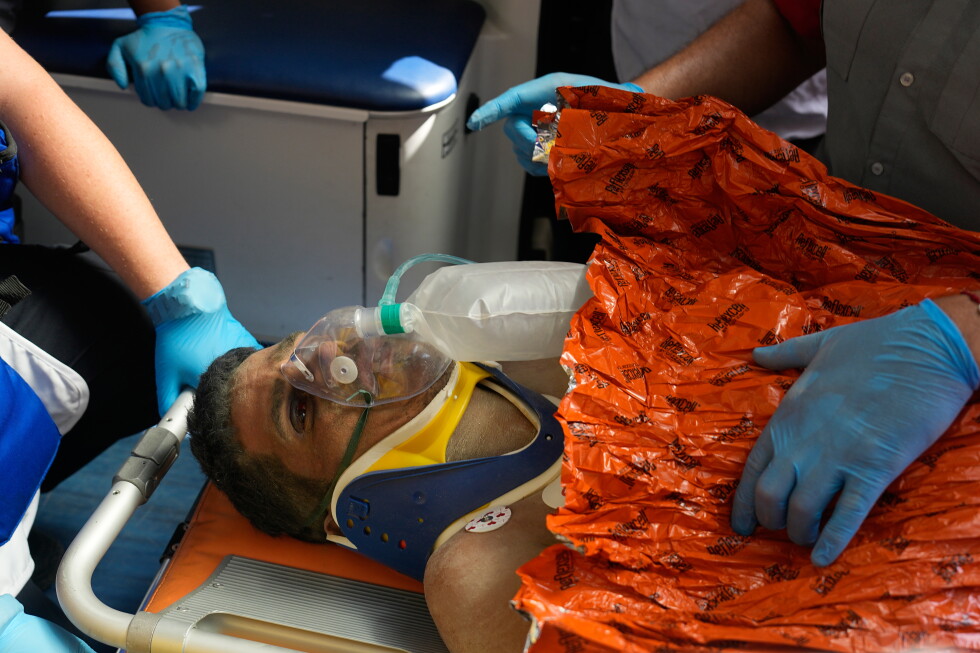
Eight days after a devastating pair of back-to-back earthquakes shook northern Venezuela, an international coalition of rescue teams pulled off a miraculous early Thursday extraction, pulling a trapped 43-year-old security guard alive from the collapsed rubble of a coastal shopping center. The successful rescue of Hernán Alberto Gil Flores has become a powerful symbol of hope amid widespread destruction that left thousands dead and countless communities shattered.
Gil Flores, a night-shift security guard stationed at the Galerías Playa Grande shopping center in Catia La Mar, a coastal town in the hard-hit La Guaira state, was inside his small on-duty cabin when the first magnitude 7.2 tremor struck on June 24. Just moments later, a second 7.5-magnitude quake hit, triggering the total collapse of the surrounding multi-story concrete structure. In a cruel twist of fate that saved his life, the small prefabricated security cabin remained intact, creating a narrow pocket of breathable air that shielded him from falling crushing debris for eight full days.
Costa Rican Red Cross specialized rescue teams first detected faint signs of life and established contact with Gil Flores over the weekend, sparking a coordinated round-the-clock extraction effort. Led by Chilean urban search and rescue firefighters, the operation brought together expert teams from the United States, Portugal, Mexico and multiple other nations, all united by a shared commitment: leave no survivor behind. “We were never going to leave him here,” confirmed Costa Rican Red Cross rescuer Minyar Collado ahead of the final extraction.
Rescue crews navigated a series of deadly hazards throughout the multi-day effort, including unstable, shifting structural rubble, torrential tropical downpours, and near-constant aftershocks that threatened to trigger further collapses. To keep Gil Flores stable as crews tunneled toward him, teams used a telescopic camera to maintain nonstop communication, and passed bottled water and liquid nutrients through a narrow drilled shaft to sustain him over the final three days of the operation. Veteran Chilean firefighter María Paz Campos talked the survivor through every step of the process, keeping him calm through the final agonizing hours of waiting. In pre-rescue footage released by Chilean firefighters, Gil Flores can be seen passing time sketching, before following instructions to put on protective goggles to shield his eyes from falling fine dust and concrete particles.
In a poignant detail shared by Collado, when rescuers first made contact, Gil Flores asked them not to inform his wife he was alive, worried that she would suffer additional heartbreak if he did not survive the extraction. For his spouse, Gusbimar González, the days after the quakes were filled with unrelenting despair, until the moment she learned the news: “when I learned he was alive, I saw a ray of light in the darkness,” she told the Associated Press. The couple share two children, aged 8 and 10, who had waited anxiously for news of their father.
When rescuers carried Gil Flores out on a stretcher covered with an orange protective tarp, teams from every participating nation broke into cheers, as crowds of onlookers lined the path to a waiting Red Cross ambulance. Members of the Costa Rican Red Cross team embraced each other, laughing through tears of relief at the successful outcome.
The twin June 24 shallow earthquakes that triggered the disaster left an unprecedented trail of destruction across northern Venezuela. More than 2,200 people were killed, over 11,000 were injured, and tens of thousands of buildings across the region were damaged or destroyed. La Guaira state, where Catia La Mar is located, bore the brunt of the catastrophe, but this unlikely rescue has given a shattered community a rare moment of hope in the wake of overwhelming tragedy.