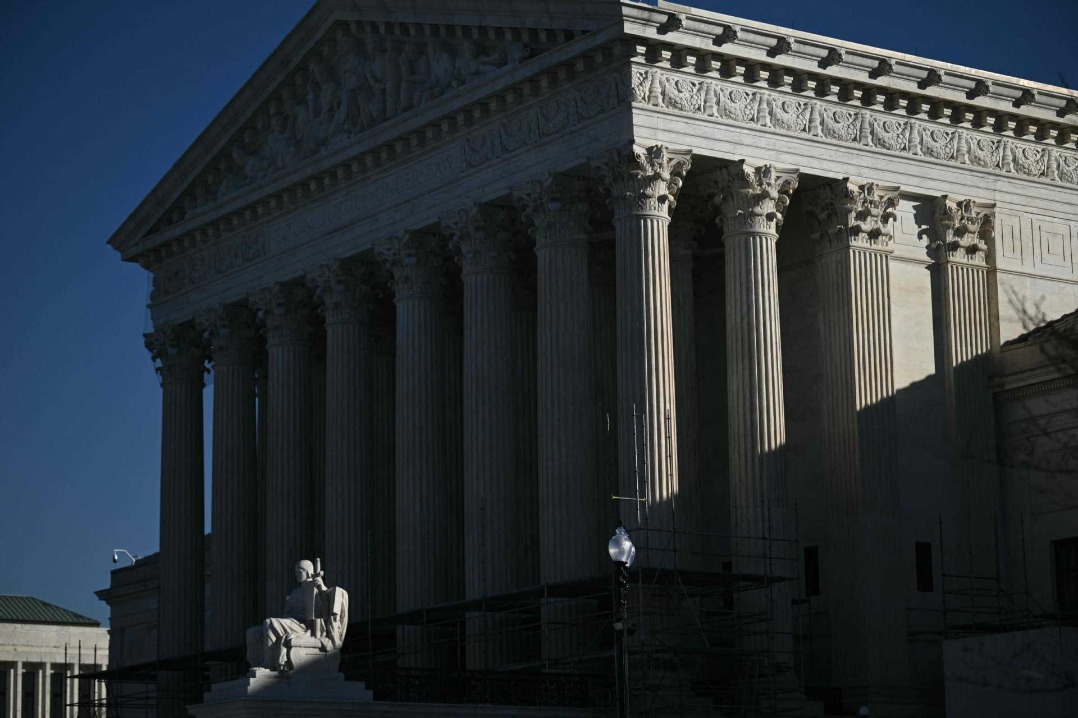
In a landmark decision that reaffirms a core tenet of American citizenship law, the US Supreme Court has formally rejected former (second-term) President Donald Trump’s executive order that sought to strip birthright citizenship from children born to undocumented immigrants and temporary residents in the United States. The ruling, handed down Tuesday in Washington D.C., upholds the long-standing constitutional guarantee of birthright citizenship that has stood for nearly 160 years.
Writing the majority opinion for the court, Chief Justice John Roberts emphasized the enduring purpose of the nation’s citizenship framework. “Citizenship, then and now, was the right to have rights — to freely participate in our political community. The Framers of the Fourteenth Amendment extended that promise to ‘every free-born person in this land’ … We keep that promise today,” Roberts wrote. The final vote split 6-3, an unusual alignment that saw three of the court’s conservative justices join all three liberal justices to form the majority supporting the ruling.
The constitutional guarantee at the center of the case dates back to 1868, when the Fourteenth Amendment was ratified in the aftermath of the American Civil War. Drafted primarily to secure citizenship for formerly enslaved Black people, the amendment’s Citizenship Clause clearly states: “All persons born or naturalized in the United States, and subject to the jurisdiction thereof, are citizens of the United States and of the State wherein they reside.”
Trump’s controversial executive order was signed on January 20, 2025, the very first day of his second presidential term. The order argued that children born to people living in the U.S. without legal authorization or on temporary visas do not fall under the “jurisdiction” requirement laid out in the Fourteenth Amendment, and therefore do not qualify for automatic citizenship under either the Constitution or the federal Immigration and Nationality Act.
The policy faced immediate legal pushback: multiple affected parents filed suit against the order, both on their own behalf and as representatives of their children. All lower courts hearing the case ruled in favor of the plaintiffs, and the executive order was never allowed to go into effect while legal challenges moved through the court system.
Following the Supreme Court’s ruling, Trump issued a statement on his social media platform Truth Social criticizing the decision. “[This is] too bad for our country,” he wrote. He went on to call for congressional action to advance his policy goal, claiming that “we can easily make it up in Congress through Legislation … Congress should start TODAY to work on ending expensive and unfair to our Country, Birthright Citizenship.”
The ruling marks a major resolution to one of the most high-profile immigration policy clashes of Trump’s second term, cementing the legal status of birthright citizenship for the foreseeable future while reigniting debate over the role of Congress in revisiting America’s century-old citizenship rules.