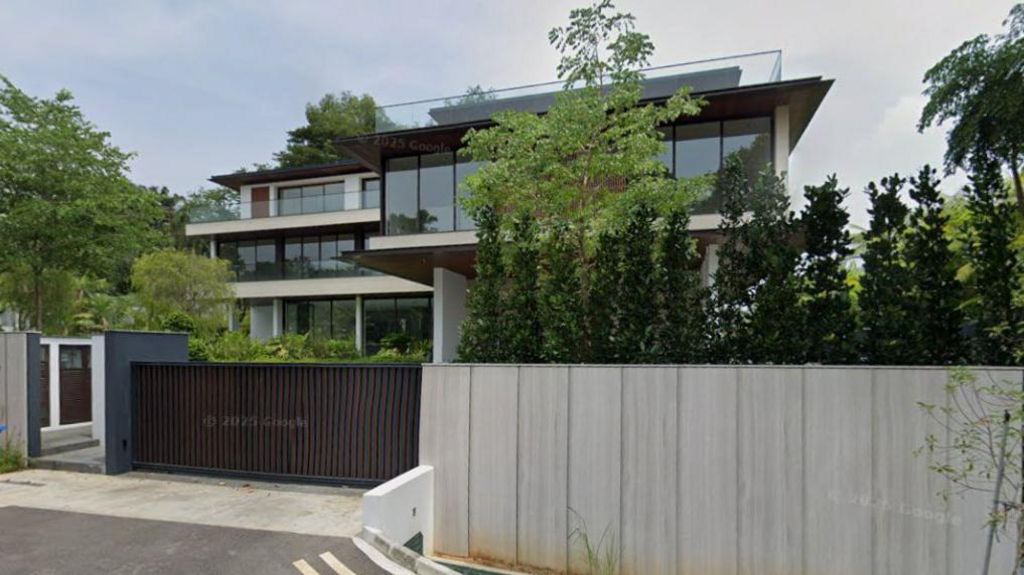
In a landmark enforcement action targeting illegal tech trade circumventing U.S. export controls, Singaporean authorities have seized a high-end luxury residence allegedly purchased with millions in illicit proceeds from a smuggling ring trafficking restricted Nvidia artificial intelligence chips. Announced by police on Wednesday, the seizure marks one of the most high-profile busts in a ongoing cross-border crackdown on unauthorized semiconductor shipments.
The property, situated just a short walk from Singapore’s iconic Botanic Gardens in one of the land-scarce city-state’s most exclusive residential districts, last sold for 55 million Singapore dollars, equal to approximately $42.5 million U.S. or £32 million. Investigators confirmed that at least 38 million Singapore dollars — around two-thirds of the total purchase price — was traced to criminal earnings from the illegal trade operation. A court order has already been enacted to freeze the asset, blocking any sale or transfer of the property while the investigation proceeds.
The case centers on Wei Zhaolun, also known as Alan Wei, chief executive of Singapore-based tech firm Aperia Group, which specializes in selling servers and enterprise tech hardware. Wei faces formal money laundering charges for his alleged role in funneling illegal proceeds into the home purchase. In addition to the luxury residence, authorities have seized roughly 1 million Singapore dollars in cash held in linked bank accounts.
Since the investigation launched in February 2025, a total of four individuals have been charged with fraud and other criminal offenses connected to the scheme. The ring allegedly placed orders for servers equipped with advanced, export-restricted Nvidia chips from global tech suppliers, including Dell, Super Micro Computer and Asus, under false pretenses — claiming the equipment would be used by legitimate local companies. Authorities have not publicly disclosed the final destination of the diverted servers, though the U.S. Department of Justice has previously identified Singapore as a common transit hub for illicit shipments bound for China. The BBC has reached out to Aperia Group, Dell, Super Micro Computer and Asus for comment on the case, with no response available as of yet.
Notably, the operation also marks the first time Singaporean authorities have pursued charges against corporate entities linked to this type of illicit trade. Alongside the individual defendants, Singapore-based firm Luxuriate Your Life and three subsidiary companies under the Aperia Group umbrella also face criminal charges. Attempts by the BBC to contact Luxuriate Your Life for comment have been unsuccessful.
If convicted on the multiple fraud charges they face, the four individual defendants could be sentenced to up to 20 years in prison. Singaporean police emphasized their unwavering commitment to rooting out this type of criminal activity, stating that the force maintains a strict zero-tolerance stance toward such offenses. Officials added that aggressive enforcement is critical to protecting Singapore’s reputation as a secure, trusted global business hub.
The bust comes as part of a years-long joint crackdown between Singapore and the United States on illegal shipments of advanced Nvidia semiconductors. Washington first implemented broad export restrictions on the chips in 2022, citing national security concerns over their potential use by the Chinese military for advanced military technology development. As of 2025, Singaporean authorities confirmed they had identified multiple suspected shipments of restricted servers transiting the country. While the U.S. has since approved limited sales of some Nvidia chip models to China under strict regulatory conditions, enforcement against illegal unauthorized shipments remains a top priority for both nations.