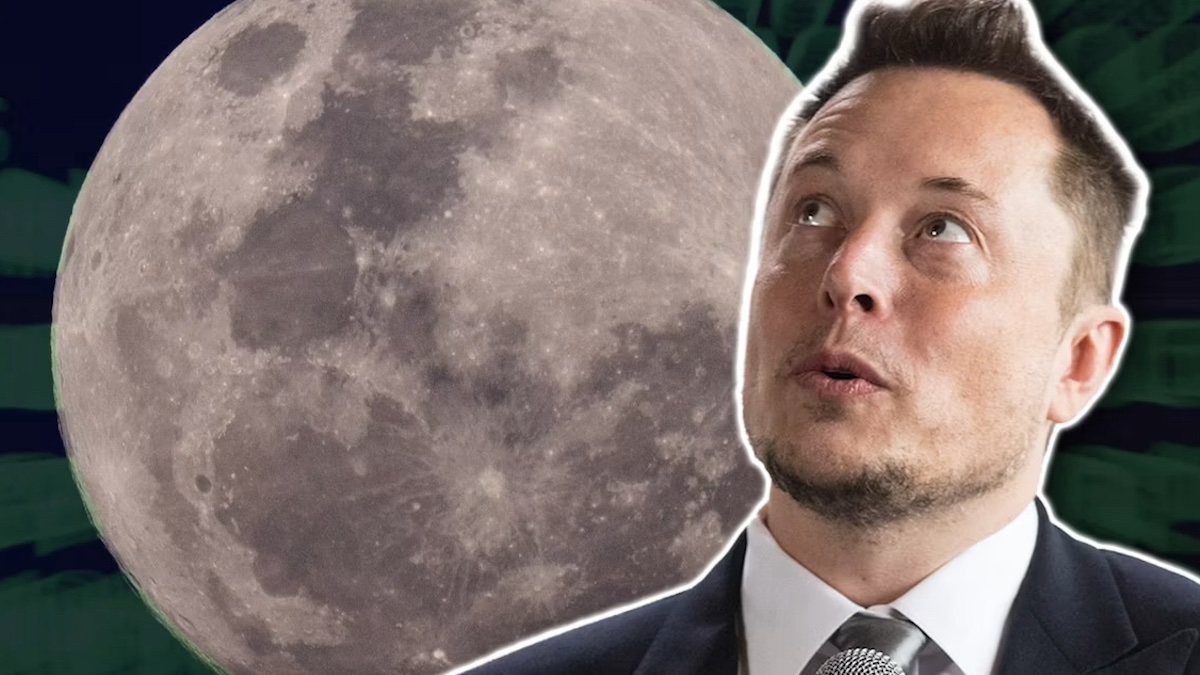
Elon Musk, a figure who briefly claimed the title of the world’s first trillionaire before returning to mere billionaire status, has built a career defined by exceptionality. Unlike most industry leaders, he has not one but two globally transformative pioneering technology companies — Tesla and SpaceX — and has openly discussed plans to establish a permanent human settlement on Mars since two decades ago. He also upends standard CEO communication norms, posting multiple times daily to his own social platform X. In 2025, he drew widespread controversy for a public gesture widely interpreted as a Nazi salute in Washington D.C., and that same year, he took a high-level role in the U.S. federal government with no prior formal political experience, all while continuing to expand his sprawling business empire.
During his short, turbulent tenure leading the newly created Department of Government Efficiency (DOGE), Musk framed governance as a technical problem of data aggregation and pattern recognition, focused on generating algorithmically optimized policy outcomes. Critics argue this approach overlooked a fundamental reality: millions of real people, entitled to equal treatment and due process, were profoundly impacted by his top-down, desk-bound decisions.
Musk’s outsize influence has made him a global household name and one of the most powerful individuals on Earth, leading many observers — including journalist Cory Doctorow — to question whether he has become uniquely dangerous, and where he fits alongside other widely criticized West Coast tech billionaires, often labeled “broligarchs,” such as Amazon’s Jeff Bezos, Palantir’s Alexander Karp, and Meta’s Mark Zuckerberg. A new carefully researched, thought-provoking book from Canadian political economist Quinn Slobodian and technology journalist Ben Tarnoff, titled *Muskism: A Guide for the Perplexed*, sets out to answer these questions by dissecting both Musk’s personal background and the vast systemic power he has accumulated.
The term “Muskism” draws a deliberate parallel to “Fordism,” the socioeconomic model named for early 20th century industrialist Henry Ford, whose mass production system reshaped American government and society for 40 years starting in the 1930s. Slobodian and Tarnoff argue that Musk, alongside other leading tech titans, is constructing a sweeping new industrial framework that is reshaping modern society in a fundamentally different direction than Fordism. While Ford’s industrial model formed the foundation for mass employment, living wages, robust social safety nets, and widespread consumer prosperity in post-World War II America, Musk’s corporate empire aims to build an entirely new socioeconomic order: one that is hyper-connected, pervasively surveilled, anti-liberal, and insular.
Under Muskism, the authors contend, unelected tech oligarchs collaborate with national governments to deploy advanced technology to erode democratic institutions, deepen social divisions, entrench rigid hierarchical power structures, and insulate elite actors from accountability. To understand the ideological roots of this system, they trace it back to Musk’s formative upbringing.
“To understand the world that Musk aims to build, we have to understand the worlds that built Musk,” the authors write. The first and most formative of these worlds was 1970s South Africa, where Musk was born and raised in a wealthy white family during the final years of the apartheid regime. The authors argue that “South Africa was the cradle of Muskism,” teaching Musk the core ideology of “fortress futurism”: the belief that technology can be used to entrench individual and elite self-reliance in an inherently hostile world. The systemic racism that structured every layer of apartheid society, where state and private business colluded to entrench white privilege through complex bureaucratic rules and discriminatory legislation despite international condemnation, shaped Musk’s worldview long before he left the country.
A bookish early adopter of video games, science fiction, and emerging technology, Musk emigrated to Canada in 1989 at age 17 to avoid mandatory military service in the apartheid military. Contrary to popular narratives that he left his apartheid-era beliefs behind, the authors argue he carried those ideological core assumptions with him. By 1992, Musk had moved to the United States to study physics and economics at the University of Pennsylvania, and by 1995 he had settled in Palo Alto to launch his first tech startup, Zip2. He went on to found X.com, which later merged with Peter Thiel’s PayPal to form the digital payment giant. By 2002, he had amassed his first fortune and founded SpaceX; he joined Tesla as an early investor and lead figure in 2004, helped found OpenAI in 2015, co-founded brain-computer interface firm Neuralink in 2016, launched tunneling venture the Boring Company in 2017, acquired Twitter and rebranded it as X in 2022, launched AI firm xAI with its Grok chatbot in 2023, and took the helm of DOGE in 2025 before splitting with then-President Donald Trump. All of these achievements came before Musk turned 55, marking an extraordinary pace of expansion that has left a white South African immigrant at the pinnacle of American political and economic power, with influence spanning the globe.
Unlike existing biographies of Musk — ranging from the celebratory authorized accounts to Walter Isaacson’s widely cited 2023 definitive biography and Jacob Silverman’s 2025 critical work *Gilded Rage: Elon Musk and the Radicalization of Silicon Valley* — Slobodian and Tarnoff frame Musk as a distinct figure among big tech leaders, shaped by his unique apartheid-era South African upbringing that allowed him to accumulate social power in ways unmatched by his peers. “He sells the fantasy that, in an increasingly unstable world, both states and individuals can fortify their self-reliance by plugging into his infrastructures,” the authors write. “The paradox is that, in doing so, you become reliant on him.”
They define Muskism as a cohesive system that blends proven commercial technologies, aspirational technological prophecies, cozy public-private partnerships, and viral online messaging designed to market and legitimize Musk’s sprawling empire. Together, these elements advance a project the authors call “tech-sovereignty”: a framework where cutting-edge technology developed by private corporations allows national governments and their favored demographic groups to project power globally while reducing vulnerability to external shocks or perceived rivals. This system secures American economic dominance in a post-free-trade era where China, Russia, and Iran are framed as systemic threats, and it operates largely out of public view even as it reshapes the lives of people around the world.
At the core of Musk’s empire are three interconnected assets: SpaceX, Tesla, and X. SpaceX and Tesla pioneered new commercial technologies in the U.S. private sector — reusable rockets, low-orbit satellite networks, and mass-market electric vehicles — with Musk driving relentless innovation while raising massive capital through skillful hype and what the authors call “future fabulation.” He built vertically integrated conglomerates to reduce dependence on external suppliers; for example, Tesla now manufactures not just vehicles but also large-scale batteries and renewable energy storage systems, resembling the large Fordist conglomerates of the mid-20th century, but without the presence of large unionized workforces that defined the earlier era.
Musk’s willingness to partner closely with the U.S. national government is most visible in SpaceX, which has become a preferred federal supplier, contractor, and partner with almost no competitors. Most notably, the U.S. military now relies on SpaceX’s Starlink low-orbit satellite internet system for frontline operations, pointing to a far more intimate integration of government and big tech than existed during Ford’s era. “State symbiosis,” rather than open market competition, is Musk’s preferred operating model when he can secure it. For Tesla, the Obama administration’s concerns about Chinese economic competition and climate change allowed Musk to secure massive federal subsidies after the 2008 financial crisis, giving him a decisive advantage over legacy American automakers that had barely entered the electric vehicle market at the time.
From 2017 onward, Musk became increasingly active on what was then Twitter, using the platform first to promote his companies and later to broadcast his increasingly right-wing political views, which have aligned closely with the resurgence of global right-wing populism. After acquiring Twitter and rebranding it as X in 2022, he began spreading rhetoric about a so-called “woke mind virus” and has since posted repeated incendiary comments targeting immigrants, LGBTQIA+ people, and promoting false claims about declining white birth rates and the supposed collapse of Western civilization.
The book devotes specific analysis to Neuralink, Musk’s brain-computer interface venture, and xAI, his artificial intelligence firm, framing these projects as core to Musk’s long-term vision. In a 2016 conversation with OpenAI CEO Sam Altman, Musk argued that merging humans and AI into a single symbiotic system would eliminate the risk of rogue AI, because “we are the AI collectively.” Musk envisions a future where digital and biological systems merge, raising critical unanswered questions about who will control the resulting cognitive and informational ecosystem. While this vision can sound like a fanciful, villainous plot straight out of a spy film, Slobodian and Tarnoff emphasize that Musk’s proven business acumen and access to state support have allowed him to turn this specific ideological vision into a concrete, functioning system that already shapes global society.
In computer science terms, Musk is building an all-encompassing “superset” of interlocking infrastructure, spanning energy, transportation, space, communication, and artificial intelligence. Unlike other tech leaders such as Bill Gates, Alexander Karp, and Peter Thiel, Musk has never published a formal manifesto laying out his ideological vision, but his consistent pattern of expansion makes clear he is driven by a clear mission. It remains unclear how much more power Musk will accumulate, or what new technologies he will bring to market with continued state backing, but critic Nick Srnicek argues that the apparatus of Muskism is already a formidable, influential force.
This new book offers critical insight into how one individual is working to reshape the world in his own image, without any input or consent from the vast majority of people affected by his decisions. It makes a clear case that no democratic society should allow a small handful of unelected individuals to accumulate the level of power that Musk currently holds. Just as the global community rejects the idea that millions should be left to die of deprivation, the authors argue, we must oppose the idea that unelected oligarchs get unilaterally to determine the future of global society. This commentary is adapted from an article by Noel Castree, Adjunct Professor of Society & Environment at the University of Technology Sydney, republished from The Conversation under a Creative Commons license.