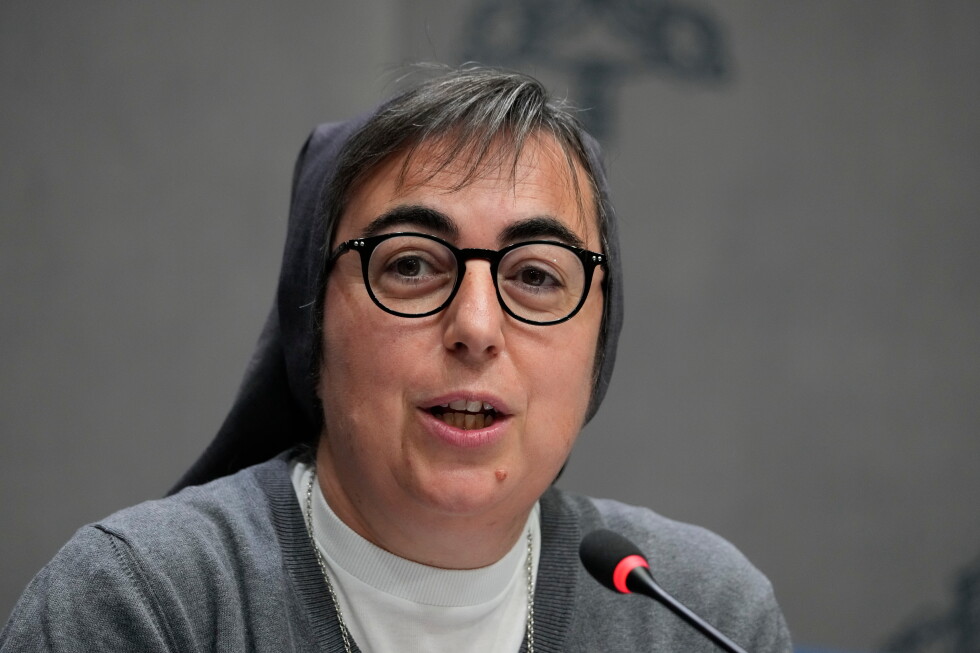
VATICAN CITY, ROME – In a landmark move that continues the gender inclusion agenda set by his predecessor, Pope Leo XIV announced Tuesday the first major appointment of a woman to a senior leadership role in the Holy See’s top governing hierarchy. Italian economist Sister Alessandra Smerilli will take over as head of the Dicastery for Promoting Integral Human Development, the Vatican office charged with advancing policies on migration, environmental stewardship, and global human development.
Smerilli currently serves as the second-in-command at the dicastery, and will succeed retiring Canadian Cardinal Michael Czerny, who is stepping down as he approaches his 80th birthday. To align with longstanding Catholic doctrine that restricts the priesthood exclusively to men – a requirement for some core responsibilities of senior Vatican department leadership – Pope Leo also named current undersecretary Cardinal Fabio Baggio to the parallel role of pro-prefect of the dicastery. Alongside this new post, Baggio will also lead the Vatican’s Borgo Laudato Si environmental education center located at Castel Gandolfo, the papal summer residence just outside Rome.
This appointment marks the second high-profile role given to a woman by Pope Leo in less than a month. Earlier this March, the pontiff tapped Mexican-American leader Maria Montserrat Alvarado to oversee the Holy See’s entire global communications operations. The move builds on the deliberate legacy of Pope Francis, who prioritized breaking gender barriers in Vatican management throughout his papacy in direct response to decades of calls from Catholic women for greater decision-making authority within the institutional church.
For generations, women have shouldered the bulk of the Catholic Church’s on-the-ground community work around the world: running most parish schools, managing faith-based hospitals and healthcare clinics, and leading intergenerational faith formation to pass Catholic teachings to younger generations. Despite this central role, women have long criticized the church for confining them to second-class status and barring them from top leadership and ordination, a grievance that continues to fuel calls for structural reform within the global institution.