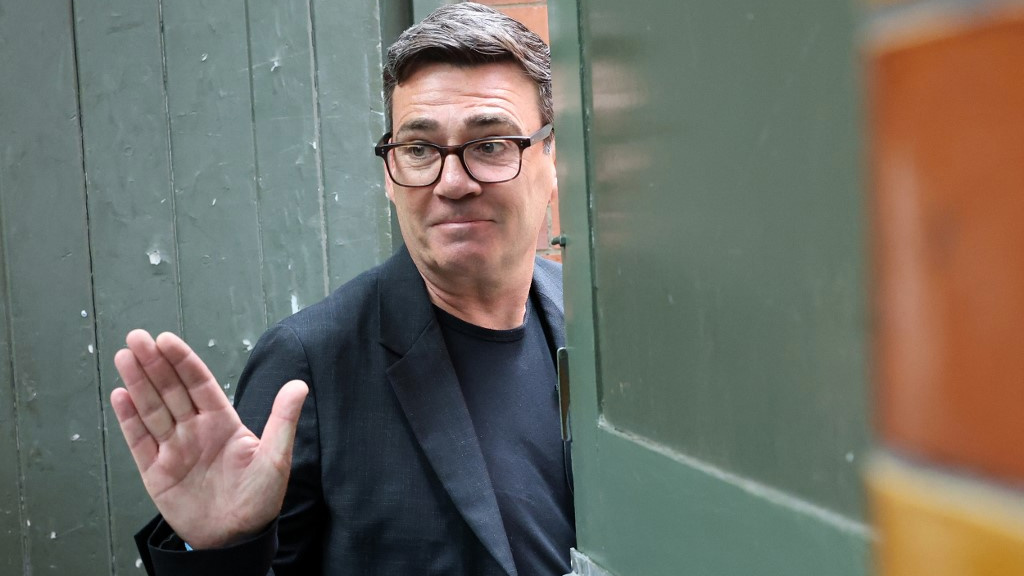
Following a devastating collapse in support for Keir Starmer’s Labour Party triggered by last month’s local elections, Andy Burnham is poised to enter Downing Street without a contested leadership race, after widespread rallying by Labour parliamentarians who see him as the only figure capable of reversing the party’s electoral hemorrhaging.
Starmer’s strategic approach, crafted over his tenure by former chief of staff Morgan McSweeney, centered on courting right-leaning voters who might otherwise back the Conservatives or Reform UK. The strategy operated under the flawed assumption that traditional left-wing and British Muslim voters had no alternative political home and would remain loyal to Labour regardless of the party’s direction. That calculation backfired spectacularly, sparking a mass exodus of core Labour supporters and fueling the explosive growth of the Green Party over the past 12 months.
The long-held orthodoxy that Reform posed the greatest threat to Labour was shattered in last month’s local votes, which ultimately led to Starmer’s resignation: data confirmed Labour lost far more votes to the Greens than to Reform. The shift has been especially dramatic among British Muslim voters, who once formed a reliably loyal Labour bloc. In 2019, more than 80% of Muslim voters backed Labour, but new polling from heavily Muslim-populated constituencies puts that number at just 33% today. Many have shifted their support to the Greens or independent candidates, a trend that directly impacted the 2024 general election results: four Labour MPs, including former cabinet-hopeful Jonathan Ashworth of Leicester South, lost their seats to independent challengers, while senior figures including current Home Secretary Shabana Mahmood and former Health Secretary Wes Streeting only held their seats by razor-thin margins.
Contrary to the popular narrative that British Muslim voters hold unique, sectarian policy priorities, data shows their concerns align closely with other traditional left-wing Labour voters who have abandoned the party. Cost of living topped the list of issues for Muslim voters in the 2025 local elections, followed by widespread opposition to Britain’s foreign policy on Israel and Gaza. This alignment is not an isolated trend: a recent study found that more than half of former Labour voters who now plan to back other centre-left parties cite Israel’s military campaign in Gaza as a core factor in their decision to leave the party.
There are clear signs Burnham is already aware of the urgent need to repair Labour’s fractured relationship with Muslim and left-wing voters. Ali Milani, chair of the Labour Muslim Network (LMN), has been a close ally of Burnham for years and played a key role in his successful campaign to win the Makerfield parliamentary seat earlier this month. Milani, who rose to national prominence after challenging Boris Johnson in the 2019 Uxbridge and South Ruislip by-election, warned early in 2024 that Starmer’s unwavering support for Israel’s actions in Gaza would destroy Labour’s standing with Muslim voters.
While LMN is not formally affiliated to the Labour Party, it maintains deep connections within the party and draws heavy attendance from Labour MPs at its events. A 2025 LMN poll of Muslim Labour elected officials found that 82% believed Starmer had handled the Gaza war badly, two-thirds said Muslim representatives did not receive equal treatment within the party, and 64% agreed the party operated a “hierarchy of racism” that sidelined Muslim voices.
A recent revelation that Burnham has asked James Purnell, a former Blair and Brown era minister and one-time chair of Labour Friends of Israel, to serve as his chief of staff has sparked speculation about the incoming prime minister’s policy direction, with Muslim and left-wing groups calling for a clean break from Starmer’s legacy.
Samayya Afzal, vice chair of LMN, laid out the scale of the challenge in an interview with Middle East Eye, acknowledging the decades-long relationship between Labour and British Muslim communities had been pushed past the breaking point. “The Labour Party has lost the trust of Muslim communities and voters,” Afzal said. “From the scale of Islamophobia within our own party and its prevalence in wider society, to our approach to the genocide in Gaza, we have seen a historic relationship between British Muslims and the Labour Party driven well past the point of crisis.”
Still, Afzal framed Burnham’s leadership as a rare opportunity to reset the fractured relationship. “With a real commitment to truly engage with the breadth of our Muslim communities, ending the factional and unfair treatment of Muslim representatives, and taking seriously the concerns around the genocide in Gaza, Sudan and ongoing situation in Kashmir, we may be able to begin to rebuild relationships with Muslim voters,” she added.
Other Muslim advocacy organizations echoed the call for sweeping change on both domestic and foreign policy. Mustafa al-Dabbagh, assistant secretary general of the Muslim Council of Britain, emphasized that British Muslim voters demand to be treated as equal partners, not spoken through third-party gatekeepers. “Any incoming prime minister must also reckon honestly with the deep anger felt over the genocide in Gaza and our government’s response to it,” al-Dabbagh said. “They must not only fix our broken public services, ensure a better NHS and education, and tackle this cost-of-living crisis, but bring people and communities together.”
Abubakr Nanabawa, a spokesperson for The Muslim Vote (TMV), a campaign group that backed independent challenges to pro-Starmer Labour candidates in 2024, said any meaningful trust-building requires a total rejection of Starmer’s policy approach. “If Andy Burnham wants to win back the trust of voters, he needs a clear break with the legacy of Keir Starmer,” Nanabawa said. “In the short term that means a complete arms embargo on Israel and sanctions on all trade with the West Bank. He also needs to put ordinary Britons first and that means delivering a bold economic agenda that deals with the cost-of-living crisis. The strategy is simple: stop supporting genocide and make life affordable for everyone.”
Early hints of a potential policy shift have already emerged from the UK Foreign Office. Current Foreign Secretary Yvette Cooper recently acknowledged the need for stronger action on Israel-Palestine, with Whitehall sources confirming the Foreign Office has long pushed for tougher measures against Israel, only to be blocked by Downing Street under Starmer. Privately, Foreign Office ministers have accepted that banning goods from illegal Israeli settlements is consistent with Britain’s official position on the occupied territories.
It remains unclear who Burnham will appoint to the critical foreign secretary role. Some speculate Cooper could retain her post, while others point to Wes Streeting, who ruled out a leadership challenge and is widely expected to receive a senior cabinet role. Streeting, who narrowly held his Ilford North seat in 2024 against a challenge from British Palestinian independent candidate Leanne Mohammed, has privately pushed Starmer for a harder line on Israel and publicly accused Starmer of ignoring evidence of Israeli war crimes, making a significant policy shift likely if he takes the foreign secretary post. Even a formal acknowledgment that Israel has committed war crimes – a step no UK government has taken to date – would mark a major break from Starmer’s approach.
Other potential candidates for the role include Emily Thornberry, chair of the parliamentary foreign affairs select committee and former shadow foreign secretary under Jeremy Corbyn, who has emerged as a leading internal voice calling for stronger action against illegal settlements in the West Bank. Burnham is also widely expected to consider appointing progressive, pro-ceasefire MPs to senior roles, including Abtisam Mohamed, the 2024 elected Sheffield Central MP and Britain’s first Yemeni-origin MP who sits on the Foreign Affairs Committee, as well as the eight backbench MPs who resigned their shadow ministerial posts in 2023 to vote for a Gaza ceasefire. That group includes high-profile figures such as Naz Shah, Andy Slaughter and Sarah Owen, all of whom retain strong credibility with Muslim and left-wing voters.
Despite some media speculation that Burnham will avoid major foreign policy changes, advocacy leaders argue a significant course correction is non-negotiable. Chris Doyle, director of the Council for Arab-British Understanding (Caabu), noted Burnham has long supported the organization and traveled to the occupied West Bank with Caabu and Labour Friends of Palestine in 2012. “Burnham will need to make a really significant course correction on Middle East foreign policy,” Doyle said, adding that the incoming prime minister will need to resist pressure from the U.S. Trump administration and avoid caving to demands for continued unwavering support for Israel.
Caabu and the British Palestine Project have laid out five core policy pledges they are calling on Burnham to adopt: banning all UK trade with goods and services from illegal Israeli settlements, upholding international law, guaranteeing unrestricted access for UN and humanitarian agencies, opening the occupied territories to international journalists and investigators, and working with allies to end unlawful regional occupations. The call for a full ban on settlement goods has broad backing within the parliamentary Labour Party, with recent polling showing 87% of rank-and-file Labour members support the ban, compared to just 6% who oppose it.
Rohan Talbot, director of advocacy and campaigns at Medical Aid for Palestinians, laid out clear expectations for the new prime minister: “The next prime minister must do what Starmer would not to end these horrors: stop providing arms to Israel, stop trading with illegal settlements in the West Bank, guarantee unrestricted humanitarian access, and ensure that those responsible for crimes against humanity are held fully accountable.”
Liverpool Labour MP Kim Johnson, one of the most prominent progressive voices within the party, emphasized that Gaza is not a peripheral issue but a core test of Labour’s values and credibility. “If Andy wants to win back traditional Labour voters, especially those who feel abandoned on foreign policy, he has to show the moral clarity [Starmer] has too often lacked on Gaza,” Johnson said. “He needs to be prepared to say clearly what Starmer would not: that a genocide is ongoing and that Labour’s refusal to speak honestly and act decisively about it has come at a huge political cost.”
Recapping the damage of Starmer’s approach in last month’s local elections, Johnson noted: “We lost 58 percent of the seats we were defending in England and lost almost four times as many voters to the Greens than to Reform UK. We cannot deny that Gaza is a major reason many have walked. Foreign policy isn’t a side issue. It’s about values, credibility and whose side you are on when it matters.”
For Burnham, the path to holding power and reuniting the Labour movement will depend entirely on whether he is willing to make the bold breaks from Starmer’s legacy that disaffected voters are demanding.