When the first half whistle blew at the 2026 FIFA World Cup Round of 32 tie in Houston, Brazil’s squad walked back to the changing rooms under the shadow of potential national humiliation. One of the tournament’s most decorated sides, with five World Cup titles to their name, was staring down the barrel of an early exit – their swiftest elimination from football’s biggest global competition since 1966. Japan, the Asian underdogs, had held the five-time champions at bay, taken a surprise lead, and looked entirely comfortable defending their advantage. For Brazil, the stakes felt even heavier: the side had not pulled off a comeback win in a World Cup knockout fixture for 24 years, dating back to their 2002 semi-final against Turkey, making a Japanese upset look an increasingly plausible outcome.
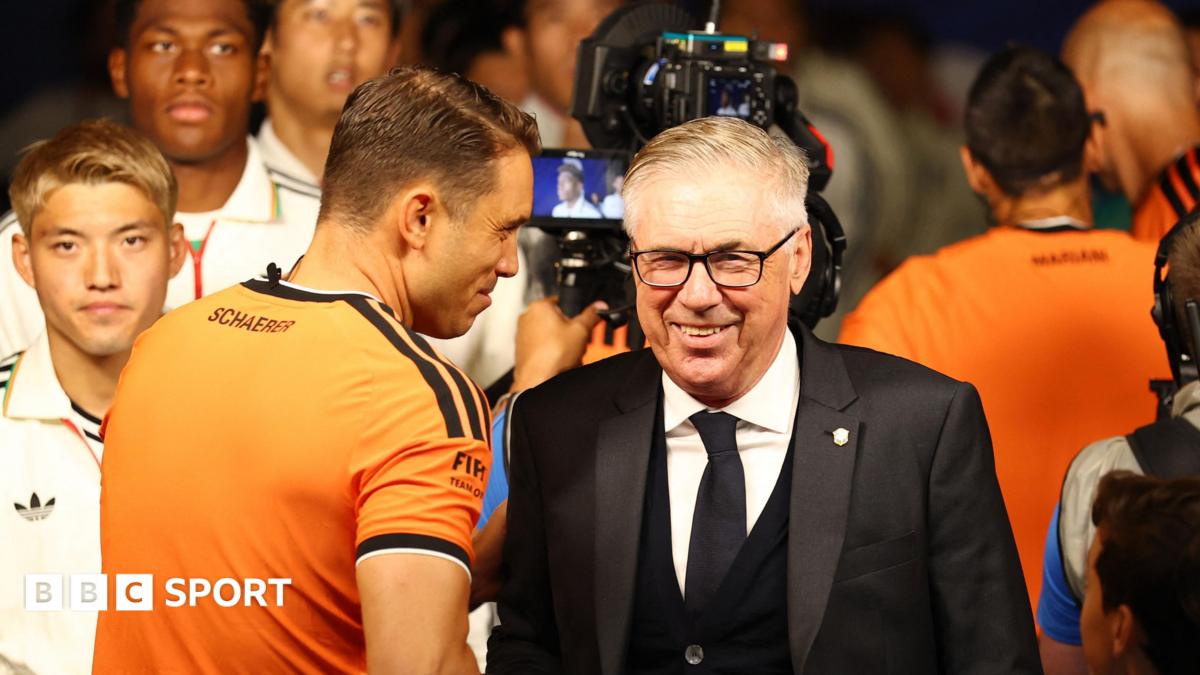
But to doubt Carlo Ancelotti, Brazil’s trailblazing first foreign head coach at a World Cup, is to ignore one of football’s most successful serial winners. With a record five UEFA Champions League trophies and domestic league titles across all five of Europe’s top competitions on his managerial resume, the 67-year-old Italian has built his legacy on keeping cool under the most intense pressure. When asked if he felt any anxiety heading into the half-time team talk, his response was unflinching: “No. Not really. I was confident in our team.”
That unflappable calm, pundits agree, was the key to turning the tide on a night that could have ended in disaster. South American football expert Tim Vickery emphasized just how high the stakes were at the break, telling BBC Radio 5 Live: “I would like to impress on you the size of the humiliation that this Brazil side were facing at half-time. Brazil, for obvious reasons, they are traditionalist when it comes to their World Cup legacy. The idea of being knocked out not even in the quarter-final, but in the last 32 against a team from Asia, was unthinkable – even if Japan, as group runners-up, were the most dangerous possible opponent Brazil could have drawn as group winners.”
With only one enforced change at the break – young prospect Endrick coming on for the injured Lucas Paqueta – Ancelotti chose stability over panic, a call that ultimately paid dividends. “Sometimes Ancelotti’s greatest ability is to do nothing,” Vickery noted. “He is an oasis of calm in all the chaos around him – and it has paid off again.”
The same starting group of players took the pitch for the second half, but they delivered a completely transformed performance. Ditching the intricate short passing that had failed to break down Japan’s disciplined, well-organized backline in the first 45 minutes, the Brazilian side shifted to a far more direct approach, flooding the penalty area with crosses. Where they had managed just 12 crosses in the first half, they put 28 into the box in the second – an average of one cross every two minutes when including six minutes of stoppage time. Japan’s defense could not cope with the constant barrage of balls into dangerous areas, and it was from this approach that Brazil found their equalizer: a well-placed header from star midfielder Casemiro that leveled the scoreline.
Pundits were quick to praise Ancelotti’s half-time adjustment. “Changes at half-time by Carlo Ancelotti made the difference,” former England full-back Stephen Warnock told BBC Radio 5 Live. “Japan couldn’t deal with their balls into the box.” Former Celtic striker Chris Sutton added: “It is about finding a way. All the experience Brazil have, and enough in the tank to knock an excellent Japanese team out of the World Cup.”
For Ancelotti, the tactical shift was never about abandoning Brazil’s iconic attacking flair – just about doing what it takes to get the win. “The only acceptable outcome is victory. Is a brand of football enough? We can never be content with what we are doing,” he explained after the match. “Was it a step forward? This was the more complete game that we played. We had more trouble in the first half because Japan were coming in strongly. In the second half we overcame it. I believe this is an evolution for sure. We struggled to find space at first but we are able to solve this problem very well.”
In the end, it came down to a moment of late drama that will be remembered for years. A stray mistake from Japan in the 95th minute was pounced on by Bruno Guimaraes, who played a calm through ball to Gabriel Martinelli – and the Arsenal winger made no mistake, slotting home a last-gasp winner to keep Brazil’s dream of a sixth World Cup title alive. Ancelotti reflected after the match: “We said before the World Cup, there is this aspect that football has its moments. There is no ‘not making mistakes’ because nobody is perfect, but you have to overcome them and push forward. That’s what the team did.”
Now, Brazil advances to the Round of 16, where they will face the winner of the previous knockout tie between Ivory Coast and Norway. While the dramatic late win has injected much-needed momentum into the side, the overriding emotion at full time was unmistakeable relief. Former Brazil midfielder Lucas Leiva summed it up as “saving the nation,” while Vickery described the win as “climbing Everest the hard way.” For Ancelotti, though, there was never any panic. This is just how he wins: keeping his cool when all around him are losing theirs, and finding a way to get over the line. As Sutton put it: “They are on to something under Ancelotti. Crafty Carlo does it again. That is what he does.”