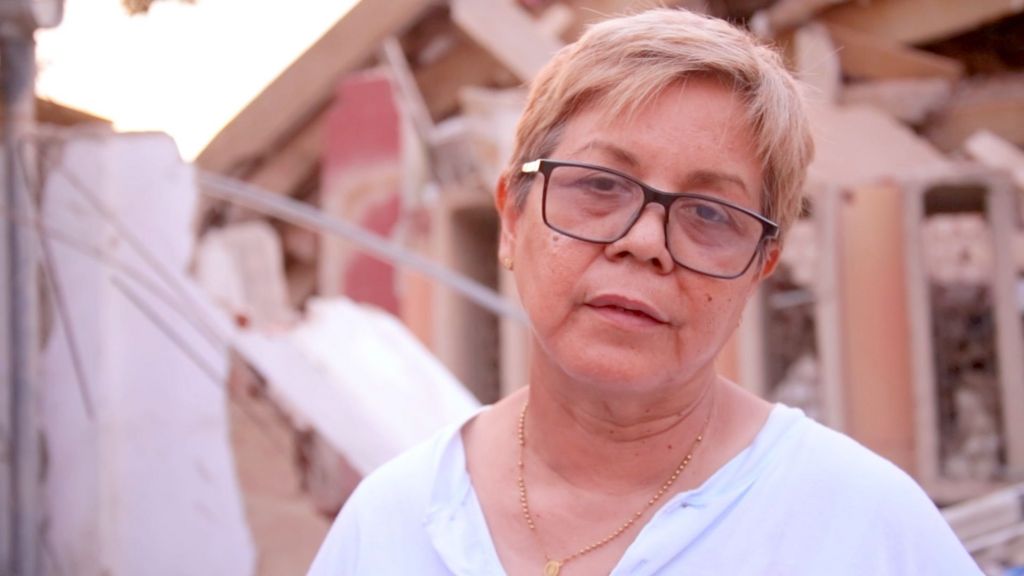
Four days after a series of powerful earthquakes rocked Venezuela’s coastal La Guaira region, the once-bustling beachside residential districts have been reduced to sprawling, unstable mountains of crumbled concrete, twisted iron and choking dust. Dozens of grieving relatives and amateur volunteers pick through this wreckage by hand, clinging to the fragile hope that they might recover their missing loved ones—either alive, or so they can lay them to rest.
The rhythm of this grim work was suddenly broken this week when a rescuer claimed to pick up the faint sound of a voice coming from deep beneath the rubble of the collapsed Mariola and Maribel Residences. The news of a potential survivor rippled through the gathered crowd in seconds. Shouts of “silence, please” rippled through the hillside of debris as emergency crews scrambled down, ordering heavy machinery, cranes and power drills to shut down immediately. The whole crowd fell dead silent, holding their breath as rescuers strained to hear any sign of life.
Just three days prior, 33 trapped people had been pulled alive from the wreckage, but that glimmer of early hope has faded with every passing hour. After 10 minutes of agonizing waiting, no sound emerged from the concrete. The alert was declared a false alarm, and the crowd’s brief euphoria crumbled into despair.
For many families, the pain of their loss has been compounded by deep anger at what they describe as a lack of meaningful support from Venezuelan authorities. Ronnie Navarro, a relative who traveled more than 350 kilometers from Puerto La Cruz to join the search for his uncle trapped in the rubble, says local officials have done little more than drive past the site for a cursory look before leaving. “The relatives of those who lived there are helping because the government doesn’t want to help,” Navarro told reporters, his voice breaking as he confirmed there has still been no sign of his uncle.
Zuly Marín, a 66-year-old biologist who has lived in the Mariola and Maribel Residences for more than a decade, survived the collapse purely by chance: she had gone out shopping before the quake and stopped to visit her father instead of returning home. Now, she says she has already lost her niece and brother-in-law to the disaster, and she holds authorities responsible for the delayed response. “I think that if [the authorities] had arrived sooner, many people would have been saved,” Marín said, adding that she no longer holds out hope of finding her missing family members alive.
Nearby, at the completely leveled Caribe residential complex, similar anger plays out. Belkys Valecillo says her brother, nephew and sister-in-law are all buried on the first floor of the collapsed tower. She says authorities have told her heavy machinery can only be used once active search efforts are called off—but just four days into the crisis, three separate families are still digging by hand to recover their loved ones. Crews have already pulled several bodies from the wreckage, with many more still missing.
As night fell over the disaster zone, another brief burst of hope flared up when a young volunteer reported hearing a voice under the Caribe complex rubble. Rescuers and volunteers rushed to the site, with crowds running to deliver water to workers and nurses preparing to treat a potential survivor. Once again, the alert ended in disappointment: half an hour after the search began, crews only found two motionless bodies deep in the debris, leaving families once again confronting the slow, agonizing work of waiting and grieving.