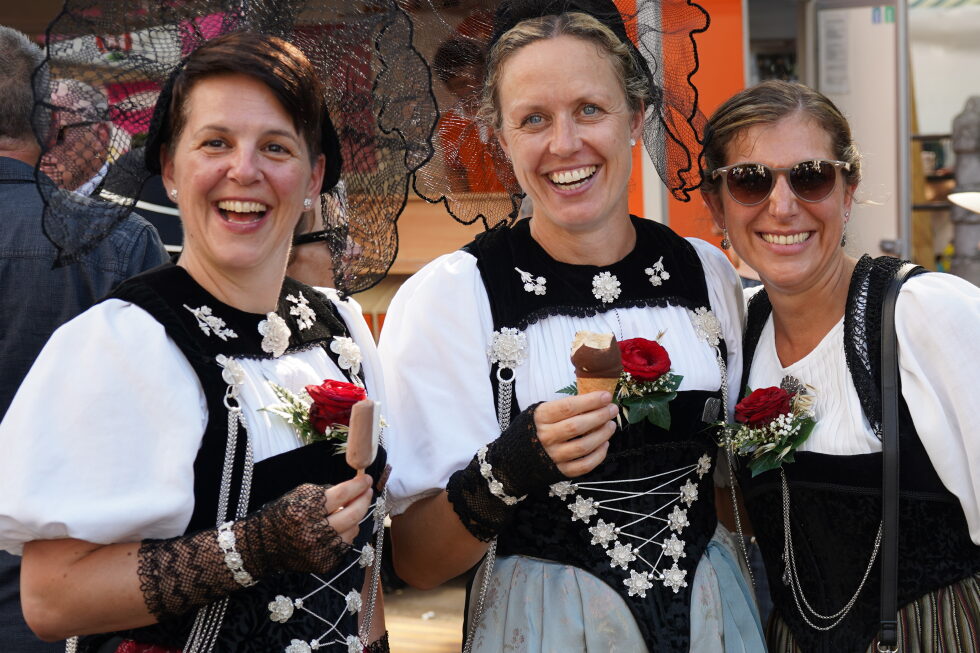
BASEL, Switzerland — When Europe’s unforgiving June heat wave pushed temperatures in this northwestern Swiss city to a sweltering 39 degrees Celsius (102 degrees Fahrenheit) this weekend, participants of the 2025 Eidgenössisches Jodlerfest turned the city’s historic fountains into unexpected, refreshing rehearsal spaces, creating the most iconic image of this year’s national yodeling gathering.
Drawing roughly 12,000 performing artists and close to 200,000 spectators from across the globe, this year’s festival marks only the second time Basel has hosted the national event, with the last appearance stretching back to 1924. What makes this gathering even more historic is its timing: it is the first national yodeling festival held since Swiss yodeling was added to UNESCO’s Representative List of the Intangible Cultural Heritage of Humanity this past December, a distinction that fills Swiss communities at home and abroad with immense national pride.
Unlike the brighter, more upbeat yodeling styles associated with Austria and the Tyrol region, traditional Swiss yodeling is defined by slower, melancholic melodies and layered emotional expression, deeply rooted in the country’s distinct regional dialects. This year’s festival brought together yodelers from far beyond Switzerland’s borders: Freddie Conquer, a member of the local host club Jodlerclub Echo Basel, moved to New Zealand as a child and joined a transnational Swiss-Kiwi yodeling club to stay connected to his cultural roots before returning to Basel.
Over three days from Friday to Sunday, the city’s cobblestone streets hummed with performance. Impromptu yodeling sessions spilled into local restaurants, where diners quickly shifted from initial surprise to enthusiastic participation. One folk band cooled their toes in fountain water while running through their sets, as onlookers clapped along and splashed their hands in the flowing water to beat the heat. In central Basel’s Petersplatz, on-call seamstresses stood by throughout the event to quickly repair tears or damage to participants’ traditional Alpine folk costumes, ensuring performers were ready for their moments on stage.
The festival featured competitive events across three distinct traditional Alpine disciplines: yodeling, alphorn playing, and flag-throwing. The alphorn, a centuries-old instrument originally used by Alpine herdsmen to communicate across mountain valleys, stretches up to 3 meters (10 feet) in length and relies entirely on natural harmonics — no valves or keys to adjust pitch. “Everything is down to the mouthpiece, hearing the note in your head, and then using your lips to shape the pitch. The higher the note, the harder you have to blow,” explained Pierre-André Karlen, an alphorn player who rehearsed on a local school lawn ahead of the competition.
By Sunday morning, competitors gathered outside Basel’s town hall to wait for final competition results. Members of Jodlerklub Balfrin from the Valais canton town of Visp nervously scanned the result sheets before bursting into loud celebration after earning a rare perfect score, one of several awarded across the competition’s categories. As the closing parade wound through Basel’s medieval old town, with colorful flags carried through the streets, members of Jodlerklub Muttenz rode past cheering crowds on a vintage tractor, followed by a procession of alphorn players. Even as thick heat made carrying the 3-meter instruments and wearing heavy traditional costumes a physical burden, every performer wore a wide, unwavering smile, celebrating a historic weekend for one of Switzerland’s most beloved cultural traditions.