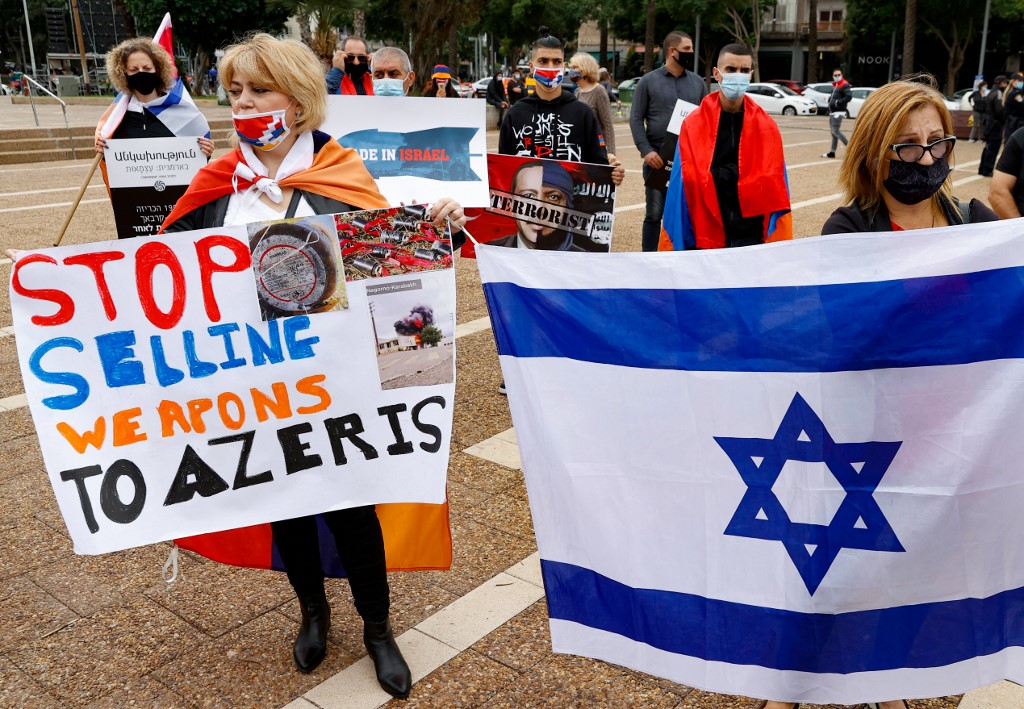
In a move that has upended long-standing diplomatic ties between Israel and one of its closest regional partners, the Israeli government’s Sunday cabinet vote to formally recognize the 1915 Armenian genocide has drawn sharp public pushback from Azerbaijan, a strategic energy and military ally that has stood alongside Israel for decades.
Azerbaijan’s Ministry of Foreign Affairs released an official statement quickly after the Israeli announcement, framing the recognition as a matter of profound diplomatic concern. The Baku administration rejected Israel’s position as a deliberate misrepresentation of documented history, arguing that a nuanced historical debate had been reduced to a cynical political calculation. The statement emphasized that the Israeli ruling lacked any credible legal or academic foundation, branding the decision fundamentally unacceptable to Azerbaijan.
“Steps of this nature do nothing to foster reconciliation or build cross-community understanding,” the foreign ministry statement read. “On the contrary, they widen existing divides and erode ongoing efforts to cement lasting peace and stability across the South Caucasus region.” The ministry closed its statement by calling on Israeli officials to reverse course and reconsider the controversial decision.
The diplomatic fallout comes against a backdrop of deep, mutually beneficial ties between the two states. For years, Azerbaijan has ranked among Israel’s top crude oil suppliers, while Israel has become Baku’s primary source of advanced military hardware, a partnership that strengthened during and after the 2020 Second Nagorno-Karabakh War. Just last year, Azerbaijan leveraged its good relations with both Turkey and Israel to host reconciliation talks between the two nations, aimed at de-escalating tensions rooted in disputes over Gaza and Syria.
Turkey, Azerbaijan’s closest strategic partner bound by a mutual defense pact under the 2021 Shusha Declaration, also quickly condemned the Israeli move. The agreement commits both nations to mutual military support if either faces foreign aggression, and both Ankara and Jerusalem backed Baku during the 2020 conflict that saw Azerbaijan retake large swathes of Nagorno-Karabakh from Armenian occupation. In its own statement Sunday, Turkey argued that Israel’s recognition was a calculated distraction from growing international legal pressure on Israeli leadership: just weeks prior, the International Criminal Court issued arrest warrants for Israeli Prime Minister Benjamin Netanyahu and senior Israeli officials over alleged war crimes in Gaza, while Israel also faces ongoing genocide proceedings at the International Court of Justice.
Notably, the Israeli cabinet’s recognition is not yet the official position of the Israeli state. The measure still requires passage through the Knesset, Israel’s unicameral parliament, to take full legal effect. Dunya Basol, an academic researcher specializing in Israeli political affairs, told Middle East Eye that Azerbaijan is likely to ramp up diplomatic pressure on Jerusalem to block the resolution from advancing through the legislative process. Basol added that it remains surprising that Israeli lawmakers appear willing to dismiss Baku’s well-documented sensitivity to the Armenian genocide issue, and underestimate the depth and strategic importance of the Azerbaijan-Turkey alliance.