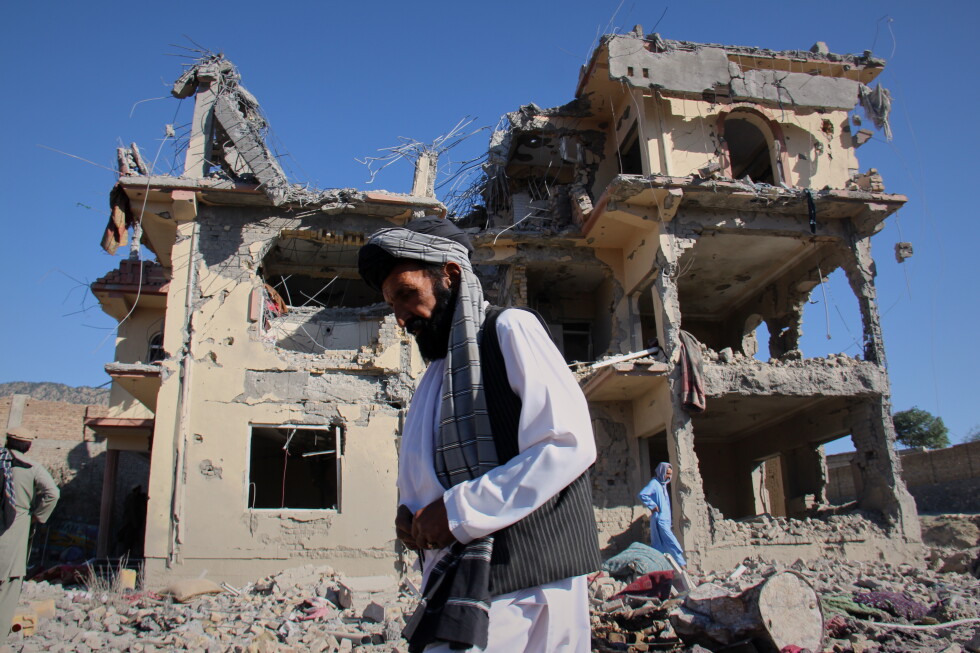
Escalating tensions between neighboring Pakistan and Afghanistan have reached a new boiling point after a round of overnight cross-border ground operations and airstrikes launched by Pakistan left at least 36 Afghan civilians dead and more than 160 injured, Afghan government officials confirmed Monday. The deadly exchange has reignited a months-long cycle of tit-for-tat violence that has defied international mediation efforts, raising alarm over broader instability in South Asia.
Pakistan’s account of Sunday’s operation frames it as a targeted counterterrorism action. Information Minister Attaullah Tarar told reporters that Pakistani security forces first carried out a ground sweep along the shared border before launching strikes on purported militant hideouts and safe havens inside Afghan territory, killing 29 suspected fighters. Tarar emphasized the operation was launched in direct response to a recent surge of militant attacks across Pakistan, culminating in an assault on the regional headquarters of Pakistan’s paramilitary Rangers force in Karachi that left three soldiers dead earlier this month. Three attackers were killed in the aftermath of the Karachi strike, and security forces captured a wounded assailant identified as an Afghan national. Jamaat-ul-Ahrar, a banned breakaway faction of the Tehrik-e-Taliban Pakistan (TTP), claimed responsibility for the Karachi attack.
Tarar shared three videos on the social platform X that he says confirm strikes hit sprawling militant camps operated by Jamaat-ul-Ahrar and Fitna al-Khwarij across Afghanistan’s Paktia, Paktika, and Kunar provinces. He added that the strikes destroyed stockpiles of weapons and ammunition, and that Pakistan’s aggressive counterterrorism campaign will continue at full speed to eliminate what Islamabad calls the menace of foreign-backed terrorism operating from Afghan soil.
Islamabad’s claim of foreign sponsorship centers on long-standing allegations that India funds and supports anti-Pakistan militant groups operating from Afghanistan, a charge New Delhi has repeatedly and forcefully rejected. Following Tarar’s statements, Indian Foreign Ministry spokesperson Randhir Jaiswal dismissed the claims as baseless, arguing that Pakistan should instead focus on addressing terror infrastructure within its own borders.
Pakistan uses the term “Khawarij” to refer to the Indian-backed TTP and other affiliated militant groups. The TTP is a separate organization from the Afghan Taliban, which returned to power in Kabul following the 2021 withdrawal of U.S. and NATO forces, but the two groups maintain close ideological and operational ties.
For Afghan authorities, the cross-border strikes are an unprovoked act of aggression that constitutes blatant brutality against innocent civilians. Hamdullah Fitrat, deputy spokesperson for the Taliban-led Afghan government, laid out details of the civilian casualties that challenge Pakistan’s narrative of targeted counterterrorism action. Fitrat said Pakistani forces first struck a private residential home in Paktia’s Chamkani district, killing an elderly man and a young child and wounding multiple other family members. When local residents gathered at the site to pull survivors from the rubble, Pakistani forces carried out a second strike on the area, killing 28 additional villagers and wounding 158 more.
Additional strikes hit other civilian targets across the region, Fitrat said. A separate residential home in Paktika’s Giyan district was hit, killing six people, most of whom were women and children. In Kunar province, a strike on a civilian home caused no human casualties but killed roughly 30 head of livestock, leaving local families without their primary source of livelihood.
Hayatullah Mohajer Farahi, deputy minister for publications at Afghanistan’s Ministry of Information and Culture, condemned the operation as a cowardly act of aggression by Pakistan’s military government. He made clear that Afghanistan would not let the attack go unanswered, saying retaliation would come at a time of Kabul’s choosing. “This will definitely be retaliated against in due time,” Farahi said. “The decisions of the [Afghan] regime are not made based on emotions, but rather serious measures are taken at the right time.”
Sunday’s operation is just the latest escalation in a months-long cycle of cross-border violence that has killed hundreds of people on both sides since February, when Afghanistan launched retaliatory strikes after an earlier Pakistani incursion into Afghan territory. Sunday’s action came less than three weeks after Pakistan carried out another round of airstrikes on purported militant hideouts inside Afghanistan, ending a roughly month-long period of uneasy calm that followed Islamabad’s declaration of an “open war” against militants operating from Afghan soil.
Multiple rounds of diplomatic talks have failed to produce a permanent ceasefire. In April, China hosted senior delegations from both Pakistan and Afghanistan for mediated talks, after which Beijing announced the two sides had agreed to avoid further escalation and work toward a negotiated solution to border and counterterrorism disputes. That agreement has failed to stop the violence, however.
As of Monday, Pakistani officials reported that an uneasy calm had returned to the border region, though security forces remain on high alert for potential retaliatory attacks from Afghanistan or militant groups.