After more than two weeks of cross-border group stage play at the expanded 48-team World Cup, the final batch of six matches on Saturday will lock in the full 32-team field for the knockout round, which kicks off just one day later. With most qualification spots already secured, the remaining fixtures bring high drama: teams are jostling for favorable group positions, fighting for their tournament lives, and sitting on the bubble of elimination, waiting for other sides’ results to shape their fate.
The format shift to 48 teams has added layers of intrigue, and occasional confusion, to the qualification race. Under the new structure, the top two finishers from each of the 12 groups advance, along with eight best third-place teams, creating a wider range of possible outcomes and putting tiebreakers at the center of many teams’ calculations.
The headline matchup of Saturday’s slate is the Group K showdown between Cristiano Ronaldo’s Portugal and Colombia, held in Miami Gardens, Florida, where kickoff conditions will see temperatures near 30 degrees Celsius coupled with high humidity. Colombia has already locked in its knockout spot, and a win or draw will give it the Group K title. Portugal, meanwhile, needs three points to top the group, but can still move on with a draw — and in some scenarios, even a loss. For Portugal manager Roberto Martinez, securing the group’s top position is a secondary goal: the only priority is advancing.
“My experience, probably in my first World Cup, I would have said yes [that winning the group matters]. You sit down and you are so inexperienced, you want to plan everything … and then you realize that doesn’t happen in competitions,” Martinez told reporters. In the end, he added, “you have to be able to beat everybody and anybody.”
Also in Group K, underdog Congo will look to claim its first ever World Cup win and secure a knockout spot when it faces Uzbekistan in Atlanta. Congo shocked tournament observers by holding Portugal to a 1-1 draw in its opening match, earning the country its first ever World Cup point. It has only qualified once before, in 1974 when it competed as Zaire and lost all three of its matches, including a 9-0 defeat to Yugoslavia. “We are very, very happy to have got this first point and first goal for Congo, but we have a final to play tomorrow,” head coach Sébastien Desabre said. “I hope that I’ll get the Congolese people to dream tomorrow a little bit.” A win against winless, point-less Uzbekistan would punch Congo’s ticket to the knockout round, joining the growing contingent of African nations that have advanced in this tournament.
In Group L, Ghana and Croatia will face off in Philadelphia with everything on the line. Sitting level on four points alongside England, Ghana only needs a draw to secure its first knockout round appearance since it reached the quarterfinals in the 2010 South Africa World Cup. Croatia enters the match with three points, needing a win to guarantee its spot in the Round of 32. “Everyone’s ready, everyone was real happy with the result against England,” Ghana midfielder Antoine Semenyo said. “It’s going to be a tough game tomorrow, but everyone is excited and ready.” England, tied with Ghana at four points, closes its group stage against Panama in East Rutherford, New Jersey.
One of the most unusual storylines heading into Saturday’s play comes from Group J, where Austria faces Algeria in Kansas City, Missouri. With group leader Argentina already guaranteed the top spot, the bracket structure creates an odd scenario: finishing third could give Austria a far easier knockout matchup than finishing second. The Group J runner-up will face Group H winner, likely reigning European champion Spain, while a third-place finish would set up a game against Group B winner Switzerland, widely viewed as a more manageable opponent. The awkward dynamic echoes the infamous 1982 “Disgrace of Gijon,” where a fixed result between West Germany and Austria eliminated Algeria and led FIFA to mandate simultaneous kickoffs on the final group stage day to avoid match-fixing risks. Austria’s manager Ralf Rangnick rejected any suggestion his side would play for a loss. “No, definitely not. Once we start we will know, but it will not influence our match. If we have a draw tomorrow, we can go on, but we cannot go into a match and just say, ‘We’ll play for a draw.’” Midfielder Konrad Laimer echoed that sentiment: “We go out, we want to win the game. It doesn’t matter who we face.”
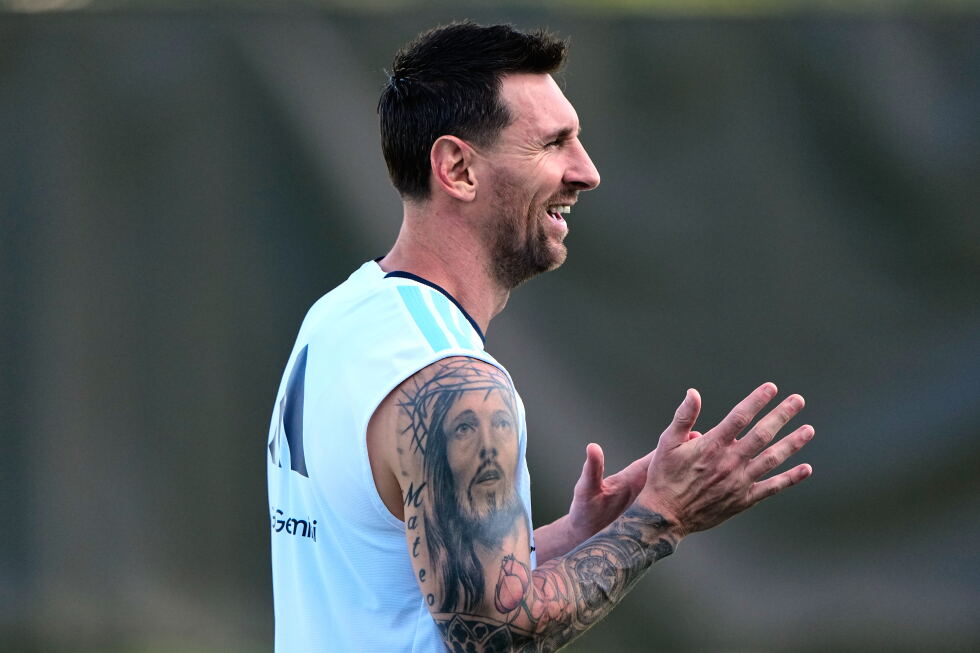
Closing out the day’s slate in Arlington, Texas, defending champion Argentina will face Jordan already confirmed as Group J winners, leaving head coach Lionel Scaloni with a tough call: play 39-year-old star Lionel Messi to let him add to his World Cup scoring record, or rest his star forward to avoid injury ahead of the knockout round. The match is widely expected to see Messi start on the bench, though the player himself has pushed for playing time in past similar scenarios.
Beyond the storylines of the final matchday, tournament data reveals a surprising trend: scoring first does not guarantee a positive result. Seven different teams have fought back from first-half deficits to secure group stage wins so far, including South Korea’s late 2-1 comeback over the Czech Republic, Algeria’s 2-1 victory against Jordan, and most recently Turkey’s last-second 3-2 win over the United States. Egypt, Germany, Morocco and Ecuador have also rallied from deficits to claim three points.