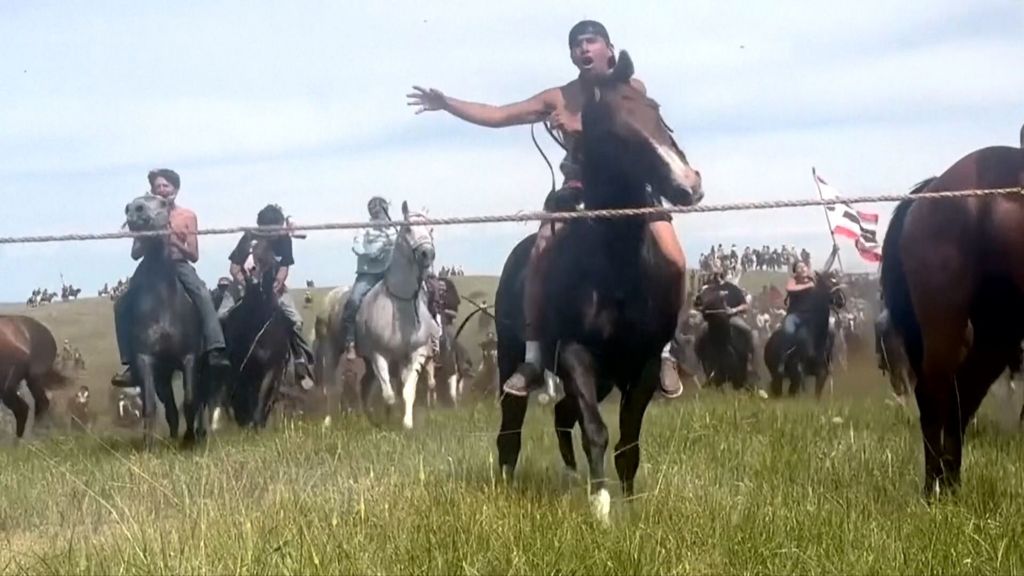
Across the rolling plains of southern Montana, where the Little Bighorn River cuts through grasslands steeped in Indigenous history, hundreds of Native American people from dozens of tribes have gathered this week to mark a landmark moment: the 150th anniversary of their ancestors’ decisive 1876 victory over U.S. military forces led by Lt. Col. George Armstrong Custer.
The Battle of the Little Bighorn, fought on June 25 and 26, 1876, emerged from deep-seated tensions over U.S. westward expansion and the displacement of Plains Indigenous nations from their ancestral territories. At the time, the U.S. government was aggressively pushing to seize control of the Black Hills, a region sacred to the Lakota, Cheyenne, and Arapaho peoples, after gold was discovered there. When thousands of Indigenous hunters and families defied government orders to move onto overcrowded, resource-poor reservations, the U.S. military launched a campaign to force them into compliance.
In a remarkable show of intertribal unity, roughly 2,000 Indigenous warriors joined forces to defend their encampment, where more than 10,000 people had gathered for summer hunting and cultural ceremonies. The combined force overwhelmed Custer and his battalion of more than 200 soldiers, killing the commanding officer and every member of his detachment in what remains one of the most lopsided military defeats in U.S. history.
For 150 years, the battle has carried drastically different meanings for different groups. For the United States, it was long framed as a shocking tragedy that galvanized public support for further military action against Plains Indigenous nations, ultimately leading to the end of their independence and confinement to reservations. But for Native Americans, the victory has always stood as a powerful symbol of resistance, sovereignty, and the courage of ancestors who fought to protect their homelands and way of life.
This year’s anniversary events included traditional ceremonies, powwows, storytelling sessions led by tribal elders, and wreath-laying at sites connected to the battle. Many attendees traveled hundreds of miles to take part, passing down stories of the battle to younger generations and reaffirming their connection to the land where the historic clash took place. Speakers at the gathering also highlighted the ongoing fight for Indigenous sovereignty, land back movements, and cultural preservation that continues to shape Native communities today, drawing a direct line from the 1876 resistance to modern advocacy efforts.