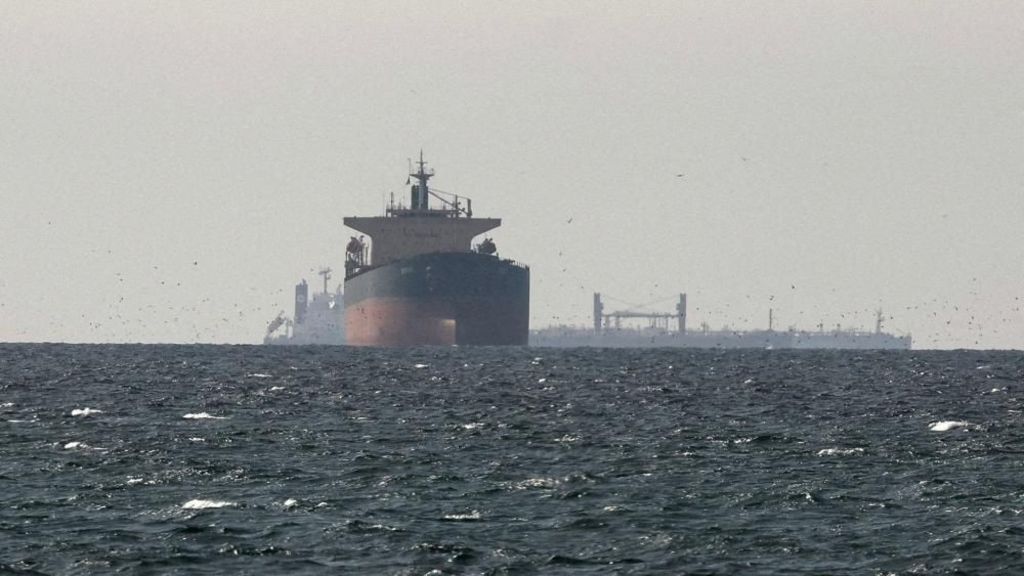
Tensions have reignited in the Persian Gulf after a one-way drone attack on a commercial cargo vessel transiting the Strait of Hormuz, prompting the United States military to launch retaliatory strikes against Iranian assets. The June assault, which Washington blames on Iranian forces, violated a recently brokered ceasefire between the two nations, marking a sharp escalation in a region that remains one of the world’s most critical chokepoints for global energy trade.
The drone strike on Thursday left no reported casualties among the cargo ship’s crew, but it triggered emergency plans to evacuate more than 11,000 sailors who were stranded in the area by heightened regional hostilities. Within 24 hours, US Central Command (Centcom) confirmed it had carried out targeted strikes against key Iranian infrastructure: missile and drone storage facilities, as well as coastal radar positions along the Iranian coastline. As of Friday evening, Iranian officials had not issued any public response to the US strikes.
Speaking to reporters at the White House shortly before the strikes were officially announced, President Donald Trump deflected questions about a potential US military response and the status of the existing ceasefire. When pressed for details, Trump merely told reporters “You’ll find out,” adding that he disapproved of the unprovoked attack: “I don’t like the fact that they took a shot yesterday. They shouldn’t be doing that.” Pressed on why Iran would choose to break the truce, Trump only offered that “they’re a little bit different.”
In its official statement framing the retaliatory action, Centcom characterized the strikes as a measured but powerful answer to the unprovoked aggression against commercial shipping. The command emphasized that the attack by Iranian forces constituted a clear violation of the terms of the ceasefire agreement reached between Washington and Tehran in mid-June. Beyond the ceasefire breach, Centcom noted that Iran’s repeated hostile actions directly undermine the principle of freedom of navigation in the strait, a vital artery that carries a huge share of global commerce, including energy exports and key industrial commodities.
“Furthermore, Iran’s dangerous behavior undermined freedom of navigation as commerce increasingly flows through the vital international trade corridor,” the Centcom statement read. The command added that the US military would maintain its posture in the region to protect commercial shipping: “The United States military will continue to provide safe passage coordination and support to commercial vessels transiting the strait.”
The current escalation follows months of open hostilities that began in late February, when the United States and Israel launched coordinated strikes against Iranian targets across the Middle East. In response to those attacks, Tehran effectively closed the Strait of Hormuz, the 21-mile wide waterway that connects the Persian Gulf to the Arabian Sea and carries roughly a fifth of the world’s daily oil consumption and a large share of global liquefied natural gas exports. The closure sent global oil prices spiking sharply and disrupted supplies of other critical commodities, including agricultural fertilizer, exacerbating supply chain pressures across global markets.
To de-escalate the crisis, the United States and Iran signed a 14-point memorandum of understanding on June 17 that agreed to end all open hostilities between the two nations. A key provision of that truce required Iran to exercise its best efforts to guarantee the safe passage of all commercial vessels through the strait, with no tolls or restrictions on transit, for a 60-day period. Thursday’s drone attack marks the first major breach of that agreement, throwing the future of the ceasefire into doubt and raising fears of a renewed full-scale conflict in the strategic region.