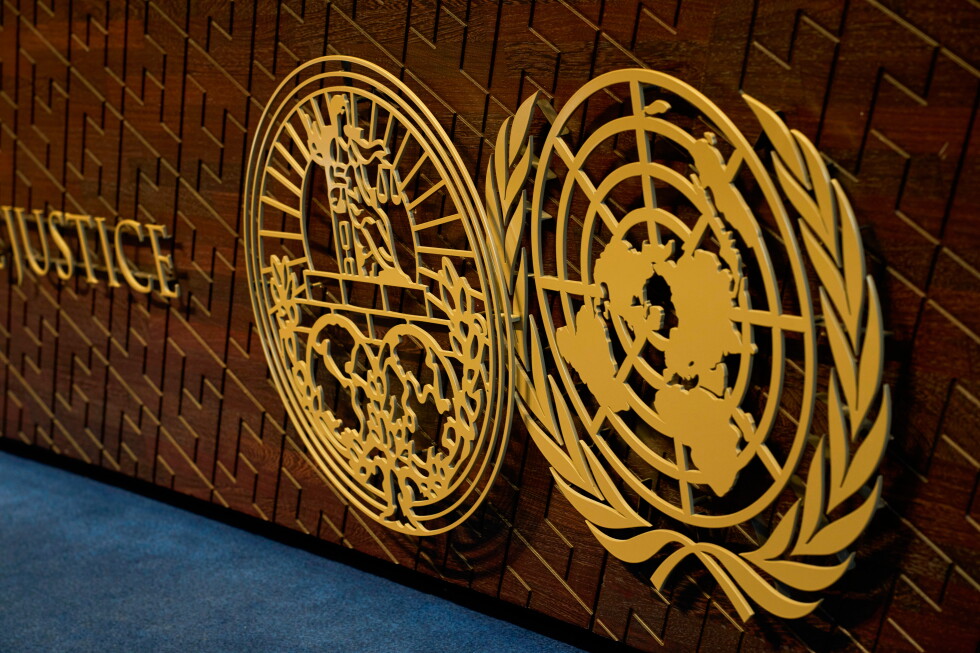
In a landmark legal move that escalates long-simmering tensions between two central African neighbors, the Democratic Republic of Congo announced Friday it has initiated formal proceedings against Rwanda at the International Court of Justice (ICJ), the United Nations’ highest tribunal for inter-state disputes. The filing seeks to hold Rwanda legally accountable for more than 30 years of widespread violence that has devastated the mineral-rich eastern region of Congo, leaving millions of civilians displaced and suffering systemic human rights abuses.
Congo’s legal application accuses Rwanda of violating multiple foundational international conventions, including pacts banning genocide, racial discrimination, torture, and systemic discrimination against women. The legal documents outline that since the early 1990s, civilian communities in eastern Congo have endured mass targeted killings, extrajudicial executions, widespread torture, systematic sexual violence, mass forced displacement, and ongoing ethnic and gender-based persecution perpetrated by Rwandan-backed armed factions.
The conflict that has torn eastern Congo apart for generations has roots stretching back to the 1994 Rwandan genocide, when Hutu militias responsible for the mass killings fled across the border into eastern Congo to escape prosecution. In the decades that followed, Rwanda has repeatedly deployed cross-border military incursions and armed proxy groups, justifying its actions as necessary to neutralize the remaining Hutu extremist fighters and safeguard Rwanda’s national security. However, both Congolese officials and the U.S. government have long alleged that Rwanda uses the security threat as a cover to gain control over eastern Congo’s vast reserves of valuable strategic minerals, which are critical to global tech and manufacturing supply chains.
Today, the region remains mired in instability as government forces and allied militias battle more than 100 active armed factions. The most powerful and disruptive of these groups is the M23 movement, which has been repeatedly linked to Rwandan support. M23 fighters launched sweeping offensive operations in early 2023, rapidly seizing key strategic population centers including the major eastern city of Goma and expanding their territorial control across large swathes of North Kivu province.
The United Nations has classified the ongoing crisis in eastern Congo as “one of the most protracted, complex, serious humanitarian crises on Earth.” More than 6 million people have been displaced by the decades of violence, according to U.N. data, with millions more facing acute food insecurity and limited access to basic humanitarian aid.
In its filing, Congo named a litany of Rwandan-backed rebel groups that it holds responsible for the decades of bloodshed, with the M23 topping the list of accused factions. The Congolese legal team is asking the ICJ to issue a formal ruling that Rwanda bears international legal responsibility for the violations, order an immediate halt to all Rwandan-backed hostile activities within Congolese territory, require formal assurances that such actions will not be repeated in the future, and order substantial reparations to be paid to both the Congolese government and the civilian victims of the violence.
Responding to the filing, the ICJ confirmed in a public statement that it had received Congolese application to institute proceedings, but has not yet made any determination on whether the court has jurisdiction to hear the full case. The Rwandan government has not issued any immediate public response to the new legal action. While Rwanda has consistently denied any official support to armed groups operating inside Congo, U.N. expert panels have published multiple findings documenting concrete evidence that Rwandan military personnel have fought alongside M23 fighters and directly directed the group’s military operations.
This new legal filing marks the third time Congo has attempted to bring Rwanda before the ICJ over the cross-border conflict. The first case was voluntarily withdrawn by Congolese authorities in 2001, and the court dismissed the second attempt in 2006 for lack of jurisdiction, finding that Rwanda had not ratified all of the international treaties cited by Congo, or had entered formal reservations that barred the court from hearing the dispute.
The landmark legal action comes amid stalled diplomatic efforts to resolve the conflict: separate U.S.- and Qatar-mediated peace negotiations between Congolese and Rwandan officials have so far failed to produce a durable ceasefire or lasting political settlement. Just one day before the ICJ filing was announced, the U.S. government imposed new economic sanctions on a Rwanda-based gold refinery, Gasabo Gold Refinery, which U.S. officials say forms part of a transnational criminal network that operates in coordination with M23 to illegally extract and smuggle gold out of eastern Congo. U.S. officials emphasized the sanctions are intended to support ongoing diplomatic peace efforts by cutting off a key source of funding for the armed group.
The new legal challenge adds another layer of complexity to an already intractable regional crisis, setting the stage for a high-stakes international legal showdown that could shape the future of security and stability in central Africa.