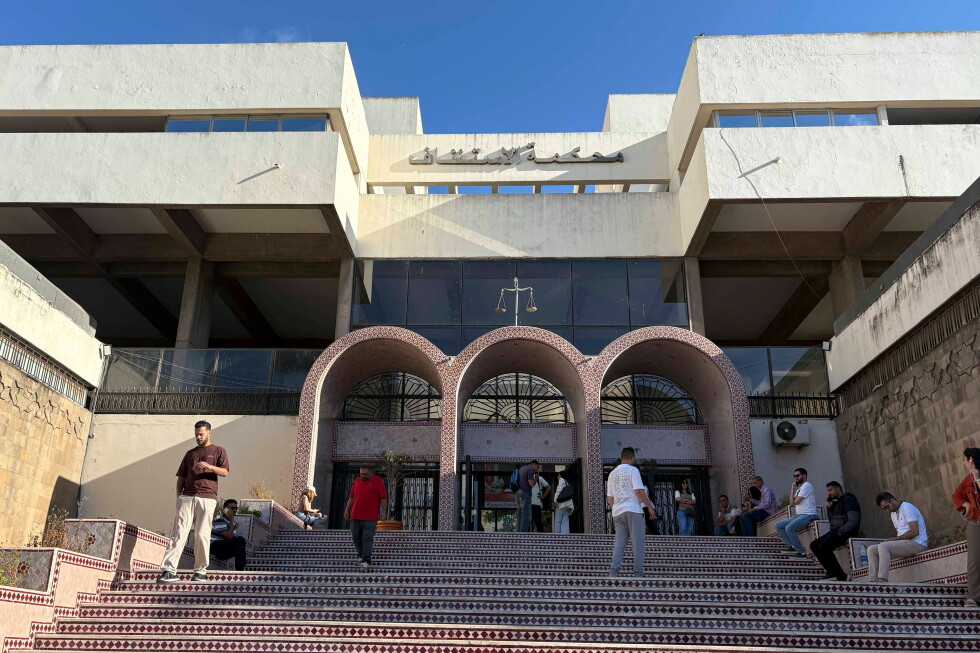
A high-profile international drug trafficking and corruption scandal that has shaken Morocco’s political establishment has concluded with a Moroccan court issuing prison sentences to 29 people, counting among them senior politicians, well-known sports leaders, and prominent business figures.
The ruling, delivered late Thursday following a trial that stretched more than two years, also mandated the defendants pay hundreds of millions of dollars in combined fines. The sprawling case traces its origins to allegations from a jailed incarcerated drug kingpin commonly known as “Sahara’s Pablo Escobar” — a nickname tying him to the infamous Colombian drug trafficker. Hadj Ahmed Ben Brahim, a Malian national already behind bars, claimed that a network of his former business associates, including senior Moroccan political figures, participated in his international trafficking operations before illegally seizing his assets while he was in prison. All accused individuals have consistently denied all charges brought against them.
The 30-defendant trial, which drew testimony from 18 witnesses and included two civil parties, sparked widespread public outcry after the initial allegations came to light, and reenergized long-simmering national debates about systemic corruption within Moroccan political circles. The fallout even prompted a rare public intervention from King Mohammed VI, Morocco’s head of state who is officially positioned above day-to-day partisan politics and rarely addresses public controversies. The king called for the adoption of a legally binding parliamentary ethics code designed to “moralize” public life in the nation’s legislative body.
Among the highest-profile convictions is that of Abdennebi Bioui, a powerful construction tycoon and former lawmaker with the Authenticity and Modernity Party (PAM) — Morocco’s co-governing political party — who also previously led a regional governing council. Bioui was handed a 12-year prison sentence and ordered to pay an individual fine of nearly $16,000. Two other former PAM lawmakers, both former presidents of top Moroccan soccer clubs, also received heavy sentences: Said Naciri, former president of powerhouse club Wydad AC, and Belkacem Mir, another ex-club leader, each received 10-year prison terms.
The remaining 26 convicted defendants received sentences ranging up to nine years in prison, with individual fines capped at just over $26,600. One defendant was cleared of all charges and acquitted. Convictions covered a broad range of offenses, including international drug and gold trafficking, political corruption, document forgery, and violations of national exchange control regulations. Legal teams for the convicted have confirmed they plan to file appeals of the court’s ruling, as allowed under Moroccan law.
In addition to fines and prison time, the court ordered the seizure of convicted defendants’ assets — including those of Bioui, Naciri, and Mir — capped at a total of $1 million. The three high-profile former lawmakers were also ordered to jointly pay more than $106,000 in damages to Ben Brahim, and together hold responsibility for the hundreds of millions of dollars in financial penalties owed to Moroccan customs authorities. Local media reports confirm that state prosecutors had requested convictions for all 30 defendants and full asset seizure ahead of the ruling.
Chaos erupted in the packed Casablanca courtroom immediately after the judge finished reading the sentences, as shouts of protest rang out from the defendants’ holding area. Multiple convicted men yelled claims of innocence, with shouting escalating into scenes of panic and grief among supporters. Relatives of the defendants screamed, several people collapsed on the courtroom floor, and others wept openly as police moved through the crowd to reestablish order.
Court documents presented by prosecutors outline that Ben Brahim first accused his former partners of running a cross-border gold trafficking network alongside drug operations. The Paris-based outlet Jeune Afrique further reported that Ben Brahim’s criminal partnership with Moroccan political figures centered on moving cannabis resin to consumer markets across Libya, Egypt, and Mauritania.
Morocco holds the distinction of being one of the world’s largest producers and exporters of hashish, a cannabis derivative. While the North African nation recently moved to legalize cannabis cultivation strictly for medical and industrial uses, illegal drug trafficking remains a deeply rooted criminal industry in the country. Morocco’s geographic proximity to Europe has long made it a key transit hub for traffickers moving narcotics across the Mediterranean into European consumer markets.