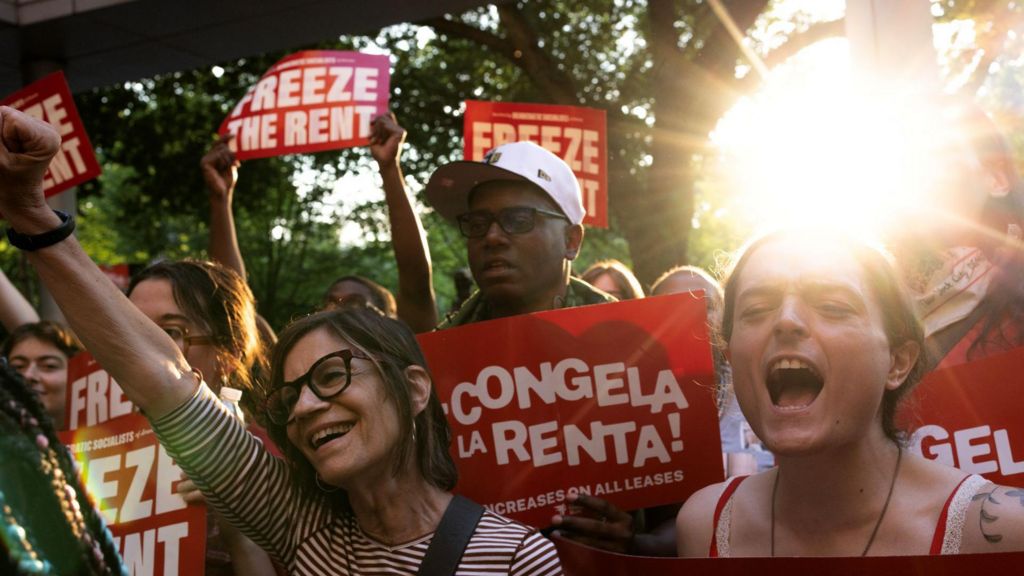
In a landmark decision that caps off a key campaign promise from New York City Mayor Zohran Mamdani, the city’s Rent Guidelines Board (RGB) has voted to approve a full rent freeze for both one- and two-year leases on nearly one million rent-stabilized apartments across all five boroughs. The policy will go into effect from October 2026 through September 2027, applying to every type of regulated housing from high-end luxury high-rises to income-restricted subsidized units.
The 7-1 vote on Thursday drew loud cheers and celebratory whistles from hundreds of tenant rights advocates gathered in Manhattan, who had packed public hearings in the lead-up to the decision to push for the freeze. Tenant organizers argued that stagnant household incomes have failed to keep pace with persistent inflation, and that past rent hikes have not been reinvested into building maintenance or upgrades as landlords promised.
The vote followed a high-profile public resignation from board member Christina Smyth, one of two landlord representatives on the panel and an appointee of former mayor Eric Adams. Smyth stepped down hours before the final vote, accusing the reconfigured board of predetermined bias against property owners and knowingly ignoring official data showing landlords are grappling with skyrocketing operating costs. In her resignation statement, Smyth claimed the outcome was locked in from the moment Mamdani restructured the board after taking office earlier this year, saying “Everything since has been theater.” Mamdani appointed seven of the board’s nine members after taking office, fulfilling another core campaign pledge to overhaul the panel’s composition. During his 2025 mayoral campaign, he explicitly pledged to replace outgoing Adams appointees with only “those who understand that landlords are doing just fine.”
RGB chair Chantella Mitchell pushed back against claims of political interference, affirming that all board members deliberated with full independence and integrity. She defended the freeze by pointing to comprehensive economic data showing a majority of rent-stabilized tenants already struggle to afford basic needs amid broader housing cost inflation across the city.
Landlord advocacy groups have harshly criticized the decision, warning the freeze will leave property owners unable to cover rising taxes, utility bills, and necessary maintenance costs. James Whelan, president of the Real Estate Board of New York, argued the policy will backfire on tenants by accelerating the decline of the city’s aging housing stock, saying “This decision will mean less investment in maintenance and repairs, accelerating the deterioration of the housing stock that millions of New Yorkers call home.”
The vote marks the fourth time New York City has implemented a rent freeze, and the first time it has applied to both one- and two-year leases. Prior freezes were enacted three times between 2015 and 2021 under former mayor Bill de Blasio, but were limited exclusively to one-year leases.
The policy win comes on the heels of another major political victory for Mamdani and New York’s left-wing Democratic movement. On Wednesday, three progressive congressional candidates endorsed by the mayor defeated incumbent and establishment-backed Democratic opponents, solidifying the mayor’s growing influence over the city’s political landscape. Two of the winners – New York City Comptroller Brad Lander and community organizer Darializa Avila Chevalier – unseated long-sitting incumbent Democratic congressmembers, while state assemblywoman Claire Valdez defeated a candidate backed by the city’s traditional Democratic party leadership.