India is grappling with a cascading national crisis driven by a delayed, underperforming southwest monsoon, bringing acute water shortages to its largest commercial hub Mumbai and threatening the livelihoods of millions of small-scale farmers across rural regions, according to leading climate scientists and meteorologists.
The annual monsoon, which typically arrives across South Asia in early June to nourish crops and replenish water supplies, has grown increasingly erratic in recent decades as global temperatures rise. This year, the weather system reached Mumbai roughly two weeks behind schedule, and experts warn that the combination of El Niño — the Pacific Ocean warming pattern that disrupts global weather systems — and long-term planetary heating has set the stage for scattered, insufficient rainfall across most of the country.
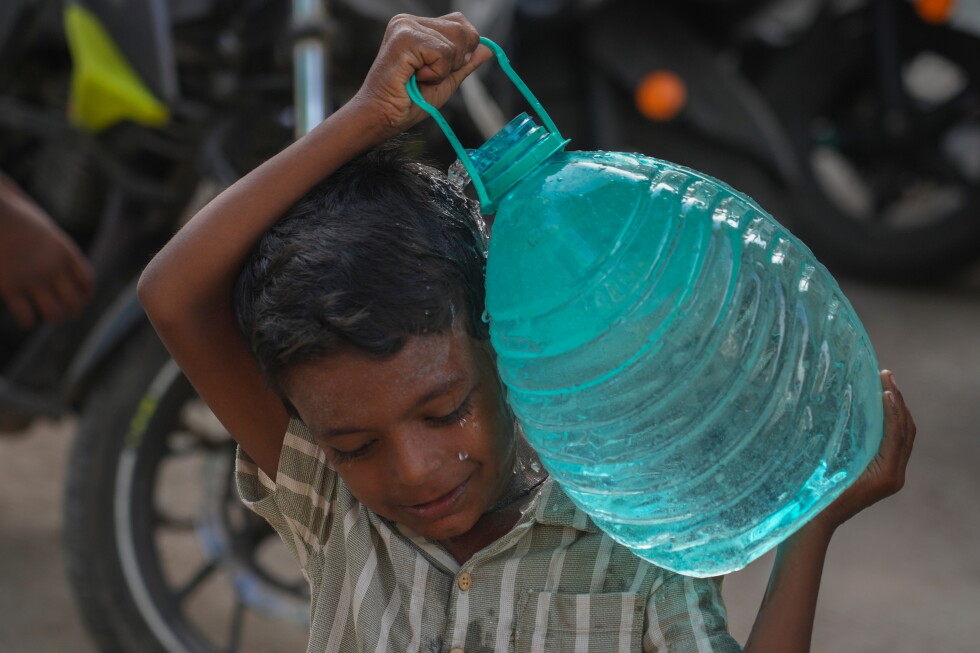
Even after this week’s early downpours in Mumbai, the city’s critical reservoirs remain at dangerously low levels, prompting local authorities to implement strict water rationing to preserve supplies for essential use. Municipal water access has been cut off to commercial construction sites, private swimming pools, and other non-essential operations, forcing construction projects to scale back work amid the shortage. Long queues now stretch for hours at public water distribution points, where residents wait to collect just enough water for their daily needs.
“To collect just 10 liters (2.6 gallons) of water, I have to wait for two hours. I have to go to work, take care of my children and make sure there is water at home,” said Aishah Khan, a 33-year-old Mumbai domestic worker, echoing the frustration of millions of city residents. Local government data shows Mumbai currently holds only a 40-day reserve of stored water, and forecasters say even significant rainfall over the coming week will not be enough to fully replenish depleted reserves.
The crisis extends far beyond urban centers, hitting India’s agricultural sector — which supports more than 90 million smallholder farmers, most working plots of less than 2.5 acres — particularly hard. In northern rural states including Uttar Pradesh and Madhya Pradesh, key growing regions for millet, soybeans, and wheat, farmers have been forced to delay critical sowing operations that typically wrap up by mid-July. Many already face mounting debt from rising input costs and disrupted supply chains, and fear a poor monsoon will push them into financial ruin.
“We are unable to plant our seeds without the rains coming. Already, we’re suffering losses. I think it’s worse this year than previous years,” said Suresh Kumar, a millet farmer in Uttar Pradesh. His neighbor Kedar Sirohi, a soybean and wheat grower in Madhya Pradesh, added, “I’m very worried but we have no choice but to wait and see now.” Farmers add that poor rainfall compounds existing pressures, including fertilizer supply disruptions linked to global conflict and trade policies they say offer little financial protection for small producers.
Climate experts say this year’s erratic monsoon aligns with long-term trends driven by human-caused climate change. For centuries, the South Asian monsoon followed a predictable pattern: a southwest monsoon from June to September that delivered steady, sustained rainfall, followed by a smaller northeast monsoon in late autumn. But rising concentrations of greenhouse gases from fossil fuel combustion have warmed the atmosphere, allowing it to hold more moisture pulled from the Indian Ocean. This shift has broken the historic pattern, replacing steady rainfall with a cycle of intense, destructive flooding followed by long, parched dry spells.
“The Indian monsoon is becoming more variable as a result of global warming,” said Akshay Deoras, a meteorologist at the University of Reading in the U.K. who has studied Indian weather systems for more than 10 years. “We are seeing wet spells becoming more extreme and dry spells are more prolonged.” Deoras noted that the current national rainfall deficit, which stands at 42% according to the India Meteorological Department, is too large to be reversed even by weeks of average rainfall in already affected regions. He added that it is unlikely Mumbai’s reservoir levels will see a substantial improvement even with expected rain over the next 10 days.
The India Meteorological Department confirms that El Niño and unseasonably dry winds from northwest India have stalled the monsoon’s northward advance, and forecasts that total rainfall between June and September will remain well below the long-term average. India ranks among the 10 countries most vulnerable to climate change impacts, according to 2023 data from European climate nonprofit Germanwatch.
As the crisis deepens, experts argue that long-term resilience depends on urgent investment in water infrastructure and conservation. India is already the world’s largest extractor of groundwater, pumping more of the underground resource than the United States and China combined, per a 2022 United Nations report. Around 70% of the country’s total water use comes from groundwater sources, and years of over-extraction paired with more frequent dry spells have caused water tables to drop dramatically across the nation.
“Poor rainfall does not have to translate into water stress if planning and governance systems are strengthened,” said Abhiyant Tiwari, a climate and health expert at the New Delhi office of the Natural Resources Defense Council (NRDC) India. “Investing in water conservation, restoring urban water bodies and protecting smaller village ponds should be high priorities at both national and local levels.”
Vivek Grewal, a hydrogeologist at Bengaluru-based WELL Labs, noted that the gap in resilience between farmers with access to groundwater reserves and smallholder farmers entirely dependent on monsoon rainfall widens with every dry year. “Every year there are bad rains, it exhausts the groundwater buffer,” Grewal explained. “In the cities, authorities expect reservoirs to get filled with a good monsoon but when that doesn’t happen there is an immediate impact.”
The Associated Press contributions from Rafiq Maqbool in Mumbai and Rajesh Kumar Singh in Lucknow supported this reporting.