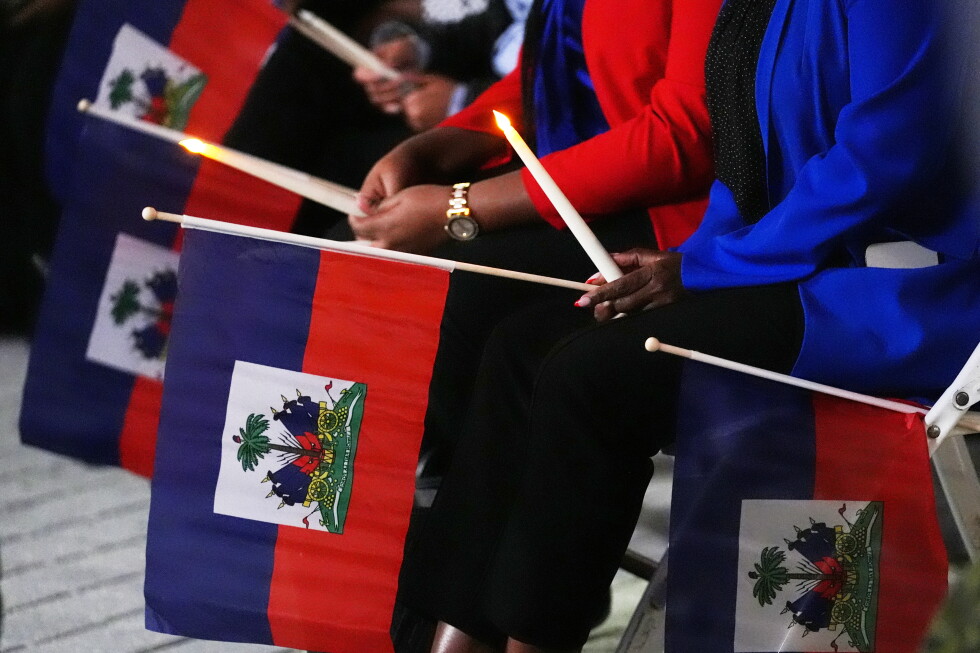
MIAMI — A recent U.S. Supreme Court decision greenlighting the Donald Trump administration’s plan to revoke temporary legal protection for Haitian and Syrian immigrants is poised to ripple across the entire Temporary Protected Status (TPS) program, putting nearly 1.3 million additional immigrants from 17 countries at risk of deportation.
The ruling directly impacts roughly 350,000 Haitians and 6,000 Syrians who have relied on TPS to live and work legally in the United States, many for decades, and most of whom have U.S.-citizen children. Beyond these two groups, the 6-3 decision by the court’s conservative majority sets a sweeping precedent that could clear the way for the expulsion of hundreds of thousands of other TPS holders across the country who currently hold pending asylum claims or other forms of immigration relief. TPS holders now face the immediate threat of detention and forced removal from the country they have called home for years.
Created by Congress in 1990, the TPS program was designed to block deportations of immigrants whose home countries face ongoing armed conflict, catastrophic natural disasters, or other extreme humanitarian crises that make safe return impossible. The program grants 6- to 18-month renewable protections to eligible immigrants who have continuously resided in the U.S. since their country was designated for TPS status.
When the Trump administration took office, Venezuelans made up the single largest bloc of TPS beneficiaries, followed by Haitians and Salvadorans. The administration has already ended TPS protections for roughly 1 million immigrants from 13 countries, including approximately 650,000 Venezuelans and 50,000 Hondurans. Critical renewal decisions are now pending for 200,000 Salvadorans and 100,000 Ukrainians whose TPS protections are set to expire in the near term, with smaller groups from Afghanistan, Myanmar, Cameroon, Ethiopia, Lebanon, Nicaragua, Somalia, South Sudan and Yemen also facing uncertainty.
The Trump administration has defended its rollback of the program, arguing that the Biden administration improperly expanded TPS designations without adequate vetting of immigrants, and that conditions in designated countries have improved enough to allow safe return. But immigration advocates and legal representatives reject these claims, saying the administration violated statutory requirements by failing to conduct required interagency consultations and on-the-ground assessments of current country conditions before moving to end protections.
Dozens of lawsuits have already been filed by TPS holders from across all nationalities challenging the Trump administration’s terminations, and legal experts say lower courts hearing these pending cases will now be bound by the Supreme Court’s new precedent. The high court ruled that the Department of Homeland Security holds sole authority to end TPS protections, a power that the conservative majority agreed courts cannot override.
Ahilan Arulanantham, co-director of the Miñana Family Center for Immigration Law and Policy at the University of California, Los Angeles, and one of the lead attorneys representing Syrian TPS holders, called the decision a devastating blow to immigrant communities. “The implication of this is that at least most of the claims that have been litigated to challenge this administration’s sort of illegal war on TPS are now foreclosed,” Arulanantham said.
Haiti was first designated for TPS in 2010 following a catastrophic 7.0 magnitude earthquake that killed more than 200,000 people and destroyed much of the country’s infrastructure. Extensions have been granted repeatedly as ongoing gang violence has displaced more than 1 million Haitians in recent years, leaving the country in a state of continuous humanitarian collapse. Syria received its first TPS designation in 2012 amid a decades-long civil war that only concluded with the fall of the national government in late 2024, leaving the country shattered and unsafe for large-scale return.
Under standard Supreme Court procedure, the ruling will not go into effect for 32 days after its announcement, and the court has sent the case back to lower courts to implement the judgment. Legal representatives expect the ruling to take full effect no earlier than July 27, meaning Haitian and Syrian TPS holders will retain their work authorization through that window. After that date, Arulanantham confirmed, nearly all Haitian and Syrian TPS holders will lose their permission to work legally in the U.S.
Immigration attorneys and advocacy groups are now urging affected TPS holders to explore all alternative pathways to legal status, including asylum claims and employment-based visas. But even these options have been restricted by the Trump administration, leaving many immigrants with few viable options. Many will be forced to choose between voluntary departure to unsafe home countries or protracted deportation proceedings that could result in forced separation from their U.S.-born children and the loss of careers and communities they have built over decades.
Unless TPS holders can secure a new form of legal status, they will revert to the immigration status they held before receiving TPS, which is often expired or invalid. Advocates have now turned to Congress, calling on legislative leaders to pass emergency legislation that would restore TPS protections and provide a path to permanent residency for long-term beneficiaries. “We also call on Congress to immediately restore these vital humanitarian protections that the TPS program represents for the sake of our clients and TPS holders, their families, and all of our communities,” said Melissa Keenan, an attorney representing Syrian TPS holders.