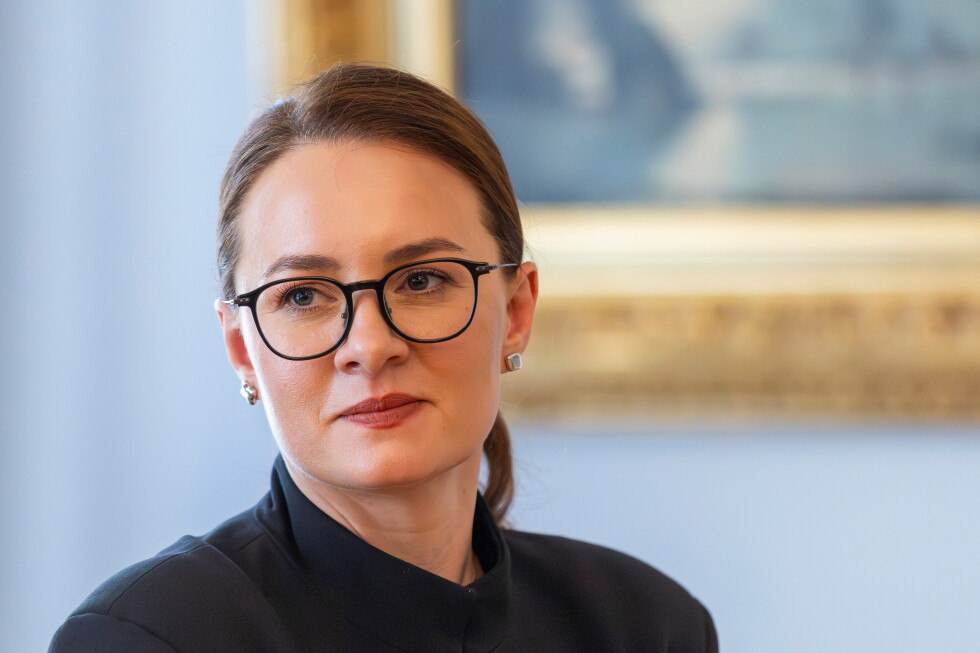
GDANSK, Poland — A landmark conference focused on Ukraine’s post-war reconstruction and long-term recovery opened Thursday in Poland, marking a major milestone in Western financial backing for Kyiv as the European Union disbursed the first 3 billion euro ($3.4 billion) installment of its massive 90 billion euro ($101 billion) multi-year macrofinancial loan package to Ukraine, Ukrainian Prime Minister Yulia Svyrydenko announced at the event. The gathering, which brings together top European leaders including German Chancellor Friedrich Merz and European Commission President Ursula von der Leyen, serves a dual purpose: it acts as a global forum to secure pledges and investments for Ukraine’s war-ravaged economy, while sending a unified message to Moscow that Kyiv’s Western allies remain committed to supporting Ukraine for the long term.
Opening Ukraine’s membership negotiations with the EU just last week, von der Leyen used the conference to reaffirm the bloc’s unwavering commitment to Ukraine. She noted that since Russia launched its full-scale invasion in February 2022, EU member states have already provided 200 billion euros ($225 billion) in combined economic, financial, and military assistance to Ukraine. The newly approved 90 billion euro loan package spread over the next four years builds on that existing support. Von der Leyen added that the second 6 billion euro ($6.7 billion) tranche of the new package, earmarked specifically for expanding Ukrainian drone production, will be disbursed to Kyiv in the coming days.
Alongside the coordinated macrofinancial support, European leaders launched a new European equity fund designed to drive private investment into strategic sectors of Ukraine’s economy. The initiative, which grew out of 2023’s recovery conference in Rome, counts backing from the EU, Germany, Poland, Italy, and France, with an initial public seed capital allocation of up to 220 million euros. Merz explained that the fund is structured to create the confidence and risk-sharing framework private investors require to enter Ukraine’s market amid ongoing conflict. While public funding alone cannot cover the full cost of rebuilding Ukraine, Merz emphasized that the early investment and long-term capital commitment sends a clear signal: Europe believes in Ukraine’s future as part of the European family.
Svyrydenko, who leads the Ukrainian delegation after President Volodymyr Zelenskyy pulled out of the conference just days before it began, said Ukrainian officials expect to sign 160 bilateral and multilateral agreements totaling more than 10 billion euros ($11.2 billion) over the course of the conference. Addressing attendees, she framed Ukraine’s adaptation amid ongoing invasion as a unique strength: “We are forced to innovate to survive and this has become our superpower,” adding that the Ukrainian people remain deeply grateful for the support extended to their war-battered nation.
Zelenskyy’s last-minute withdrawal stems from a growing bilateral dispute between Kyiv and Warsaw over contested World War II history that has strained relations in recent weeks. The dispute erupted after Polish President Karol Nawrocki stripped Zelenskyy of Poland’s highest state honor, the Order of the White Eagle, over Zelenskyy’s decision to name a Ukrainian military unit after the Ukrainian Insurgent Army (UPA), a mid-20th century paramilitary group that fought for Ukrainian independence against Nazi Germany and the Soviet Union. Poland accuses the UPA of carrying out the genocide of tens of thousands of Polish civilians in the Volhynia and Eastern Galicia regions during World War II, a classification Kyiv disputes. Following Nawrocki’s announcement, Zelenskyy returned the honor to Poland, with other senior Ukrainian officials following suit.
Polish Prime Minister Donald Tusk noted that Zelenskyy’s absence may actually create space to reduce the current tensions between the two nations. Svyrydenko did not reference the bilateral dispute in her opening remarks at the conference. In his own address, Tusk emphasized the shared path forward: “We can only build the future on the basis of truth, mutual respect and understanding the past.” The conference proceeds amid a recent string of Ukrainian long-range strikes on strategic Russian infrastructure, including a major natural gas plant, satellite facilities, and a key railway bridge connecting the Russian-held Crimean Peninsula to mainland Russia, with Kyiv reporting that Russian military command has shifted air defense assets away from frontline positions to protect Moscow and other key Russian territory. The Associated Press contributed reporting from Kyiv and Berlin.