In an uncommon show of unified diplomatic concern, Great Britain, France, and Germany released a joint public statement on Wednesday sounding the alarm over recent Chinese maritime operations east of Taiwan, the self-governed island that has long been a flashpoint for cross-strait and global geopolitical tension.
The joint statement was released through the three European powers’ de facto diplomatic missions based in Taipei, Taiwan’s capital. While the statement did not outline specific details of what it labeled “novel Chinese activity”, it emphasized that the unorthodox deployments posed a clear threat to long-standing stability across the Indo-Pacific region.
China, which claims the democratically governed Taiwan as an inalienable part of its territory that it has pledged to reunify, even by force if necessary, framed its early-month coast guard deployments as routine “maritime traffic enforcement and hydrographic survey operations”. According to Chinese state media reports, the deployments also carried an explicit messaging purpose: they were crafted to send a sharp warning to Japan and the Philippines, after the two nations announced plans to hold negotiations over their shared maritime boundaries in waters Beijing claims as its sovereign territory.
The joint statement from the three European nations noted: “These actions threaten regional stability and the freedom of navigation and safety of international shipping. We reiterate our opposition to any unilateral change to the status quo, particularly by threat or use of force or coercion.” The missions also called for universal upholding of navigational rights and freedoms, and unwavering respect for the personal safety of all seafarers operating in the region. As of Wednesday evening, China’s Ministry of Foreign Affairs had not issued any immediate response to media requests for comment on the joint statement.
Tensions in the region have spiked sharply in recent days, following a sequence of consecutive military moves by both Beijing and Taipei. On Tuesday, just hours after Taiwan launched a five-day nationwide military exercise designed to test its defensive readiness against potential Chinese incursion, China sailed its newest and most technologically advanced aircraft carrier through the Taiwan Strait, the narrow body of water that separates mainland China from the island.
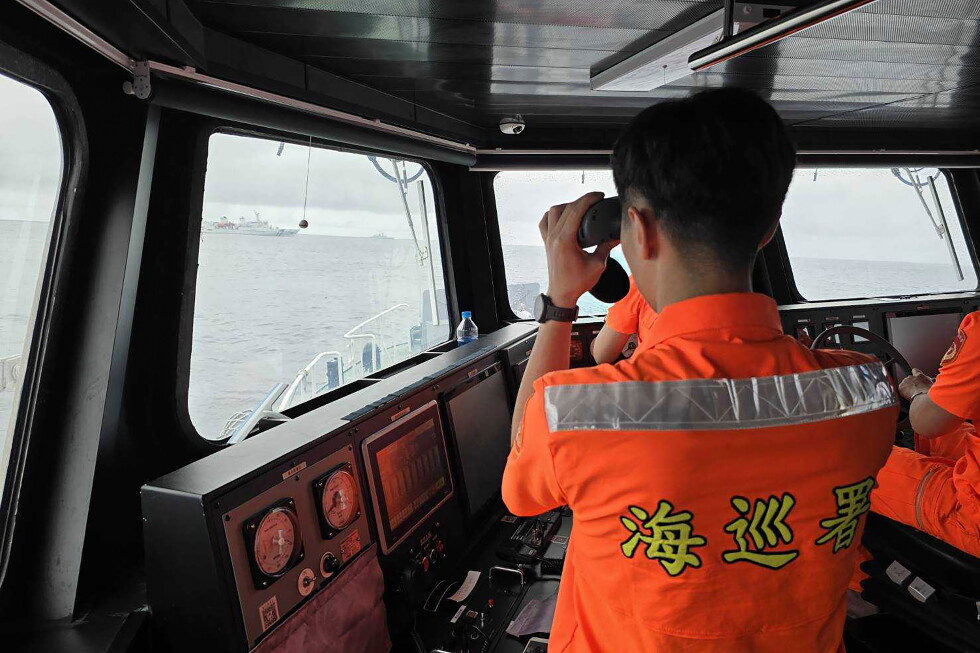
Taiwan’s Ministry of National Defense clarified that the ongoing drills are intended to strengthen the island’s ability to respond to a full-scale Chinese attack, with a specific focus on testing rapid deployment capabilities for military units. This preparation is targeted specifically at countering potential sudden escalations of Chinese grey-zone tactics — a broad category of coercive aggressive actions that range from routine naval patrols to unannounced drone flights, all of which stop short of open, full-scale combat. Earlier this month, Taipei also confirmed that Chinese coast guard vessels had been harassing commercial shipping near the island, ordering transiting civilian ships to disclose their intended routes before passing through the area.
Cross-strait pressure has grown steadily in recent years, with Beijing ramping up its coercive campaign against Taiwan: Chinese military aircraft and naval vessels now conduct near-daily patrols around the island, with large-scale live-fire drills held periodically to demonstrate Beijing’s military capabilities. Regional tensions have also grown between China and Japan over the Taiwan issue, after Japanese Prime Minister Sanae Takaichi suggested last year that the Japanese Self-Defense Forces could intervene militarily if Beijing launched an attack on Taiwan.