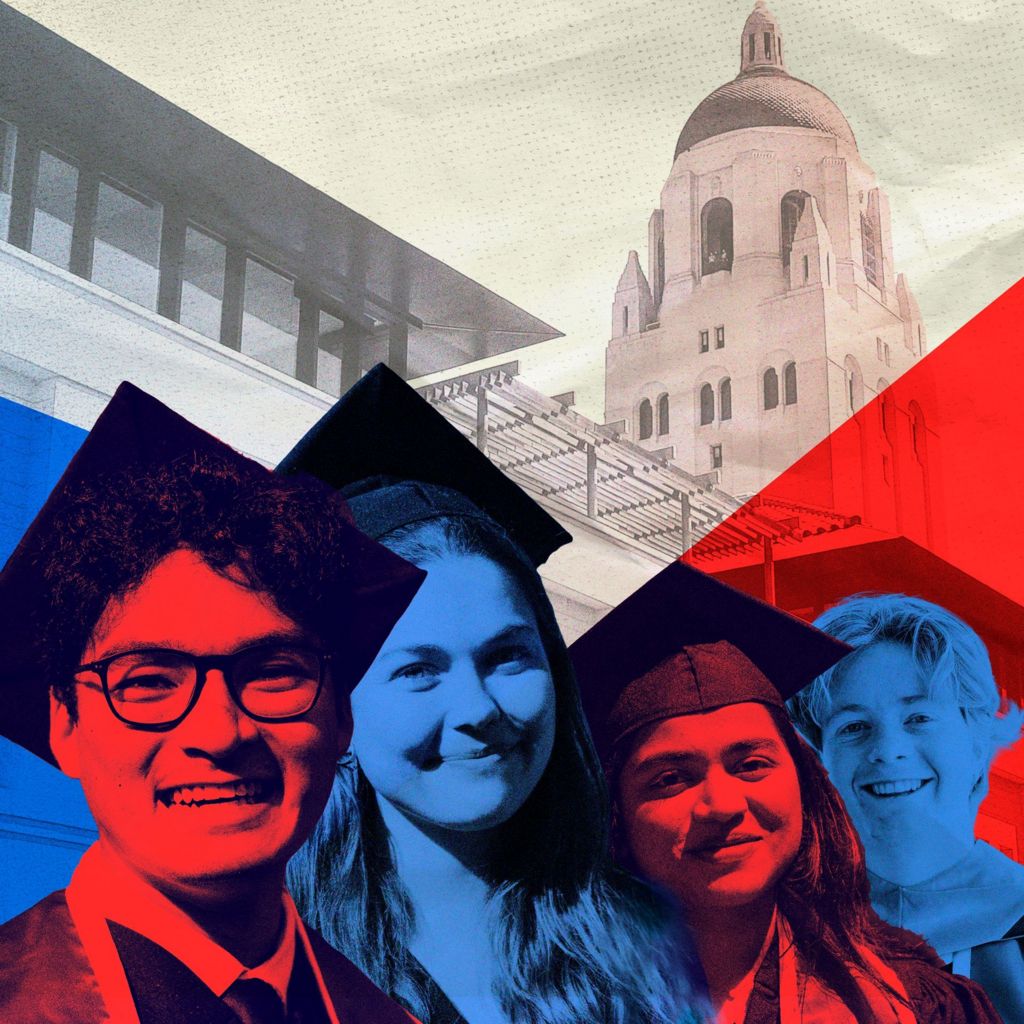
Nestled in the heart of Silicon Valley, Stanford University has long stood as the global cradle of technological innovation, counting the co-founders of Google, dozens of AI industry pioneers, and countless breakthrough inventions among its storied legacy. This year, however, as the institution welcomed one of its most famous alumni—Google CEO Sundar Pichai—to deliver its 2026 commencement address, the campus became the backdrop for a raw, public reckoning with the technology that Stanford helped bring to life: artificial intelligence.
Across American college commencement ceremonies this year, a clear message has emerged from graduating cohorts: top speakers have been warned to avoid the topic of AI, and those who broach it have often been met with vocal pushback. Even former Google CEO Eric Schmidt faced boos from audiences when he referenced the technology at other graduation events. For Pichai, whose company is one of the world’s leading AI developers, the writing was on the wall before he took the stage. He opened his address with a lighthearted joke, noting that every person he spoke to had given him the same guidance: avoid AI. Even with that self-censorship, more than 200 students stood in unison, shouted chants for Palestinian liberation, and walked out of Stanford Stadium mid-speech.
The protests were not rooted solely in anxiety over AI’s societal impact. Many demonstrators carried signs calling out Google’s controversial Nimbus contract, which provides AI tools to the Israeli military, and decried the tech giant’s past partnerships with U.S. Immigration and Customs Enforcement (ICE), referencing the agency’s harsh, often deadly immigration enforcement actions under the Trump administration. After the walkout, the group relocated to an alternative campus commencement headlined by prominent pro-Palestinian activist Mahmoud Khalil, who gained global attention during 2024 Gaza war protests at Columbia University when ICE attempted to deport him despite his legal permanent resident status. Pichai, who earned his master’s degree from Stanford, declined to comment on the protest when approached by the BBC after the ceremony.
Stanford occupies a unique space in the global AI ecosystem. The term “artificial intelligence” itself was coined on campus by pioneering computer scientist John McCarthy in 1955, and the university has incubated generations of AI leaders, from OpenAI CEO Sam Altman to Fei-Fei Li, often called the “Godmother of AI” who currently serves as a Stanford professor. Today, the $400,000 price tag for a four-year undergraduate degree at Stanford remains widely seen as a golden ticket to top roles in the tech industry, and major firms headquartered within 15 miles of campus—including Google, Apple and Meta—still scout the institution for top talent annually, admitting less than 4% of tens of thousands of annual applicants. For this graduating cohort, who entered as undergraduates in 2021—just one year before OpenAI’s ChatGPT upended daily life and work around the world—AI is not an abstract future concept: it is an immediate, transformative force that is already reshaping their career prospects, education and worldview.
In interviews with the BBC shortly after Pichai’s address, graduating students expressed a wide spectrum of views on AI, from cautious optimism to deep dread, but nearly all agreed that the technology’s impact is already unavoidable. For Ifdita Hasan, a computer science and AI major, AI is a tool that unlocks unprecedented opportunity for scientific exploration and progress. “I feel optimistic about AI. I think AI gives us the opportunity to learn more about the universe. It’s a tool that people should try to use and try to adapt to,” she said. Hasan added that she is not surprised by the widespread backlash, noting that early societal anxiety is a common response to every transformative emerging technology—including the internet, which faced similar skepticism in its early days. “But I would encourage people to be optimistic about AI—to try to learn and explore more,” she said.
Other students are far less sanguine, particularly as they enter a job market already being upended by AI adoption. A 2025 Stanford study found that employment for early-career U.S. workers has dropped sharply in fields most vulnerable to AI disruption, including software development, and a recent analysis from the Federal Reserve Bank of New York confirmed that recent graduates across the country are already struggling to secure stable employment. Atash Heil, an Earth Systems major focused on environmental policy, says the speed of AI’s advancement over the past four years has been jarring. He described a recent visit to an AI art exhibit as a deeply unsettling experience, days before his own graduation. “I thought it was scary, especially on my graduation day, to see that. The future is… that? I want art to be made by humans. That’s what makes it art, right?” he said. Like many of his peers, Heil criticized the unregulated, ethics-free approach that many major AI companies have taken to rolling out new tools: “It has to be done ethically, and it’s not being done ethically these days.” Even so, Heil, who will soon start a role working on climate resilience in New Orleans, acknowledges that AI can be a force for good—including helping build more accurate climate prediction models to guide adaptation work.
Lucy Zimmerman, a computer science major who worked as a teaching assistant during her time at Stanford, has witnessed AI’s impact on education first-hand. She says she has noticed a clear gap between the polished take-home assignments students submit—many of which she suspects are completed with AI assistance—and their performance on in-person, proctored exams. In response, many departments have already reinstated in-person exam proctoring and oral assessments to curb AI-assisted cheating. Zimmerman also expressed concern about the rise of “cognitive offloading,” the growing practice of relying on AI to complete problem-solving and critical thinking tasks that build core cognitive skills. “I’m worried about future generations, and for my generation,” she said. Despite these concerns, Zimmerman will soon start a role as a software engineer at a San Francisco tech startup, putting her at the center of the ongoing AI boom.
Colbey Harlan, a psychology major, echoed this mixed outlook. He has used AI to help jumpstart creative writing projects, and found it particularly helpful for managing his ADHD. Even so, he worries about the hidden environmental cost of AI’s rapid expansion: data centers powering large language models consume massive amounts of energy and natural resources. “I’m not a fan of how it’s destroying the environment. Data centres are taking a lot of resources, a lot of energy,” he said. “I’m kind of at a point where it’s like – ‘Okay, AI is cool, but can we just stop progressing it?’ because if we continue, things are going to get out of control.”
For many graduates, the uncertainty of AI’s long-term impact is part of what makes this moment so charged. Management Science and Engineering graduate Harry Kaplan, who participated in Stanford’s annual Wacky Walk graduation tradition carrying an inflatable palm tree, described Stanford as the global center of tech innovation, and said the institution’s legacy of breakthroughs is a source of pride for the graduating class. Still, he said it is too early to know what AI’s long-term impact will be on his career and generation. “It’s an exciting place to be. It feels like we’re at the edge of something,” he said. For this cohort of Stanford graduates, standing at that edge means navigating both the unprecedented opportunities and existential risks of a technology that will define the rest of their lifetimes.