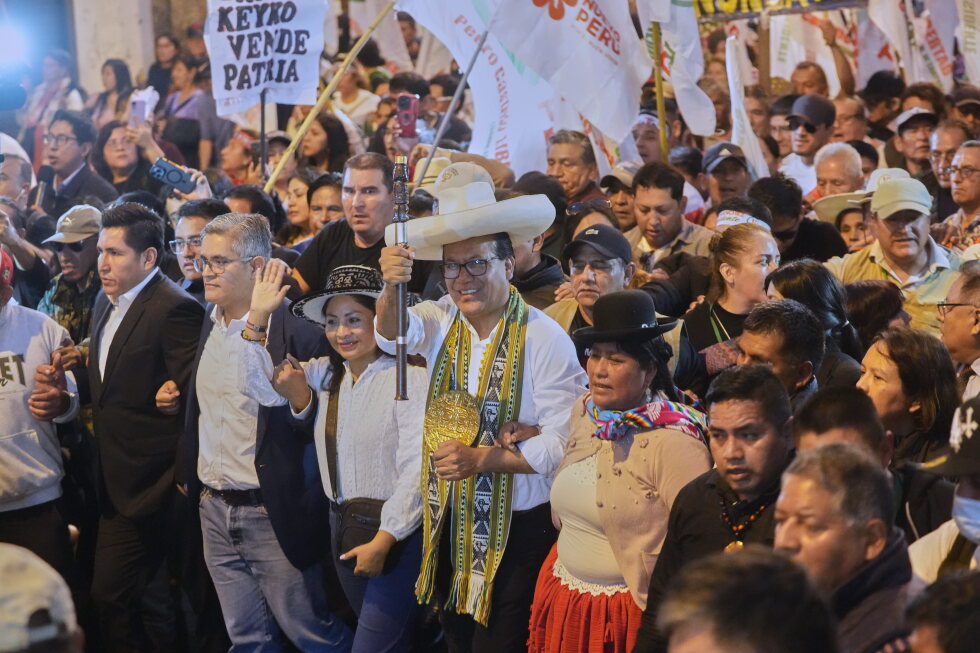
Peru’s tense 2025 June 7 presidential runoff has descended into electoral chaos, as left-leaning candidate Roberto Sánchez has openly pledged to reject the final election results if election officials formalize the count of more than 300,000 ballots cast by Peruvians living overseas. Sánchez claims the processing of these overseas votes violated national electoral law, opening a new chapter of political uncertainty for a South American nation already grappling with decades of volatile leadership turnover.
With 99.72% of all ballots counted across the country, Sánchez trails conservative rival Keiko Fujimori by a narrow margin of just 40,000 votes. Official projections indicate Sánchez will remain behind once the remaining tally sheets are fully processed, out of more than 18 million total votes cast in the runoff. Data published by Peru’s electoral authorities confirms that if the overseas vote bloc were invalidated entirely, Sánchez would secure a winning majority. This outcome has been driven by lopsided support for Fujimori among overseas voters: official figures from the National Elections Board (ONPE) show 65% of the more than 307,000 international votes cast went to Fujimori, with particularly strong majorities among Peruvian communities in the United States, Argentina, and Japan—birthplace of Fujimori’s paternal grandparents.
A former commerce minister who draws broad support from rural communities and Peru’s large Indigenous population, Sánchez’s campaign has already filed a formal petition to strike all overseas ballots from the final count. The core of the campaign’s complaint centers on a procedural adjustment: Peruvian law requires consular staff to use a government-approved mobile application to scan vote tally sheets before transmitting them to central election authorities. According to the campaign, this mandate was not followed, creating openings for widespread electoral fraud.
Peru’s Foreign Affairs Ministry has pushed back against these claims, clarifying that it received formal authorization from ONPE in late May to alter the processing procedure. The change was implemented after technical failures disrupted scanning operations during the election’s first round, the ministry explained. Under the adjusted rule, consulates were permitted to send physical tally sheets directly to Lima for central processing after voting concluded, rather than scanning them on location. Both ONPE and the Foreign Ministry have formally denied Sánchez’s fraud allegations, stating the procedural change was fully legal and transparent.
Despite this official confirmation, Sánchez has stood firm in his rejection of a potential Fujimori presidency. “Under these conditions of transgression of the rules, we will not recognize the government of Miss Keiko Fujimori,” he stated in comments Tuesday.
Fujimori, who centered her campaign on a strict public safety platform, has not yet issued a public response to Sánchez’s demand to annul the overseas vote count. Beyond the immediate electoral dispute, the contest has underscored deep regional and ideological divides across Peru: Sánchez, a close political ally of imprisoned former president Pedro Castillo, has campaigned on sweeping mining sector reforms that would grant local Indigenous and community groups direct equity stakes in the nation’s lucrative copper and gold mines. He won landslide support in the impoverished mountain regions of southern Peru, which have long been sidelined from national economic growth, but trailed badly in Lima—home to roughly one-third of Peru’s total voting population.
The current electoral standoff comes against a backdrop of prolonged political instability in Peru: over the past 10 years alone, the country has been led by eight different presidents, only two of whom won their terms through popular general elections. The remaining six took office after predecessor presidents resigned or were removed by Congress amid widespread corruption allegations. Even amid this persistent political turbulence, Peru has maintained consistent, market-oriented economic policies that have positioned it as one of the fastest-growing economies in South America for much of the past two decades.