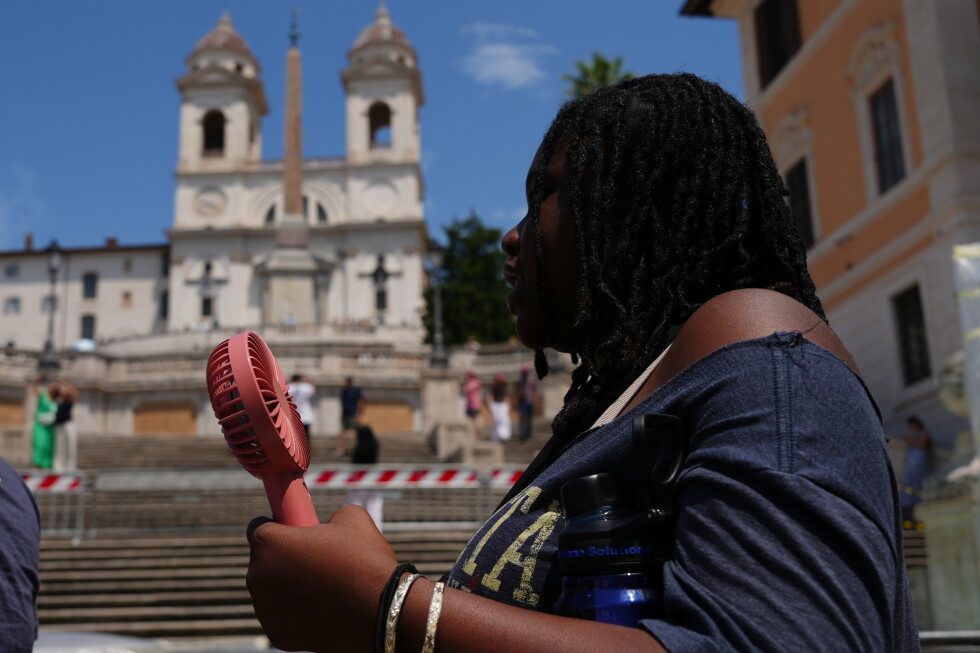
An unexpected early summer heat dome has sent temperatures soaring across Western Europe this week, forcing millions of residents to confront sweltering, dangerous conditions that have already broken preliminary temperature records and claimed dozens of lives. Climate experts confirm this extreme weather event is directly linked to a stationary high-pressure system, and warn that human-caused climate change is making such events more frequent, intense, and long-lasting than ever before.
To understand the phenomenon driving this heat wave, climate scientists explain that a heat dome originates from a distinct shift in the jet stream — the fast-flowing river of high-altitude wind that shapes global weather patterns. When the jet stream develops a large, persistent northward bulge, it traps a stable high-pressure system in the region below. Mireia Ginesta, a research associate at the Climate Litigation Lab hosted by the University of Oxford’s Smith School of Enterprise and the Environment, breaks down the physics at play: sinking air within the high-pressure system compresses as it moves toward lower altitudes, raising both atmospheric pressure and air temperature, effectively locking hot, humid conditions in place for days on end. As Woodwell Climate Research Center climate scientist Jennifer Francis puts it, the heat dome describes the jet stream’s atmospheric behavior, while the heat wave is the tangible, surface-level impact that communities experience.
This week’s event has hit major European nations particularly hard. France, Italy, Spain, and the United Kingdom are all recording far higher temperatures than average for mid-June, with forecasts calling for peaks as high as 40 degrees Celsius (104 degrees Fahrenheit) across swathes of the continent. France has faced the most severe impacts so far: nearly half the country is under the national weather service’s highest-level red heat alert, and a lack of widespread residential and public air conditioning — a common feature across much of the region that has not historically faced consistent extreme heat — has left many residents without reliable ways to cool down. Dozens of drowning deaths have already been recorded across France, as people flocked to open bodies of water to escape the heat. Liz Bentley, chief executive of the UK’s Royal Meteorological Society and a meteorology professor at the University of Reading, predicts that the event will not just break long-standing June temperature records across the continent, but will obliterate them entirely.
Francis notes that Europe is still adapting to a new normal of extreme summer heat, noting that these brutal, deadly heat waves have only become common across the region in the last 10 to 20 years. Many communities still lack the infrastructure and public health systems to protect vulnerable populations from sustained extreme heat. Experts are uniform in their conclusion that anthropogenic climate change is the core driver of increasing heat dome frequency and severity. “We are warming the globe, and that means we’re shifting the range of temperatures that any given place experiences,” Francis explained. “As you shift that range of temperature, you’re making extreme temperatures much more likely.” Bentley echoed this assessment, comparing rising global temperatures to turning up a home thermostat. “Climate change is definitely having an impact on the fact that [heat waves] are more frequent, they are more intense, and they are more persistent as well,” she said. “They hang around a lot longer than they used to do.”
Public authorities across the affected region have rolled out emergency measures to reduce heat-related risk. In France, scheduled passenger train services, outdoor concerts, and public sporting events have been canceled, and officials have implemented a temporary ban on public alcohol consumption to reduce risky behavior and dehydration. Climate and public health experts have issued clear guidance for residents to stay safe during the event: maintain consistent hydration, avoid strenuous outdoor activity during the hottest midday and afternoon hours, seek out shaded or cool indoor spaces whenever possible, and cool off safely in designated public water areas if available. Francis also emphasized the underrecognized risk of overnight heat, which prevents the human body from recovering after a hot day. “If you don’t give your body a chance to cool off at night, heat just starts to accumulate in your body and that can really start to affect your health,” she said. “Figuring out a way to stay cooler at night is very, very important.”
The extreme conditions are expected to persist across most affected regions for at least several more days, and public health officials are urging residents to remain vigilant, particularly for elderly and vulnerable community members who face the highest risk of heat-related illness and death.