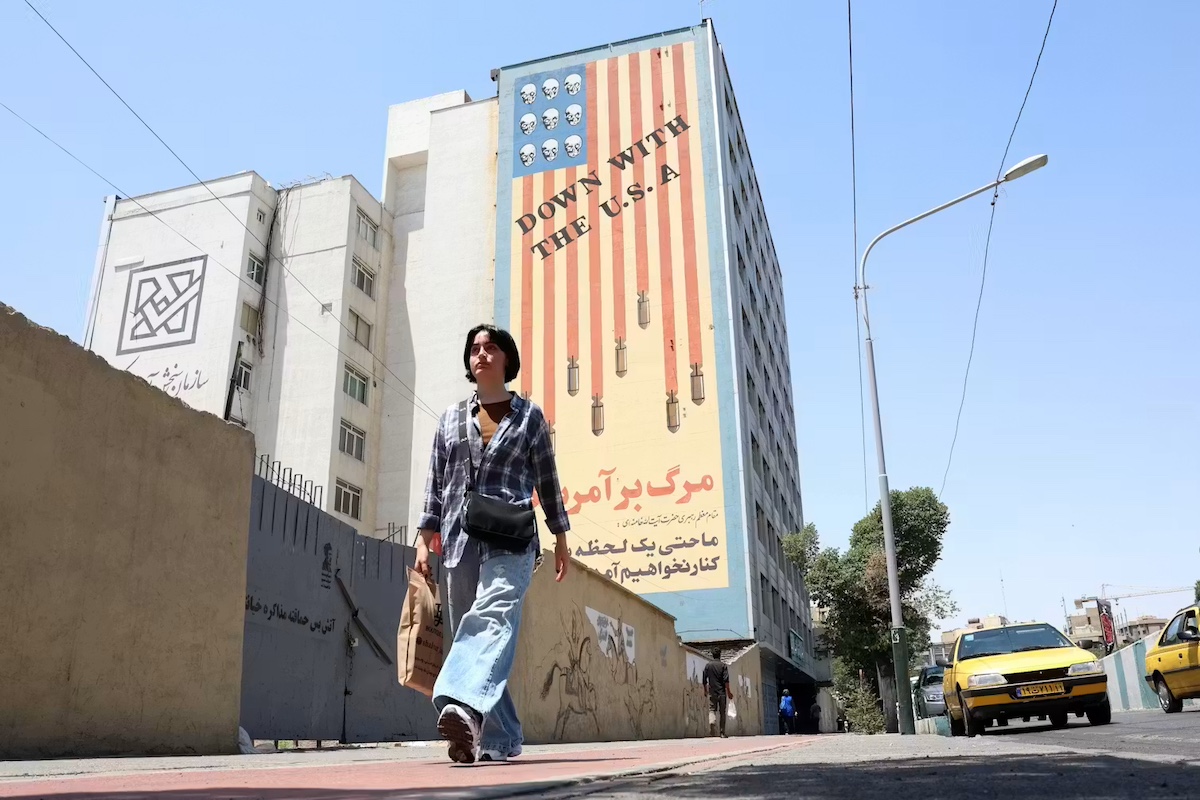
When the United States and Iran signed a landmark memorandum of understanding (MoU) on the final day of the G7 summit on June 17, the diplomatic breakthrough was widely celebrated across the international community. Through terms that included the reopening of the strategically critical Strait of Hormuz, targeted sanctions relief, and the launch of a 60-day formal negotiation window, the deal was initially viewed as a promising first step toward defusing a years-long conflict that had threatened both regional stability and global energy markets.
But just weeks later, developments over the past weekend have laid bare the extreme fragility of this tentative agreement. While negotiators from both sides confirmed incremental progress during the first round of talks held in Switzerland, a cascade of new developments has stoked widespread fears that the entire diplomatic process could collapse, plunging the region back into open hostilities. Most notably, former President Donald Trump’s renewed threats of military intervention against Iran, paired with growing concerns over the physical safety of Iranian negotiating teams, have injected deep uncertainty into the process.
Even the one tangible win the US claimed from the deal—the reopening of the Strait of Hormuz, a chokepoint through which 20% of the world’s daily oil shipments pass—remains shrouded in uncertainty. As it stands today, the agreement is best characterized not as a permanent resolution to decades of conflict, but merely as a temporary pause in hostilities. It has largely restored the pre-escalation status quo, but has left core tensions between the US, Iran, and Israel entirely unaddressed.
One critical, underdiscussed factor hanging over the process is Israel’s awkward outsider position. The country is one of the parties most deeply affected by any US-Iran deal, yet it was excluded from negotiations entirely. It retains the capacity to derail any diplomatic progress, and its ongoing military assault on Lebanon stands in direct violation of the MoU’s terms, creating a persistent flashpoint for renewed escalation.
Most analysts agree that the most probable long-term outcome is a return to what has become known as gray-zone conflict: a state of persistent hostility that falls short of open, full-scale war. In this context, that would likely mean a continuation of proxy warfare, cyberattacks, economic coercion, and periodic spikes in military confrontation. While active large-scale shooting has paused, all the underlying geopolitical and ideological forces that sparked the original conflict remain firmly in place.
This incomplete outcome represents a major setback for US strategic goals in the region. When Washington launched its current round of confrontation with Tehran, it promised three core outcomes: the full dismantling of Iran’s nuclear program, the rolling back of Iran’s regional influence, and the restoration of American deterrence across the Middle East. Instead, the MoU delivers significant economic relief to Iran, while leaving all three core US objectives unmet—including unresolved disputes over Iran’s ballistic missile program, its regional proxy networks, and long-term caps on uranium enrichment.
For Iran, by contrast, simply maintaining its ruling regime’s survival through the pressure campaign already qualifies as a strategic victory. Despite sustained coordinated pressure from both the US and Israel, the Iranian government remains fully intact and is now negotiating from a position of strength rather than surrendering to US demands.
The conflict has also laid bare the fundamental limits of Western-led security arrangements in the Gulf. Gulf Arab states have witnessed firsthand that even the overwhelming military superiority and advanced weapons arsenals of the US and Israel do not guarantee decisive political outcomes, nor do they provide reliable protection against unintended escalation.
For the US, the MoU also serves as a public acknowledgment of the mounting economic costs of its years-long confrontation with Iran, which have already surpassed $132 billion and continue to climb. Disruptions to shipping through the Strait of Hormuz drove global energy prices higher, strained longstanding US alliances in the region, and proved that military coercion has clear limits. While sanctions relief and the resumption of Iranian oil exports may ease near-term economic pressures, it also reinforces a dangerous perception (for US strategic goals) that sustained pressure and gray-zone aggression can force even a global superpower to the negotiating table.
Perceptions carry enormous weight in international politics. For Washington’s Gulf partners, the MoU has sparked new doubts about America’s willingness to stick to ambitious regional strategic objectives when the political and economic costs of confrontation grow too high. For Iran, on the other hand, the deal has left it strategically stronger: it creates much-needed breathing room for economic recovery and strategic adaptation, making it almost certain that Iran will continue expanding its regional influence through cyber operations, proxy networks, and other gray-zone tactics.
Israel faces perhaps the most challenging strategic reckoning of any party. For decades, its national security doctrine has been built around maintaining unchallenged military superiority, backed by $4 billion in annual military aid from the US. The MoU makes clear that Israel’s core strategic priorities are now directly at odds with those of its closest ally and patron. It has forced open uncomfortable questions about how far Washington is willing to align its own regional goals with Jerusalem’s security demands.
Israel’s long-standing strategic culture prioritizes self-reliance when it comes to countering Iranian threats. This means it will almost certainly continue pursuing covert operations, targeted assassinations, and unilateral military strikes against perceived Iranian assets and interests across the region. While the formal US-Israeli security alliance has not fractured, the open strategic rift could make future coordination far more transactional, even as Israel remains deeply dependent on American military and diplomatic support. Addressing the divide, US Vice President JD Vance pushed back against criticism of the MoU from Israeli cabinet members during a June 19 White House briefing, noting that “Donald J Trump is the only head of state in the entire world who is sympathetic to the nation of Israel at this moment in time.”
Beyond the immediate dynamics of the US-Iran conflict, the June 17 MoU offers critical insight into the changing nature of geopolitical conflict in the 21st century. Modern great power confrontations rarely end in clear-cut victory or defeat. Instead, they increasingly devolve into prolonged, low-intensity competitions waged in the gray zone between formal peace and open war. When full-scale escalation becomes too costly for all parties, states simply regroup and continue their rivalry through alternative, non-conventional means.
For the Middle East, this reality means significant risks will remain for the foreseeable future. A comprehensive permanent settlement within the 60-day negotiation window appears extremely unlikely, given the intractable ongoing disputes over sanctions, nuclear enrichment, and regional security. Continued Israeli military operations in Lebanon could unravel the fragile truce at any moment, and Gulf US allies may respond to the persistent uncertainty by deepening their economic and security ties to China and Russia to hedge against American unpredictability.
Ultimately, the US-Iran MoU is far less a peace agreement than it is a temporary diplomatic holding pattern. It has reduced immediate tensions and stabilized global energy markets, but it leaves all the underlying drivers of conflict completely intact. Relations between the US, Iran, and Israel will therefore almost certainly continue to oscillate between periods of confrontation and tentative accommodation for years to come. Addressing the deep roots of regional instability—including competing regime security concerns, ideological rivalry, and sprawling transnational proxy networks—would require a far more ambitious, comprehensive settlement than any 14-point memorandum can ever deliver.