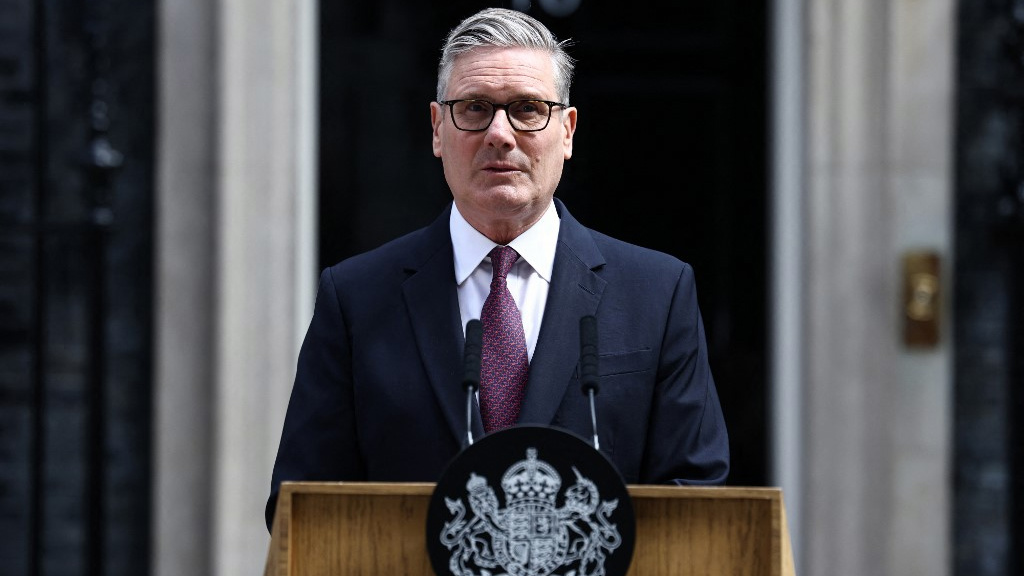
In a sudden development that has shaken British politics, Keir Starmer has stepped down as Prime Minister and Leader of the Labour Party less than two full years after securing a landslide victory in the UK general election. His announcement came Monday morning outside 10 Downing Street, ending days of swirling public speculation about his political future.
Starmer confirmed in his address that he would formally resign from the party’s top leadership role, and has requested the Labour Party’s National Executive Committee launch a leadership selection timetable that will open nominations on July 9, with the full process wrapped up before parliament’s summer recess. Under this schedule, a new party leader will be confirmed and installed before MPs return to Westminster in September, regardless of whether a contested election is held.
Addressing the pressure that led to his exit, Starmer acknowledged that the Parliamentary Labour Party had delivered a clear answer on whether he remained the best candidate to lead the party into the next general election. “I have heard the answer of my parliamentary party to that question, and I accept that answer with good grace,” he said. “Every decision I’ve taken has been about putting the country I love first. That is why I will resign as leader of the Labour party.” He added that he had already notified King Charles III of his decision during a conversation earlier that morning.
The collapse of Starmer’s leadership follows a string of damaging political setbacks. A catastrophic round of local election results, widely blamed on Starmer’s deep unpopularity among voters, preceded last week’s by-election win in Makerfield by Andy Burnham, the former popular mayor of Greater Manchester. That victory solidified Burnham’s position as the overwhelming favourite to replace Starmer, and political insiders now widely expect him to run unopposed, potentially taking office as prime minister as early as mid-July.
In his departure speech, Starmer defended his two years in office, framing his tenure as a period of necessary reset for the Labour Party. “I inherited a Labour Party that was politically, financially and morally bankrupt,” he said. “We changed our party, ripping out the poison of antisemitism and restoring trust on the economy, defence and national security.” He pledged full, unwavering support to his successor, adding: “They will inherit a Britain that is far stronger and fairer than the one I inherited two years ago, better prepared for the challenges ahead and better able to ensure the Labour Party secures a second term in office.”
Burnham is scheduled to take his seat in the House of Commons later on Monday, completing his transition from municipal leadership to national politics. While former Health Secretary Wes Streeting previously indicated he would enter the leadership race, sources close to Streeting have confirmed he is now reconsidering his bid. Polling data shows Streeting is even less popular among Labour Party members than the outgoing Starmer, making a successful challenge unlikely.
Politically, Burnham is positioned on the soft left of the Labour Party, and has long been described as a pragmatic “political chameleon” who has adjusted his policy stances significantly over his career. During his tenure as Greater Manchester mayor, he and his allies developed a policy framework they have branded “Manchesterism”, which he now proposes to roll out across the entire country.
Unlike Starmer’s more centrist economic approach, Manchesterism advocates for far more interventionist government action in the economy – stopping short of full socialism, but bolder than the outgoing government’s vision. In Burnham’s own framing, it is a “modern and functional response to the high-inequality, low-growth trap that came from the 1980s drive to privatise economic power and overcentralise political power in the Treasury”. He has already publicly pledged to bring water and energy utilities back into public ownership if he takes office.
Still, questions remain about which policy iteration of Burnham voters and party members will see as prime minister. During his recent by-election campaign, he indicated he would retain key elements of Starmer’s policy agenda, most notably continuing the government’s push to dramatically cut net immigration. This position is intended to win back voters who have defected to the right-wing Reform Party, but it has already become a potential target for criticism from the left-wing Green Party, which has seen a major surge in national polling in recent months.
Burnham and his campaign team are well aware of the political risk posed by the Green Party’s rise, and observers expect many of his upcoming economic policies will be crafted to appeal to left-leaning voters who have abandoned Labour for the Greens. If Burnham takes office as expected, the coming months could bring sweeping policy shifts across British politics.