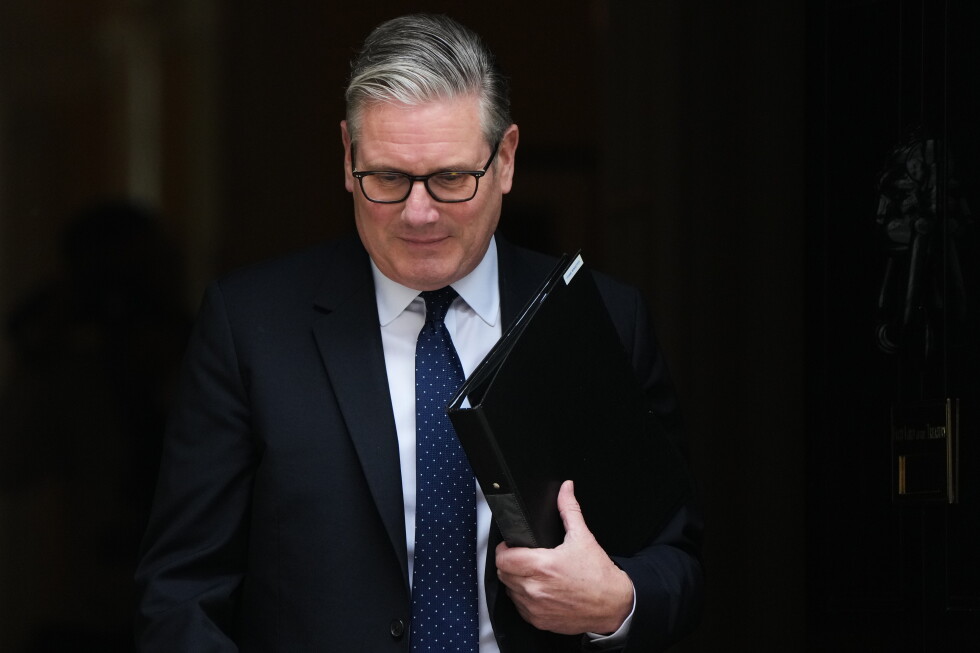
LONDON – When Keir Starmer swept into Britain’s top office in July 2024, voters handed the centre-left Labour Party a landslide parliamentary majority after 14 years of Conservative rule, casting him as a steady, crisis-ending alternative to the relentless chaos, scandal and rapid turnover of Conservative prime ministers Boris Johnson and Liz Truss. Positioning himself as a “safe pair of hands” who would restore dignity and stability to UK politics, Starmer famously pledged to end the “soap opera” of Westminster and deliver a low-drama government focused on public service. Just 22 months later, that promise lies in tatters, and Starmer is stepping down as Labour leader – a spectacular political downfall triggered by a cascade of missteps, internal party unrest, and a catastrophic judgment call that entangled his premiership in the lingering scandal of disgraced financier Jeffrey Epstein.
In an emotional public address Monday, Starmer confirmed he would resign as leader of the governing Labour Party, remaining in Downing Street only as a caretaker prime minister until the party selects a permanent successor in the coming weeks. “The question my party is asking now is whether I am best placed to lead us into the next general election,” Starmer said. “I have heard the answer of my parliamentary party to that question, and I accept that answer with good grace.”
Political analysts trace Starmer’s collapse to weaknesses that were visible even on the day he took power. Though Labour won a commanding 411 of 650 House of Commons seats, the party secured just 34% of the national vote, with most of its support driven by widespread voter anger at the Conservatives rather than genuine enthusiasm for Starmer or his policy agenda. That fragile foundation quickly eroded as a series of early missteps eroded public and parliamentary trust: an early controversy over unreported free gifts, including designer glasses and Taylor Swift concert tickets, was followed by a string of awkward policy U-turns, most notably unpopular attempts to cut welfare spending that stoked deep anger within Starmer’s own party ranks.
The fatal blow to Starmer’s leadership came from his decision to appoint veteran Labour figure Peter Mandelson as UK Ambassador to the United States. Starmer’s government viewed Mandelson as an ideal pick for the role, leaning on his extensive trade expertise and established connections with global elites to navigate the challenges of Donald Trump’s second presidential term. The gamble initially paid off: Mandelson helped negotiate a bilateral trade agreement that spared the UK from steep new tariffs imposed by the Trump administration on dozens of nations. But the appointment backfired spectacularly when newly released documents confirmed Mandelson’s long-documented close ties to Epstein, the convicted sex offender who died in prison in 2019 while awaiting trial on sex trafficking charges. Mandelson infamously once referred to himself as Epstein’s “best friend”, and records released in September 2025 laid bare the extent of their ongoing relationship long after Epstein’s 2008 conviction for sex offenses involving a minor.
Starmer quickly fired Mandelson, but successive revelations continued to escalate the crisis. Documents released in January 2026 indicated that Mandelson, while serving in Gordon Brown’s Labour Cabinet in 2009, shared sensitive, potentially market-moving government information with Epstein. Mandelson has since been arrested and questioned by UK police on suspicion of misconduct in public office, though he has not been charged and faces no allegations of sexual misconduct connected to Epstein. Most damagingly for Starmer, it emerged that Mandelson had failed mandatory security vetting for the ambassador post – yet was appointed anyway, despite the red flags. Starmer’s repeated apologies and claims he had no knowledge of the failed checks failed to defuse outrage across the parliamentary Labour Party.
Starmer’s background as a career prosecutor may have set him up for failure in the top job, according to political observers. Rob Ford, a professor of political science at the University of Manchester, noted that after entering electoral politics in his 50s following a successful legal career that culminated in his appointment as Director of Public Prosecutions for England and Wales, Starmer lacked the innate political instinct needed to spot avoidable crises. “Starmer’s selling point was ‘no more soap opera politics’,” Ford explained. “Instead, his government was the antithesis of what he said he was going to be about, and it’s very hard to survive that.”
Opponents had long painted Starmer, knighted for his service at the Crown Prosecution Service, as an out-of-touch elite “lefty London lawyer”, a narrative that stuck despite his humble working-class roots: born to a toolmaker, Starmer is an avid amateur footballer who still plays the sport at 63, and counts watching his beloved Arsenal with a pint at his local pub among his favorite pastimes. He has kept his family life intensely private, with his two teenage children largely out of the public eye.
Though Starmer’s forensic, prosecutorial style made him a formidable opposition leader, where he repeatedly tore into three successive Conservative prime ministers – most notably scathing attacks on Boris Johnson over the illegal Downing Street lockdown parties during the COVID-19 pandemic – he struggled to adapt to the different skill set required of a sitting prime minister, particularly on domestic policy. He fared far better on the international stage, rallying unified European support for Ukraine in its war against Russia and working to contain the economic and political spillover from the U.S.-Israeli war on Iran. That diplomatic work did little to shore up his domestic standing, however, and his decision to take a firmer public stance against Trump – after initially cultivating a friendly cross-ideology relationship – over the Iran war and Trump’s public threats to annex Greenland led to open personal criticism from the U.S. president, who derided Starmer as “not Winston Churchill” and mocked the Royal Navy.
The final nail in the coffin came on May 7, when Labour suffered a catastrophic trouncing in nationwide local and regional elections. The result triggered a wave of ministerial resignations and open leadership challenges, as lawmakers representing marginal constituencies grew increasingly panicked by plummeting poll numbers and Starmer’s record-low personal approval ratings. In the aftermath, the path was cleared for former Greater Manchester Mayor Andy Burnham to run for a parliamentary seat, which he won decisively, setting him up to be the overwhelming favorite to replace Starmer in 10 Downing Street.
For Starmer, the end of his premiership marks one of the most sudden and dramatic falls from power in modern British political history, brought on by a failure to deliver on the core promise that won him office: steady, competent governance after years of conservative chaos.