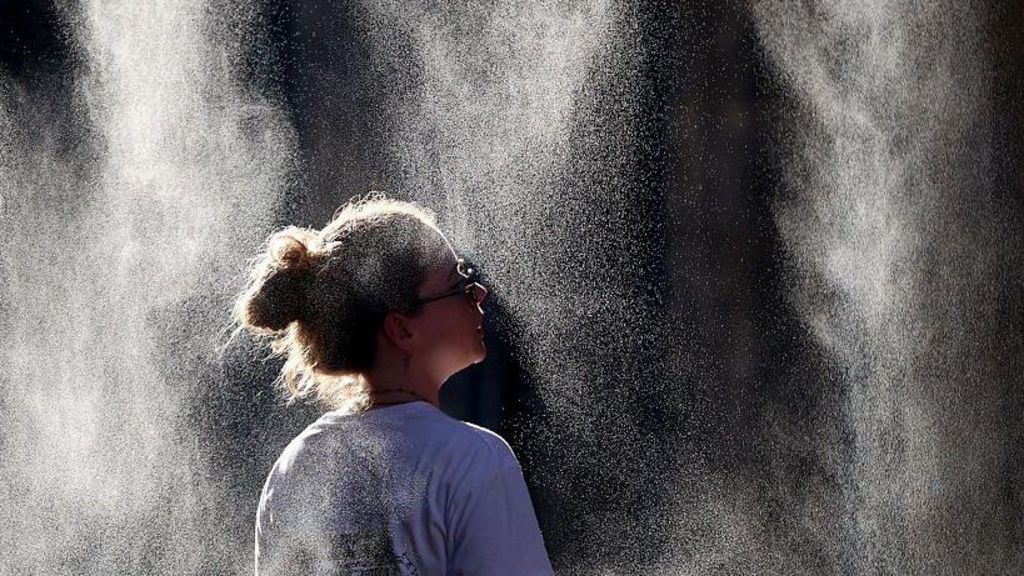
A record-breaking, early-season heatwave has tightened its grip across France, triggering the country’s highest-level red heat warnings for nearly half of its administrative regions and causing widespread disruptions to public services, travel, and daily life. As of Monday, 49 out of France’s 96 continental departments are operating under red alert for extreme heat, with national weather service Météo-France projecting that peak temperatures will surge well above 40 degrees Celsius (104 degrees Fahrenheit) across large swathes of western France on the day. The port city of Bordeaux, in the country’s southwest, was forecast to see thermometers climb to a blistering 43C, with overnight temperatures remaining unseasonably warm to offer little relief.
The extreme heat has already had fatal consequences. In the southwestern Gironde region, local authorities confirmed Sunday that three people between the ages of 80 and 95 have died, with excessive heat listed as a contributing factor to their deaths. The devastating toll comes on the heels of a sweltering weekend that saw temperatures already cross the 40C threshold, forcing officials to cancel alcohol sales at the popular annual Fête de la Musique, a nationwide street festival that draws hundreds of thousands of attendees to public spaces across the country.
In response to the public health risk, French education officials have ordered 845 schools across high-risk regions to close fully for the day, with an additional 1,800 campuses dismissing students early to limit exposure to dangerous high temperatures. In total, an estimated 63 million French residents are impacted by either red or lower-level orange heat warnings, which cover dozens of additional regions across the country.
French Health Minister Stéphanie Rist warned the public in an interview with national public broadcaster TF1 Info Monday that many residents would face significant discomfort and health risks through the duration of the heat event, urging communities to check in regularly on elderly, vulnerable, or isolated relatives and neighbors.
Météo-France has cautioned that this heatwave is unlike many previous seasonal heat events, describing it as “widespread, long-lasting and intense.” Forecasters do not expect temperatures to drop back to seasonable averages until the end of the week, with most of the country outside the western coastal region recording sustained highs between 36C and 40C through the coming days.
Transport infrastructure across Western Europe is already adapting to the strain of high temperatures, which can damage rail tracks and reduce service capacity. France’s state-owned national railway operator SNCF has urged people classified as medically vulnerable to avoid or reschedule any non-essential train travel this week, and multiple Parisian commuter rail lines implemented reduced service schedules on Monday to account for heat-related risks. Neighboring Belgium’s national rail operator also announced it would cancel a number of peak-hour commuter services on Monday and Tuesday to prevent infrastructure damage and safety risks.
The extreme heat is not isolated to France. Forecasts predict record or near-record high temperatures across much of Western and Southern Europe this week, with the Spanish capital Madrid projected to hit 39C and Rome, Italy forecast to reach 37C. In Paris, local residents have taken matters into their own hands to cool off, flocking to city canals to wade and beat the sweltering conditions as the region waits for cooler temperatures to arrive at the end of the week.