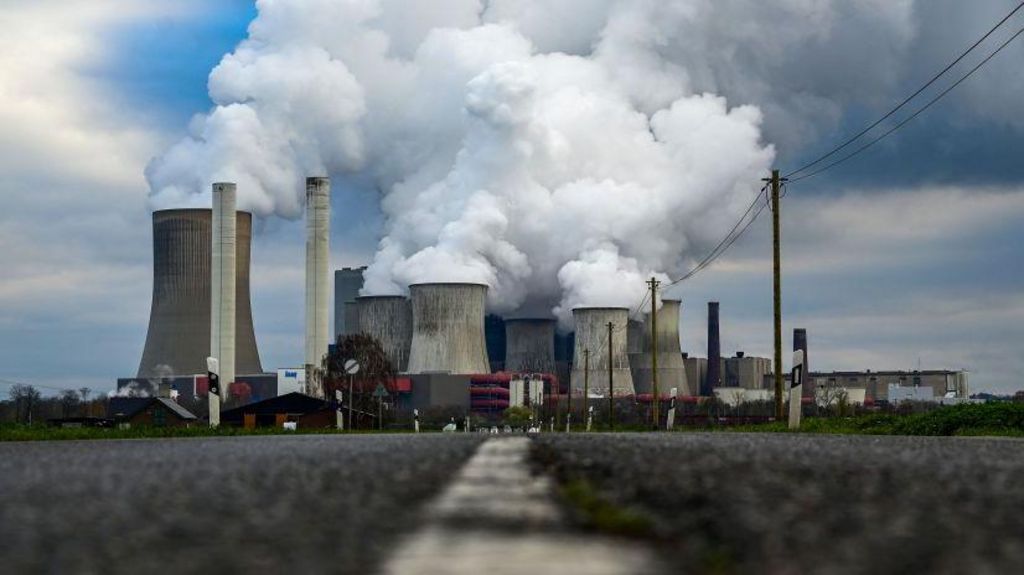
For decades, Germany has anchored its clean energy transition around a defining national policy: kohleausstieg, the planned phase-out of all coal-fired power generation. As Europe’s largest coal consumer and the fourth biggest globally, trailing only China, India, and the United States, Germany’s progress on this initiative carries global weight for climate action. Initially, Berlin pledged to fully eliminate coal from its power mix by 2038, with an accelerated target of 2030 for lignite — the high-pollution, low-grade soft coal that makes up much of the country’s domestic coal reserves. Today, coal accounts for 20% of Germany’s total electricity output, a share the country planned to shrink dramatically as it scales up wind and solar capacity; as of 2025, renewables already supply 59% of the nation’s power, meeting more than half of annual demand.
To replace coal as a reliable baseload and backup for intermittent wind and solar output, particularly during high-demand winter months, Germany originally planned to pivot to natural gas, a fossil fuel that produces roughly half the carbon emissions of coal. Natural gas currently makes up 13% of Germany’s electricity generation. But a recent global energy shock, triggered by soaring gas prices in the wake of rising geopolitical tensions between the U.S. and Iran linked to the Israel conflict, has upended these plans. The price surge has pushed a growing number of major economies to reverse course on coal: Japan has relaxed regulatory rules to expand coal-fired plant operations, Italy has pushed back the planned closure of its remaining coal facilities from an earlier target to 2038, and India has delayed scheduled maintenance shutdowns of existing coal plants to keep output high. The question now hangs over Germany: will the country also backtrack on its landmark coal phase-out?
The debate has been reignited by comments from Chancellor Friedrich Merz, who stated in March that “We must supply this country with electricity. I am not prepared to jeopardise the core of our industry simply because we have adopted phase-out plans that have become unrealistic.” His remarks have sparked speculation that Germany could extend coal operations, driven by two core challenges: energy supply reliability and cost. Germany holds the largest lignite reserves in Europe and the third largest in the world, giving it full energy independence for this fuel at a far lower cost than imported natural gas. By contrast, Germany relies on imports for 95% of its natural gas needs, leaving it extremely vulnerable to global price volatility. Adding another layer of complexity, Germany closed its final nuclear power plants in 2023, eliminating nuclear as an alternative low-carbon baseload option. For energy producers, the appeal of reversing course on coal is clear: LEAG, Germany’s second-largest lignite miner, has openly welcomed discussions of a reprieve for coal power, noting that it already expanded lignite output in 2022 to offset lost Russian gas imports following Moscow’s full-scale invasion of Ukraine. “We already demonstrated our ability to quickly draw on reserves to return to the market when the situation demands it,” the company said in a statement, adding that it supports the government’s renewed focus on long-term supply security.
But environmental researchers and climate advocates argue that doubling down on coal would derail Germany’s energy transition. “More coal is not the answer,” insisted Hauke Hermann, a senior researcher at independent environmental think tank Öko Institute. Instead, Hermann argues that Germany should accelerate the expansion of renewable energy capacity to resolve supply gaps. Major industrial groups, meanwhile, are calling for clear, long-term policy certainty to support business investment. “Our industry needs reliable energy,” said Wolfgang Große Entrup, director general of the German Chemical Industry Association (VCI). “Renewable energy alone cannot yet guarantee this… Companies will only invest billions if they can trust that energy will remain reliably available at competitive prices in the future.”
Notably, almost no mainstream political faction outside the far-right Alternative for Germany (AfD) is calling for scrapping the coal phase-out entirely. The debate instead centers on a modest compromise: extending operations for a small group of existing facilities. The proposal in question covers six coal-fired plants running on imported hard coal, a fuel with lower emissions than domestic lignite. These plants are currently only activated as backup capacity during periods of high demand, such as prolonged cold winters. Owner Steag Iqony Group has urged policymakers to allow the plants to run full-time, arguing that temporary full operation could power millions of households while strengthening supply security and lowering energy costs. A parliamentary committee established in March is currently reviewing the proposal.
The biggest barrier to a final decision lies in Germany’s ruling grand coalition, which splits power between the center-right CDU/CSU bloc and the center-left SPD. The two parties hold starkly opposing views on extending coal operations: CDU/CSU leans toward extending capacity to protect industrial competitiveness and keep costs low, while SPD opposes any rollback of climate commitments. SPD energy spokeswoman Nina Scheer warned that loosening coal rules would be “counterproductive for the energy transition and mean new fossil lock-in effects.” On the other side, CDU deputy leader and Saxony Minister-President Michael Kretschmer argued that “Germany, as a major industrial nation, must do everything in its power to ensure that energy remains affordable. The energy transition must be completely recalculated. It should not be a matter of [original arbitrary] deadlines, but rather a matter of realistically considering security of supply and affordability.”
The German federal government is set to make a final decision this year on whether to uphold the 2030 lignite phase-out deadline, or allow limited coal capacity to be retained as a strategic reserve for a temporary period. A statutory review of the coal phase-out, originally launched to assess whether the transition could be accelerated, is scheduled for publication in August. The review will evaluate the policy’s impact on energy supply, security, and consumer costs — and many observers now expect it to recommend slowing, rather than speeding up, Germany’s exit from coal.