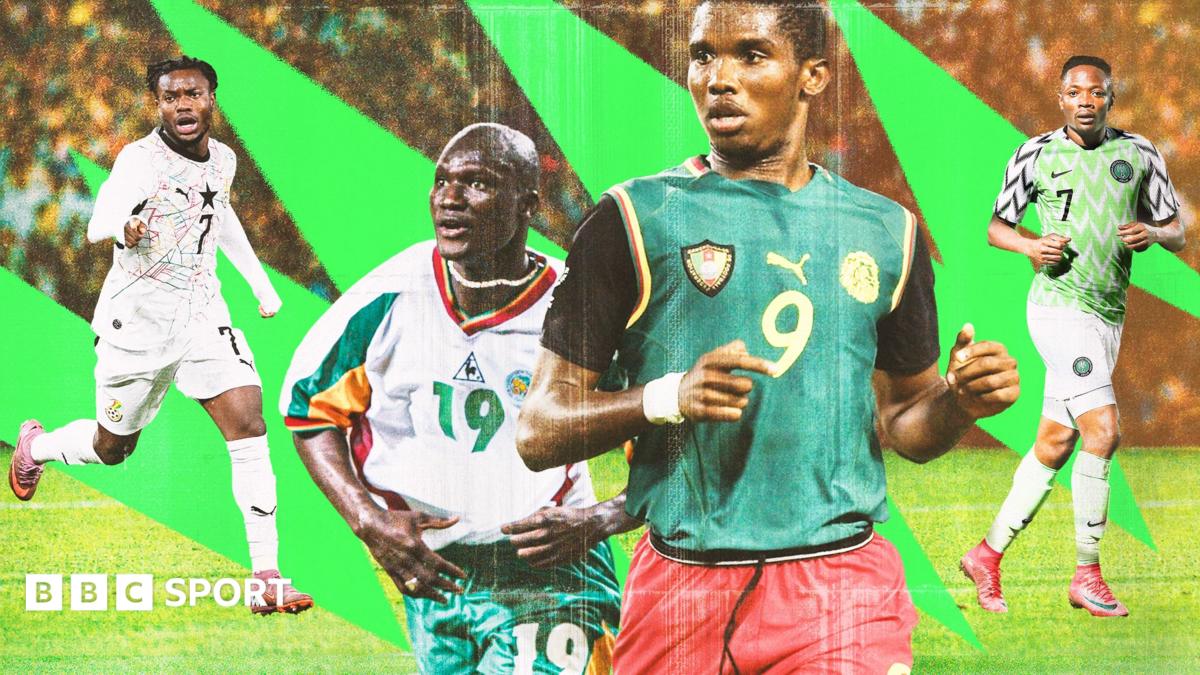
The FIFA World Cup is globally celebrated for its breathtaking goals, last-minute drama, and raw emotional moments — but it is also a stage where memorable football fashion is born. When it comes to bold, culturally rooted, and instantly recognizable kit designs, African national teams have produced some of the most iconic looks in the tournament’s history. BBC Sport Africa has curated a list of 10 standout designs from the continent, spanning more than 50 years of World Cup participation, inviting fans to weigh in on which they rank as the all-time greatest.
The oldest entry on the list hails from 1974, when Zaire (now the Democratic Republic of the Congo) took to the World Cup stage in a striking yellow and green ensemble that perfectly embodied the fashion sensibilities of its era. Featuring a wide collar and a dramatic deep V-neck, the kit made its biggest statement by emblazoning both the country’s name and the national team’s Leopards nickname and logo directly across the chest. While Zaire’s 1974 tournament ended in disappointment — including a lopsided 9-0 defeat to Yugoslavia — the kit itself has gone down in history as a bold classic. Even contemporary Congolese designers draw inspiration from it: Alvin Junior Mak, who went viral recently for creating the current DRC squad’s viral leopard-print arrival suits, says he looked back to 1974 to ground his work. “When you are in Africa, we say if you want to move forward, you have to see where you come from,” Mak explained to BBC Sport Africa.
Next on the list is Algeria’s 1982 kit, created for the country’s first ever World Cup appearance. Mirroring Zaire’s 1974 design choice, the kit featured the country’s name printed across the chest, written in elegant Arabic script. Like the Zaire kit, it also boasts a deep neckline and oversized collar that marked it as a product of early 1980s fashion. Produced by Sonitex, Algeria’s defunct state-owned clothing manufacturer, the design is no longer bound by copyright protection — a detail that has made it widely reproduced by small local brands for both domestic fans and the Algerian diaspora. This accessibility has cemented its cult status among Algerian football fans, particularly self-described football hipsters, says Algerian sports journalist Maher Mazahi.
Cameroon’s 1990 kit is forever tied to one of the most iconic runs in African World Cup history. That year, the Indomitable Lions became the first African nation to reach the tournament’s quarter-finals, stunning defending champions Argentina 1-0 in the opening match and capturing global attention with Roger Milla’s iconic corner flag dance celebration. The 38-year-old striker, who was called out of retirement by Cameroon’s President Paul Biya, scored four unforgettable goals during the run. The kit’s centerpiece was a roaring lion emblazoned across the chest, a symbol that still stands for national pride, courage, and determination for Cameroonians, explains Paul Njie, BBC World Service’s Yaounde correspondent. “Many people believe that was the best ever performance of the Cameroon national team and some of them attribute that to the luck which came with the kit,” Njie says.
For Nigeria’s 1994 World Cup debut, the Super Eagles debuted an away white kit that would become legendary. In that tournament, Nigeria claimed 3-0 and 2-0 wins over Bulgaria and Greece respectively while wearing the white jersey, dropping only their matches against Argentina and Italy when wearing their traditional green home kit. That coincidence has only added to the kit’s mythos among Nigerian football fans. “We see the legends, the players that made the difference for Nigerian football, and if I close my eyes that’s the first shirt that comes to mind,” former Super Eagles captain William Troost-Ekong told BBC Sport Africa. “Nigeria’s greatest set of Super Eagles have worn that shirt and all of us strive to be able to imitate that.”
South Africa’s 1998 kit, worn during the country’s first ever World Cup appearance after the end of apartheid, is a geometric-designed classic from Italian sportswear brand Kappa. The design was an updated iteration of the kit Bafana Bafana wore when they won the 1996 Africa Cup of Nations on home soil, a moment that remains a touchstone of national pride. Though South Africa failed to win any of their three group stage matches in their 1998 debut, the kit has endured as a fan favorite. “These days South Africa tend to wear yellow, but back in the 1990s their shirts were much more fun,” said Josh Warwick, co-founder of the Cult Kits website. “In our opinion, Kappa were one of the great brands from that era.”
One of the most controversial entries on the list is Cameroon’s 2002 sleeveless kit. Originally designed as a basketball-style vest, the Indomitable Lions wore the sleeveless version to win the 2002 Africa Cup of Nations title just months before the World Cup, and it instantly won over players and fans alike. “When we came to the dressing room we said, ‘Wow, this is a new generation of shirt’. When we went on to the pitch the world was watching and it became famous. Everybody in Africa wanted to wear that shirt,” former Cameroon midfielder Eric Djemba-Djemba recalled in a 2023 interview. However, FIFA ruled the sleeveless design violated World Cup competition rules, forcing Cameroon to add awkward black sleeves for the tournament — a decision many fans still see as an unnecessary spoiler.
Senegal’s 2002 kit is tied to one of the biggest upsets in World Cup history: the Teranga Lions’ 1-0 opening match win over defending champions France, courtesy of a winning goal from the large, imposing midfielder Papa Bouba Diop, nicknamed “The Wardrobe” for his massive frame. The kit’s signature baggy fit even became part of its iconic look, and it remains wildly popular among Senegalese fans decades later. “Of all our kits, 2002 is the best,” said Mamour Insa, a Senegal fan who followed his team at a recent World Cup watch event in New York. “All our generation, they wear just that kit. A lot of young people wear it more than new designs. It is very difficult to find.”
Ghana’s 2010 red and gold kit is forever linked to one of the most gut-wrenching moments in African World Cup history: Asamoah Gyan’s late penalty miss against Uruguay that would have sent the Black Stars into the tournament semi-finals, the first for any African side. With the match tied 1-1 in the final moments of extra time, Luis Suarez was sent off for a deliberate handball that stopped a sure Ghana goal, but Gyan’s penalty clipped the crossbar and went over; Uruguay went on to win the match in a penalty shootout. Despite the heartbreaking outcome, the kit itself remains a fan favorite. “I think it was a great shirt, the players loved it,” former Ghana midfield legend Michael Essien told BBC Sport Africa, jokingly adding that its tight, figure-hugging cut required a well-built physique to pull off.
Nigeria’s 2018 neon green kit became a global viral sensation before the tournament even kicked off, with fans queuing for hours outside retailers to get their hands on the popular design. The Nike design pays deliberate homage to Nigeria’s 1994 debut kit, creating a modern classic that circles back to the Super Eagles’ first World Cup moment. “The best football shirt ever,” Troost-Ekong said of the design. “Everyone was trying to get hold of it, I had so many calls and messages.” Despite its massive popularity, the Super Eagles only got to wear it once during the 2018 tournament, in a 2-0 group stage win over Iceland.
The newest entry on the list is Ghana’s 2026 home kit, which features a striking spiderweb design inspired by Kwaku Ananse, the iconic trickster spider figure from Ghanaian folklore. The bold design has drawn comparisons to Spider-Man’s suit for its bright, web-patterned look, but it may never get its moment on the World Cup stage: FIFA has already ruled that Ghana will not be allowed to wear the home strip for any of its 2026 group stage matches, leaving fans to wonder if this will go down as a would-be classic that never got its spotlight.