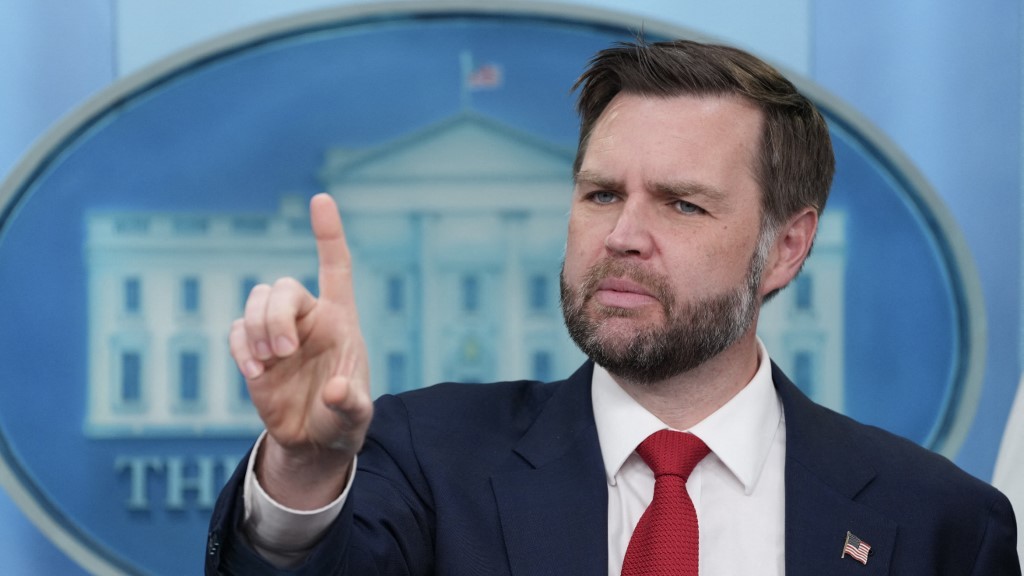
Tensions between the U.S. government and Israeli leadership have escalated sharply this week, after Vice President JD Vance delivered a blunt public warning to Israeli officials: President Donald Trump is the only major world leader still sympathetic to their cause, and they risk damaging their most critical security partnership by attacking the newly signed U.S.-Iran memorandum of understanding (MoU).
Speaking at a White House press briefing Thursday, Vance pushed back against fierce Israeli criticism of the draft agreement, which includes a reported $300 billion reconstruction fund for Iran and paves the way for 60 days of formal negotiations on Tehran’s nuclear program and relief from international economic sanctions. The MoU, which aims to end months of open conflict between the two nations, has sparked widespread outrage across Israel’s political spectrum, with many leaders arguing the deal effectively grants Tehran a major strategic victory.
Vance laid out a clear two-part message for Israeli cabinet members considering continued public opposition. “Number 1: Donald J. Trump is the only head of state in the entire world who is sympathetic to the nation of Israel at this moment in time,” he told reporters. “If I was in the cabinet of the Israeli government, I might not be attacking the only powerful ally that I have anywhere left in the entire world.”
Israeli officials have also voiced particular anger over provisions in the MoU that require an immediate end to Israel’s ongoing war in Lebanon, with multiple senior figures saying they will refuse to comply with the terms. Itamar Ben Gvir, Israel’s far-right national security minister, has been one of the deal’s most vocal opponents, insisting Israeli forces will maintain their presence in occupied southern Lebanese territory indefinitely. In an interview with *The New York Times*, Vance pushed back against hardline positions from Ben Gvir and fellow far-right Finance Minister Bezalel Smotrich, questioning their alternative approach to long-term security. “What is your exact proposal? You’re a country of 9 million people. You can’t just kill your way out of solving every single national security problem that you have,” Vance said.
The political confrontation comes as Israeli Prime Minister Benjamin Netanyahu navigates a challenging path ahead of scheduled October national elections, as he works to shore up sagging approval ratings for his ruling coalition. During a press conference Monday, Netanyahu claimed Israel had secured decisive victories in all recent conflicts across Gaza, Lebanon, Syria and Iran. He also doubled down on his government’s 2025 and 2022 pre-emptive strikes against Iranian nuclear targets, arguing that inaction would have allowed Tehran to develop a functional nuclear weapon.
Vance reminded Israeli leaders of the depth of U.S. security support that has sustained their country for decades, noting that roughly two-thirds of the defensive military equipment Israel relies on for national protection are manufactured in the United States and funded by American taxpayer dollars. “The problem for Israel is not Donald Trump, and anybody in Israel who thinks their biggest problem is the president of the United States needs to wake up and smell the reality of the situation that country is in,” he added.
Uncertainty already hangs over the next phase of negotiations between the U.S. and Iran. The first formal negotiating session, scheduled for Friday in Switzerland, has been postponed indefinitely, with the White House announcing late Thursday that Vice President Vance would not attend the upcoming round of direct talks, citing unresolvable “logistical complications” that made the trip unfeasible.
Fresh violence on Friday has further complicated prospects for a peaceful resolution, as Israel launched new air strikes across southern and eastern Lebanon. Lebanese official counts confirm 18 civilians and combatants were killed in the strikes, while Hezbollah carried out one of its deadliest attacks of the entire conflict, killing four Israeli soldiers including a senior battalion commander. The sudden escalation has reinforced fears that the ceasefire called for in the U.S.-Iran MoU could collapse before formal negotiations even get underway.