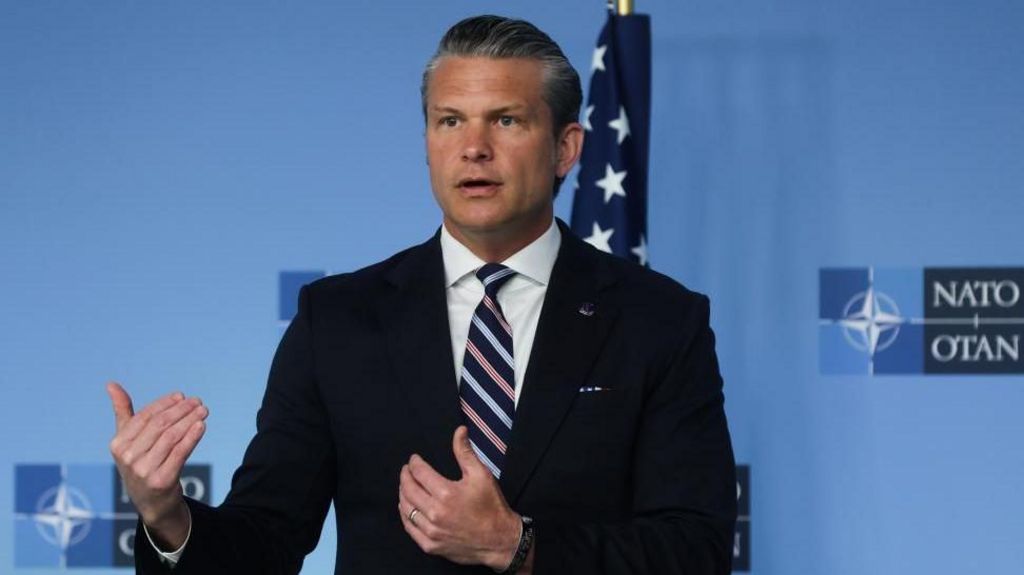
At a recent gathering of NATO defense ministers in Brussels, U.S. Defense Secretary Pete Hegseth delivered a sharp rebuke to alliance members he accuses of free-riding on American security investment, while unveiling a sweeping six-month review of U.S. military posture across Europe. The announcement comes on the heels of Washington’s decision to scale back its commitments to the NATO Force Model (NFM), the alliance’s high-readiness rapid-response force.
Hegseth drew a clear line between compliant and non-compliant allies during his address, stating bluntly: “Some countries will fail, and others will pass with flying colours.” He saved particular criticism for NATO members that restricted operational support for U.S. forces during the ongoing conflict with Iran, a point of tension that has already roiled U.S. diplomatic relations with multiple European allies. The six-month review, branded by Hegseth as “NATO 3.0”, is framed as a push to accelerate a shift toward European-led security on the continent.
At the core of the standoff is defense spending: Washington is demanding all NATO members meet a binding target of allocating 5% of gross domestic product to defense by 2035, with 3.5% earmarked for core defense capabilities and 1.5% for defense-related infrastructure. Hegseth warned that U.S. financial contributions to NATO’s annual budget would now be tied directly to progress on this target. “Where other allies do not spend with urgency, our dues contributions will go down,” he said, calling out wealthy major economies that continue to pay lip service to the rules-based international order while clinging to decades of free-riding on U.S. security. He declined to name specific countries facing criticism.
The fissures within the alliance were on clear display throughout the meeting. UK Defense Secretary Dan Jarvis attended the summit without a finalized British defense investment plan, following the resignation of his predecessor John Healey, who stepped down after warning the draft plan fell “well short” of the UK’s required commitments under the 5% target.
NATO Secretary-General Mark Rutte pushed back on the most severe U.S. criticism, noting that alliance members already increased collective defense spending by €90 billion ($103 billion) in 2025, an almost 20% year-over-year rise. He emphasized that European allies are already “backfilling” the air and naval capabilities the U.S. plans to withdraw from the NFM, though senior NATO officials have conceded that not all withdrawn U.S. capabilities can be fully replaced immediately. Rutte confirmed that the U.S. drawdown is already in effect, and he called on all members to present clear, credible roadmaps to hit the 5% target ahead of the alliance’s July summit in Ankara.
Tensions between Washington and European capitals have been building for months over the Iran conflict. In May, the Trump administration announced it would withdraw 5,000 U.S. troops from Germany amid a public dispute with German Chancellor Friedrich Merz over German policy on the Iran war. The same month, Washington initially announced a 4,000-troop withdrawal from Poland, before President Trump reversed the decision and pledged instead to deploy an additional 5,000 troops to the country. Poland currently hosts up to 10,000 rotational U.S. troops, and Polish Defense Minister Władysław Kosiniak-Kamysz confirmed Thursday that Washington is actively considering Warsaw’s offer to host a permanent U.S. military base, with a final decision pending negotiations on agreement terms.
Earlier this year, President Trump also threatened to cut off all trade with Spain after Madrid refused to allow U.S. forces to use Spanish air bases for strikes on Iran, where the U.S. maintains two key military installations: Naval Station Rota and Morón Air Base.
A NATO official explained the role of the NFM, noting it is a pre-allocated set of high-readiness forces that the alliance’s Supreme Allied Commander in Europe can rely on for rapid deployment in crisis scenarios. The U.S. drawdown from this framework marks one of the most significant shifts in transatlantic security burden-sharing in modern alliance history.