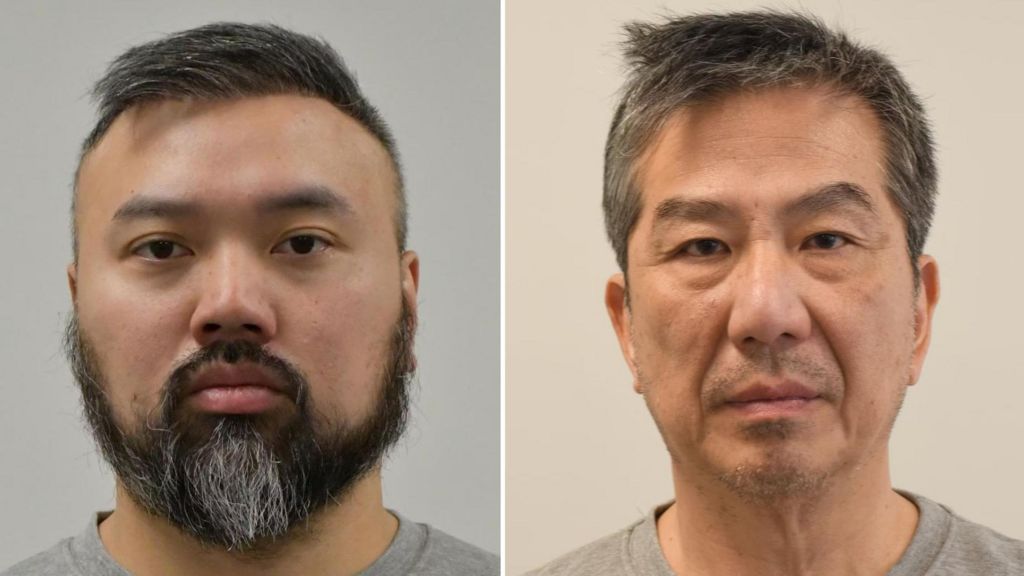
On Thursday, a landmark sentencing at London’s Old Bailey delivered severe punishment to two men convicted of working on behalf of Chinese intelligence to target Hong Kong pro-democracy dissidents on British soil. After a month-long trial, 40-year-old Chi Leung “Peter” Wai received a total 10-year prison term, while 65-year-old Chung Biu “Bill” Yuen was sentenced to eight years behind bars. Both were found guilty of assisting a foreign intelligence service under the UK’s National Security Act, marking one of the most high-profile foreign interference cases in recent British legal history.
Wai, a former Metropolitan Police officer who joined UK Border Force at Heathrow Airport in December 2020 after years of public service roles including eight years in the Royal Navy and a volunteer constable position with City of London Police, abused his official access to the Home Office’s national database of foreign nationals to track Hong Kong residents who fled the territory’s crackdown on pro-democracy activism. Beyond the charge of assisting a foreign intelligence service that carries a six-year sentence, he was also convicted of misconduct in public office, which added an extra four years to his punishment. In one message sent to Eddie Ma, a former chief superintendent of Hong Kong Police’s Criminal Intelligence Bureau who maintained ties to Chinese authorities, Wai infamously wrote, “Will not let any cockroaches in,” referencing the dissidents he was tasked to monitor.
Yuen, a former Hong Kong police officer who served as office manager at the Hong Kong Economic and Trade Office in London, acted as the critical liaison between Wai and Chinese state authorities, coordinating the illegal surveillance network that prosecutors described as a coordinated “shadow policing operation” run for Hong Kong authorities and ultimately the Chinese government. During the trial, the court revealed that the operation did not only target exiled dissidents – it also extended special surveillance attention to high-profile British politicians, including senior Conservative MP Sir Iain Duncan Smith.
The court also heard that Wai recruited another Border Force officer, former Royal Marine Matthew Trickett, to participate in the surveillance. In November 2023, Trickett was ordered by Wai to follow prominent exiled Hong Kong activist Nathan Law – one of eight dissidents that Hong Kong chief executive John Lee placed a HK$1 million (£100,000) bounty on that year – while Law spoke at the Oxford Union. Shortly after the pair were apprehended by counter-terrorism police, Trickett was found dead in an apparent suicide, with an official coroner’s inquest scheduled for November this year.
Delivering the sentencing remarks, Mrs Justice Cheema-Grubb emphasized the severity of the men’s crimes, stating their actions “threaten the sovereignty of the state.” Several Hong Kong pro-democracy activists, including one who currently has a HK$1 million bounty placed on her by Hong Kong authorities, attended the sentencing in the Old Bailey’s public gallery to observe the ruling.
While the jury returned guilty verdicts on the main charges, it could not reach a consensus on an additional count of foreign interference linked to an alleged break-in at the West Yorkshire home of a Hong Kong-origin fraud suspect.
UK law enforcement and prosecution officials have framed the convictions as a stark warning against any foreign interference activity on British territory. Commander Helen Flanagan, Head of Counter Terrorism Policing London, made clear in an official statement that this kind of covert activity will not be tolerated. “I want to be really clear that if you are working on behalf of a foreign state, that we in counter-terrorism policing and with our partners will identify who you are and bring the full force of the National Security Act upon you,” Flanagan said.
Bethan David, Head of the Counter Terrorism Division at the Crown Prosecution Service, echoed that sentiment, noting that Wai and Yuen’s actions were “deliberate, coordinated and carried out with full knowledge of who it would benefit.” She added that the convictions send an unmistakeable message: “transnational repression, foreign interference, unauthorised surveillance, and attempts to operate outside the law will not be tolerated on British soil.”
The case has sparked renewed official and public scrutiny of transnational repression operations run by hostile states within UK borders, raising urgent questions about the vulnerability of sensitive government systems and the safety of exiled dissidents who have relocated to Britain to escape persecution.