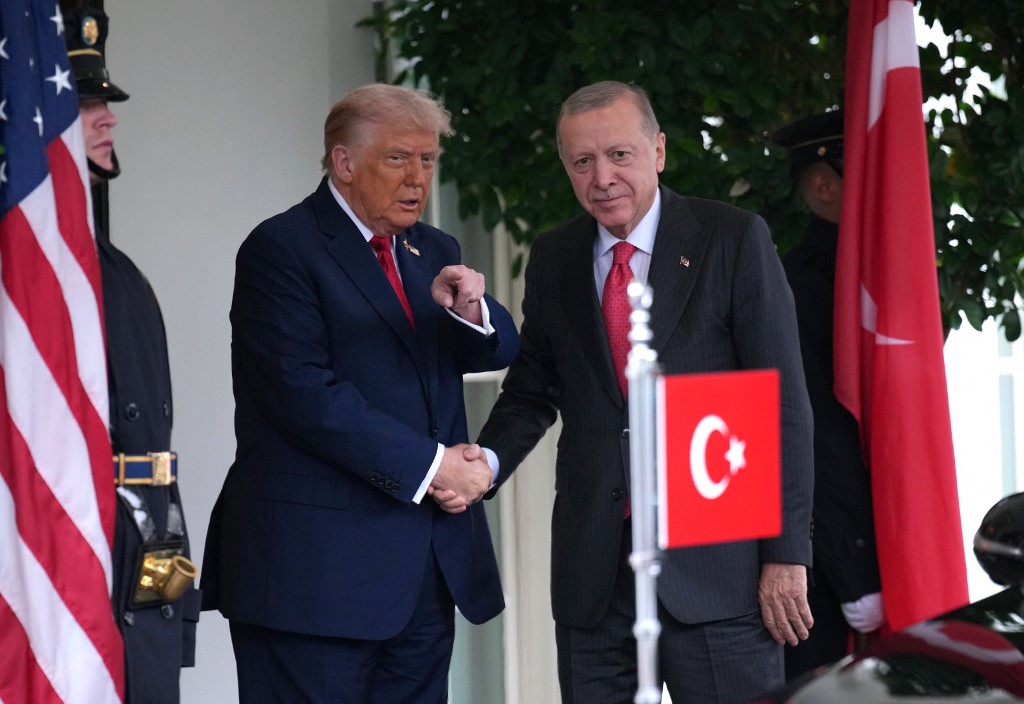
New details have emerged from a recent phone call between US President Donald Trump and Turkish President Recep Tayyip Erdogan, revealing that Trump committed to attending the upcoming Nato summit in Ankara specifically as a gesture to the Turkish leader, multiple sources familiar with the conversation told Middle East Eye.
This development comes amid steadily escalating frictions between the United States and its European Nato allies, with the July gathering in Turkey widely framed as a critical turning point for the alliance. Leaders on both sides are expected to lay out their long-held positions and work toward a unified path forward after months of growing disagreement over alliance priorities and burden sharing.
Turkish Foreign Minister Hakan Fidan reinforced this framing during comments to reporters on Thursday, noting that many European capitals view Ankara’s hosting of the summit — and Erdogan’s personal role as host — as the single biggest factor securing Trump’s participation. Fidan argued that without Turkey in the hosting role and Erdogan at the event, Trump would have skipped the summit, sending a clear signal that he did not view the gathering as a priority. He added that productive talks require Trump’s presence, as the summit will address core disagreements between US and European perspectives that cannot be resolved without the American leader in attendance.
The tensions over alliance burden sharing moved to the forefront this week as US Defense Secretary Pete Hegseth delivered a sharp warning to Nato allies during the bloc’s defense minister meeting in Brussels. Hegseth announced that over the next six months, the US will conduct a full review of its military footprint across Europe, and will cut its contributions to the alliance’s collective budget if European member states fail to raise their national defense spending to 5 percent of gross domestic product. “Make no mistake about it, this will be a real review,” Hegseth told attendees.
Unusually, Turkey has so far avoided the American anger directed at many allies over insufficient defense spending, thanks to a string of policy wins for the Trump administration from Erdogan’s government. Ankara has delivered on multiple key priorities for Trump, from brokering last year’s ceasefire in Gaza to playing a critical supportive role in the recent Iran memorandum of understanding, a deal Trump personally publicly praised.
Turkey has already outpaced Nato’s original 2 percent defense spending target in 2024, hitting 2.3 percent of GDP. On Thursday, the Turkish defense ministry confirmed that Ankara’s long-term military budgeting is already aligned with the goal of reaching the new 5 percent target, which Nato has required all member states to hit by 2035.
In a show of allied cooperation ahead of the July summit, Nato members have moved to bolster Turkey’s national air defense capabilities. The United States and Germany deployed Patriot air defense systems to southern Turkey in May. On Thursday, Turkey’s defense ministry announced that an Italian SAMP/T air defense system had also been deployed to the 3rd Main Jet Base Command in the central Turkish city of Konya, as part of Nato’s Standing Defence Plan to strengthen the alliance’s collective eastern air defenses.