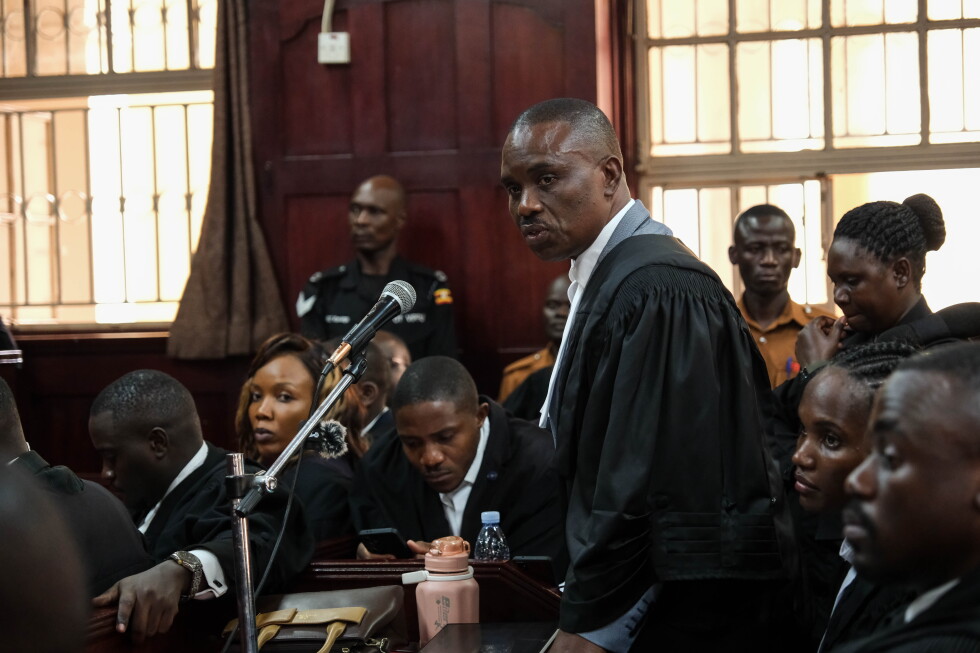
In a dramatic escalation of political tensions in Uganda, a Kampala court has formally charged prominent opposition attorney Erias Lukwago with misprision of treason, a charge that comes just days after he was seized from his home in a heavily criticized military operation ordered by the country’s powerful army chief Gen. Muhoozi Kainerugaba.
Lukwago, who leads the opposition bloc People’s Front for Freedom and serves as legal counsel to jailed four-time presidential candidate Kizza Besigye, has entered a formal denial of the charges. The presiding magistrate confirmed the charge stems from allegations that Lukwago failed to report purported treasonous acts by other individuals. A well-known critic of long-serving President Yoweri Museveni and his son Kainerugaba, Lukwago previously held the position of Kampala mayor.
The circumstances of Lukwago’s arrest have sent shockwaves through Uganda’s political and legal communities: armed soldiers scaled the perimeter wall of his private residence to detain him, a show of force that has amplified growing concerns over the rapidly expanding influence of Kainerugaba, who has openly positioned himself to succeed his father as president. The army chief, who was appointed as Uganda’s top military commander in 2024, has a well-documented history of aggressive public attacks on perceived political opponents via the social platform X. Ahead of Lukwago’s arrest, he publicly warned the lawyer would face “hurt and pain” and could spend up to a decade behind bars.
The charges against Lukwago are widely understood as a direct retaliation for his efforts to hold Kainerugaba legally accountable for alleged human rights violations connected to Besigye’s case. Besigye is currently imprisoned on treason charges that his supporters dismiss as politically motivated. In November 2024, Besigye was abducted from Nairobi, Kenya, and subsequently jailed without bail in Uganda, and Lukwago had moved to name Kainerugaba as a responsible party in the alleged violations of Besigye’s legal rights. Kainerugaba, who has publicly threatened to hang Besigye over unproven claims of a plot to kill Museveni, made his anger over Lukwago’s legal action clear in a post on X Monday, writing, “This fool will learn the lesson he has been begging for.” After Lukwago’s arrest, Kainerugaba further escalated the confrontation by posting photos of a blindfolded Lukwago appearing to beg for mercy.
The political context of this confrontation underscores a major shift in Uganda’s power dynamics. President Museveni, 81, was recently sworn in for his seventh consecutive term in office, but Kainerugaba has already emerged as the country’s de facto center of power, with his succession to the presidency viewed as an increasingly likely outcome as Museveni relies heavily on his son’s military authority. Museveni, who has held uninterrupted power in Uganda since 1986, has not publicly announced a timeline for his retirement, and with no viable rivals within his ruling party, political analysts broadly agree the military will play a decisive role in selecting the next national leader.
Kainerugaba’s background includes military training at elite institutions in the United States and United Kingdom. He rose through the ranks to command the presidential guard unit, which he later expanded into a powerful elite special forces group, before being appointed army chief last year. Beyond his military role, he founded the Patriotic League of Uganda, a political activist group that draws support from a wide network including sitting government ministers and prominent business figures. Just this week, Kainerugaba made public that even Uganda’s parliamentary speaker and her deputy serve as his group’s envoys to the legislature, a statement that lays bare his sweeping influence over state institutions.
Uganda’s leading legal body, the Uganda Law Society, has called for Lukwago’s immediate release, condemning his arrest as a direct contempt of the country’s judicial processes. The charges against one of the country’s most visible opposition figures have deepened fears of accelerating authoritarian consolidation under the Kainerugaba-Museveni dynasty, as political dissent faces increasingly harsh crackdowns across the nation.