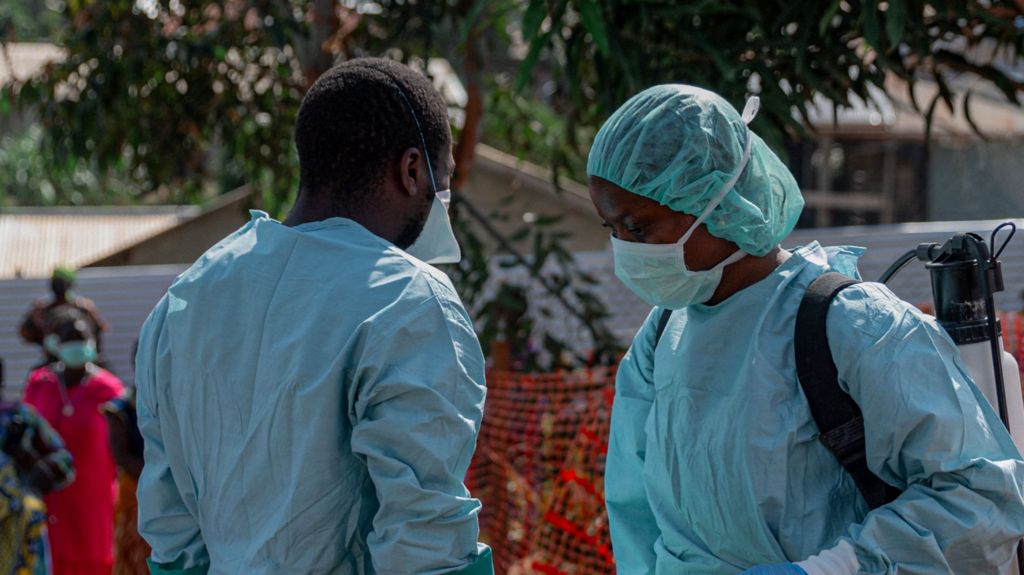
A violent attack on an Ebola treatment facility in eastern Democratic Republic of Congo (DRC) has triggered an urgent search operation for a 6-year-old confirmed Ebola patient and her mother, who were abducted from the hospital by armed men armed with knives, local health authorities have confirmed.
According to a formal statement released by Dr. Lubambo Maboko Gaston, a senior local health official, the pair were taken from Wanamahika Hospital in the conflict-affected city of Butembo by what he described as a group of ‘very angry’ assailants. It remains unclear whether the attackers had any prior personal connection to the child or her family, but the incident fits a dangerous pattern of rising violence against Ebola response infrastructure that has plagued the current outbreak.
Deep-seated suspicion and misinformation around Ebola treatment efforts have created a volatile environment for medical responders across the affected region. In a conversation with Reuters, Dr. Gaston issued an urgent appeal to the abducted pair to voluntarily turn themselves in at a formal health facility, warning that delayed care would not only put their own health at severe risk of worsening outcomes but also threaten the health of their family and community by enabling further virus transmission.
This attack is not an isolated event. During the current outbreak, Ebola treatment centers have been targeted repeatedly by community members distrustful of medical efforts. Official counts from response teams have already confirmed 840 total cases and nearly 200 deaths from the virus to date.
Just last month, tensions boiled over in two separate communities. In Mongbwalu, local police were forced to fire warning shots into the air to disperse an angry crowd that attempted to forcibly retrieve the bodies of Ebola victims from a local health facility. Just a few days before that incident, residents of Rwampara — a town located 85 kilometers southeast of Mongbwalu — set fire to hospital isolation tents after authorities blocked them from collecting the body of a man who had died from suspected Ebola.
Health experts emphasize that the bodies of people who die from Ebola carry an extremely high viral load, making them far more infectious than living patients in most cases. Unregulated contact and traditional burial preparations with infected remains are one of the most common drivers of new Ebola clusters, making these forced retrievals an especially major public health threat.
Local leaders say much of the unrest stems from widespread misinformation that has spread through rural and remote parts of the affected provinces. ‘People are not properly informed or sensitised about what is happening. For a certain segment of the population, especially in remote areas, Ebola is an invention by outsiders – it does not exist,’ local politician Luc Malembe Malembe explained to the BBC in an interview last month. ‘They believe it is the NGOs and hospitals creating this to make money, and this is tragic.’
Complicating response efforts further, the current outbreak is caused by Bundibugyo, a rare strain of Ebola that has no licensed vaccine currently available for use. The World Health Organisation (WHO) has confirmed that it will take months of development and testing before a specific vaccine for this strain is ready for widespread deployment.
The abduction took place on Monday in North Kivu, one of three eastern DRC provinces currently at the center of the outbreak, alongside Ituri and South Kivu. Ituri province remains the epicenter of ongoing transmission. The WHO has repeatedly warned that ongoing armed conflict in the region is a major barrier to containing the spread of the virus. The M23 rebel group currently occupies large swathes of both North and South Kivu, leaving vast areas inaccessible to medical response teams.
More coverage of the DRC Ebola outbreak and other news from across the African continent is available at BBCAfrica.com, and audiences can follow BBC Africa’s reporting on Twitter, Facebook, and Instagram.