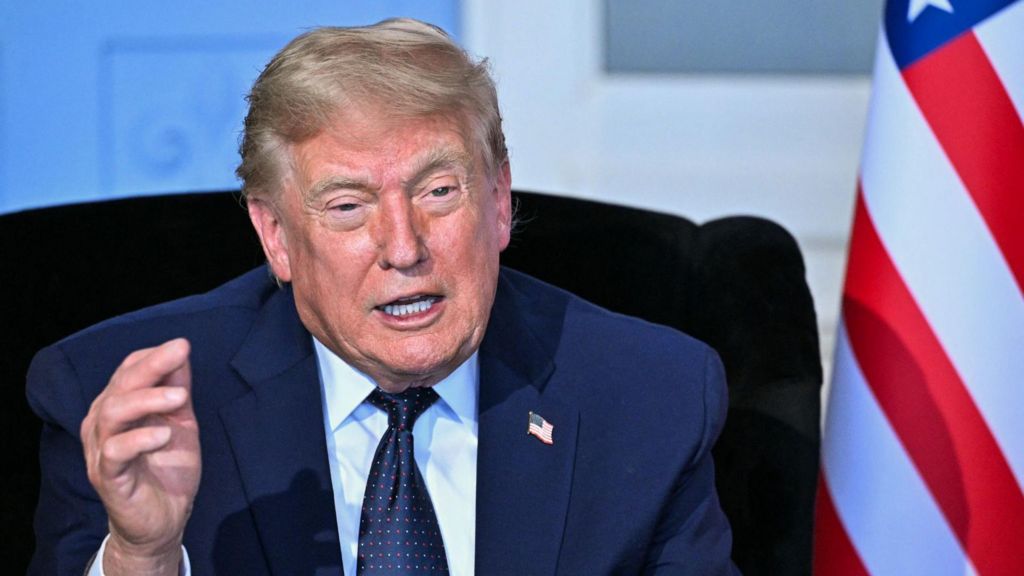
As U.S. President Donald Trump attends the 2026 G7 Summit in France, a landmark breakthrough in months of conflict between the United States and Iran has emerged, with a preliminary peace memorandum of understanding already signed and a possible early public release as soon as this week. U.S. Vice President JD Vance confirmed the development in multiple media interviews, laying out key details of the short, broad framework agreement that paves the way for full peace talks.
According to senior U.S. administration officials, the 1.5-page preliminary MOU was signed electronically by Trump, Vance, and Iranian Parliament Speaker Mohammad Bagher Ghalibaf. Trump first announced the signing during talks with French President Emmanuel Macron on Monday, stating “I am very happy to say it’s signed, the deal is all signed”. While the deal is scheduled for formal formalization in Geneva this Friday, alongside the reopening of the strategically critical Strait of Hormuz, Vance noted that Trump could choose to release the text of the agreement to the public before that date.
A major step built into the framework is the extension of an existing ceasefire across all conflict zones by an additional 60 days, a window that will allow negotiating teams to work out the granular details of a final permanent peace agreement. Iranian Foreign Minister Seyed Abbas Araghchi has confirmed that technical negotiations for the final deal will kick off in Switzerland this Friday, the same day the formal MOU signing ceremony takes place.
Key terms of the preliminary agreement are already clear. The core obligations laid out for Iran include a verifiable commitment to never develop a nuclear weapon, a pledge to support regional peace and stability, and an end to financial and material support for regional militant organizations. Vance confirmed that as part of the nuclear provisions, International Atomic Energy Agency (IAEA) inspectors will be granted full access to Iranian nuclear sites, and a joint U.S.-IAEA program will support Iran in destroying its existing stockpile of highly enriched uranium. Any meaningful sanctions relief and unfreezing of tens of billions of dollars in Iranian frozen oil assets will be tied directly to Iran meeting its verifiable commitments under the framework, U.S. officials emphasized.
The breakthrough comes after weeks of quiet mediation led by Pakistan, with additional support from Qatar. Pakistani Prime Minister Shehbaz Sharif, who first announced the breakthrough on Sunday, confirmed the agreement requires the immediate and permanent end to all military operations across all fronts, including Lebanon. The ceasefire has already triggered a series of reactions across the region, however, with early tensions threatening to derail the deal.
Just hours after the framework was announced, Lebanese media reported a deadly Israeli airstrike on a vehicle in southern Lebanon, the first such attack since the deal was made public. The Israel Defense Forces confirmed the strike, saying it targeted terrorist operatives, and resulted in four fatalities. In response, Hezbollah launched drone and missile attacks against Israeli military positions in the area.
U.S. officials clarified that while the ceasefire framework covers Lebanon, the withdrawal of Israeli forces from Lebanese territory is not a requirement of the preliminary deal, and Israel retains its right to self-defense. Israeli Prime Minister Benjamin Netanyahu reiterated Monday that Israeli forces will remain in established security zones in Lebanon, Syria, and Gaza for as long as necessary, and maintained that Iran will not be allowed to acquire a nuclear weapon regardless of the agreement with Washington. Araghchi issued a sharp warning in response, saying any Israeli attack on Lebanon or continued military presence on Lebanese territory will be considered a direct violation of the interim agreement by Iran.
Trump has already ordered the immediate lifting of the U.S. naval blockade on Iranian ports, and stated on social media that commercial vessels loaded with Iranian oil have already begun moving through the Strait of Hormuz ahead of the formal reopening scheduled for Friday. At the G7 Summit in France, Trump is set to attend a special closed session on Tuesday focused on the Iran deal, with leaders from Egypt, Qatar, and the United Arab Emirates invited to participate. G7 allies including France and the United Kingdom have previously led planning for a multinational defensive mission to protect commercial shipping in the Strait of Hormuz. Trump told reporters Tuesday that while he does not believe the U.S. requires significant additional support to maintain free passage through the waterway, he sees no issue with other countries deploying a small number of vessels to the strategic chokepoint.
Reactions to the deal inside Iran have been mixed. Iranian state media has framed the framework agreement as a major victory for Tehran, with Iran’s top military command releasing a statement claiming that Iranian armed forces and their regional allies have forced the U.S. and Israel to accept defeat. At the same time, the Iranian foreign ministry acknowledged that deep mistrust of the United States remains in place, and the MOU is nothing more than an initial step to de-escalate broader tensions.
Lebanese President Joseph Aoun welcomed the agreement, releasing a statement saying he hopes the new framework will translate into concrete action that ends the years-long cycle of violence in the region. Key sticking points that remain to be resolved in upcoming technical talks include the full details of nuclear inspection and enrichment limits, the scope and timeline of sanctions relief, and the future of Iranian regional military activity.