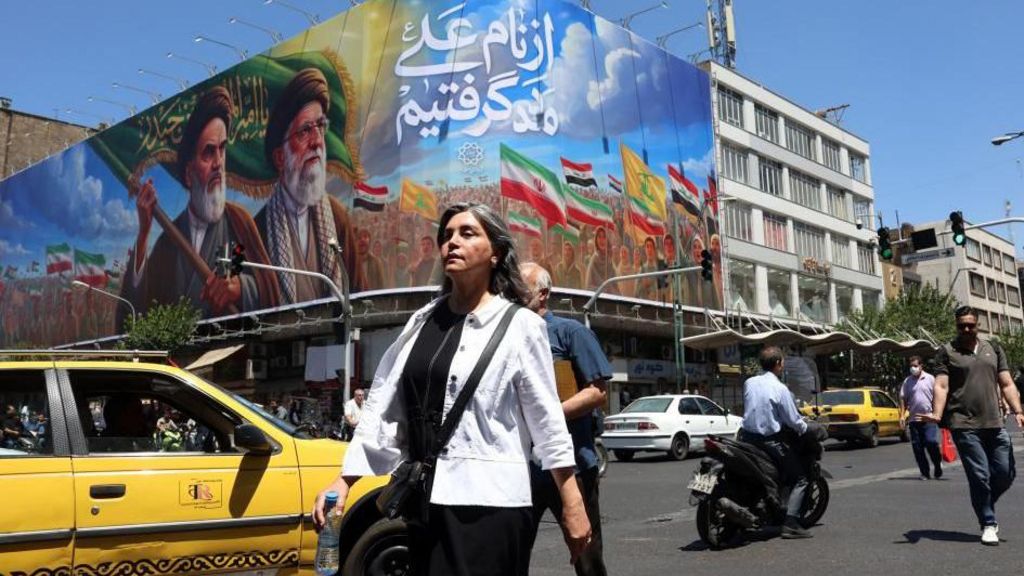
More than three months after the United States and Israel launched a surprise war against Iran, a tentative preliminary agreement has emerged to end a conflict that has already reshaped regional power dynamics and exposed the limits of American military dominance. Widely regarded as the most damaging foreign policy failure of the Trump presidency to date, the war has left lasting scars on alliances, global supply chains and countless civilian lives.
To understand how the region arrived at this new ceasefire agreement, one must revisit the deceptive lead-up to the February 28 invasion. On February 27, just 24 hours before the first strikes, Iranian and American negotiators were meeting in Geneva for what both sides had framed as serious talks to regulate Iran’s nuclear program. Multiple sources confirm Iranian negotiators entered the discussion in good faith, putting both concessions and policy demands on the table. At that time, the Strait of Hormuz—the strategic waterway that carries roughly 20% of the world’s daily oil and natural gas supplies, along with critical petrochemical inputs ranging from agricultural fertilizers to semiconductor components—remained fully open to commercial shipping.
What followed was a coordinated surprise attack that upended the entire region. Israel struck first, killing Iran’s long-serving supreme leader Ayatollah Ali Khamenei and his top inner circle of advisers. Parallel to the Israeli strike, a U.S. airstrike destroyed a school in the southern Iranian city of Minab, an attack that independent investigations have confirmed killed more than 150 civilians, at least 120 of whom were girls under the age of 12. Then-President Trump and Israeli Prime Minister Benjamin Netanyahu delivered televised addresses announcing the start of what they promised would be a short, decisive war that would topple the Islamic Republic regime in Tehran.
That prediction proved to be a catastrophic miscalculation. Instead of collapsing, the Iranian regime rapidly reorganized: Khamenei was quickly replaced by his son Mojtaba as supreme leader, with a new generation of hardline Islamic Revolutionary Guard Corps commanders taking top leadership roles. Far more ideologically aggressive and less risk-averse than their predecessors, the new leadership executed a pre-planned retaliatory strategy that closed the Strait of Hormuz, struck U.S. military assets across the Middle East, attacked American regional allies, and launched direct strikes on Israeli territory. Claims from U.S. Defense Secretary Peter Hegseth that American strikes had crippled Iran’s military capacity quickly proved to be wildly exaggerated.
The human and economic costs of the three-month conflict have been staggering. Thousands of civilian lives across the Middle East have been lost, countless homes and businesses have been reduced to rubble, and the closure of the Strait of Hormuz disrupted global fertilizer supplies, threatening widespread hunger in low-income nations later this year—with sub-Saharan Africa facing the most severe risk.
Now, after months of fighting, the two-page, 14-point preliminary memorandum of understanding—still unreleased to the public—brings a temporary end to hostilities. The agreement, pending no last-minute disruptions, reopens the Strait of Hormuz, extends an existing ceasefire across all front lines, and lifts the U.S. Navy’s blockade of Iranian ports. The most intractable sticking points, including the future of Iran’s nuclear program and the scale of sanctions relief Iran would receive for nuclear concessions, have been deferred to future negotiations. For millions of civilians caught in the crossfire, the end of active fighting will come as an enormous relief.
The agreement has already upended regional political dynamics, starting with the damage it has done to long-standing U.S. alliances with Gulf Arab monarchies. For these states, which have marketed themselves as islands of stability amid Middle East chaos, the crisis has undermined their core political and economic model. Private diplomatic briefings from Gulf officials already reveal plans to diversify geopolitical allegiances and explore new arrangements to coexist with Iran, their immediate neighbor across the Persian Gulf. The conflict has also given China a major strategic opening: Beijing has closely watched the war drain U.S. stockpiles of precision weapons and expose the practical limits of American hard power in the region.
For Israel, the agreement has sparked acute political crisis. Though Israel was a full co-partner in launching the war, it was entirely excluded from the negotiations that produced the deal, and Netanyahu’s government has reacted with open dismay. Netanyahu, who claimed ahead of the invasion that he had waited his entire political career to destroy the Islamic Republic, now faces fierce recriminations from political opponents who accuse him of undermining Israeli national security. With a national election scheduled for October, Netanyahu is caught between competing pressures: hardline cabinet allies are demanding continued offensive operations in Lebanon and even annexation of southern Lebanon, where Israeli forces have expelled tens of thousands of civilians and destroyed thousands of structures, while U.S. President Trump has openly vented frustration with Netanyahu in recent interviews, creating a rift in the bilateral alliance. A recent Israeli airstrike on Beirut’s southern suburbs, widely seen as an attempt to derail the ceasefire talks, ultimately backfired and accelerated the negotiation process.
While the deal brings an urgent pause to active fighting, there is no guarantee this preliminary memorandum can evolve into a comprehensive long-term peace agreement between the U.S. and Iran. A lasting grand bargain would fundamentally reshape the Middle East, but decades of ideological hostility and a total lack of mutual trust make that outcome a distant prospect for now.
The conflict leaves a troubling legacy for all parties. The Iranian people, who were promised freedom by Trump ahead of the invasion, remain under the rule of a hardline regime that just months ago killed thousands of domestic protesters during January’s nationwide unrest. The war has not weakened the Iranian regime; if anything, the failed regime-change attempt has consolidated its power and emboldened its new hardline leadership. For the United States, the conflict reveals that while Washington retains enormous global economic and military power, Trump’s impulsive decision to launch the war has emerged as a clear sign of a declining superpower struggling to maintain its dominance in a rapidly shifting global order.