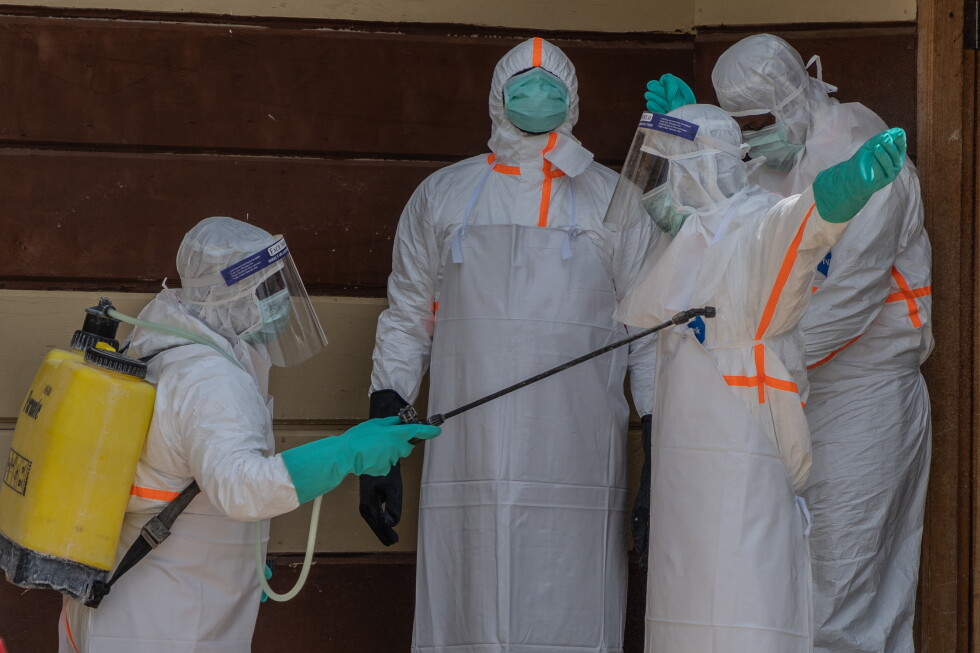
One month after the Democratic Republic of Congo formally declared an Ebola outbreak, the country is grappling with an unprecedented single-day spike in infections, as long-running systemic issues including insecurity, inadequate contact tracing, and critical funding shortfalls continue to derail containment efforts, Congolese health authorities have confirmed. In an update released Sunday, the Congolese Ministry of Health announced 72 new confirmed cases and 32 new confirmed deaths recorded over a 24-hour period. That surge pushes the total number of confirmed infections nationwide to 782, with the overall death toll now standing at 181. To date, 56 patients have successfully recovered from the virus, putting the current outbreak’s fatality rate at 23 percent.
Unlike the majority of past Ebola outbreaks in Congo, which were driven by the better-studied Zaire virus, this current event is caused by the rare Bundibugyo strain — a variant for which no approved vaccine or targeted treatment currently exists. Public health experts warn the true scale of the outbreak is almost certainly larger than official counts indicate. The virus was not formally confirmed until May 15, weeks after epidemiologists suspect community transmission first began, and contact tracing coverage has dropped sharply to just 56 percent, down from levels reported just one week prior.
Over 90 percent of all confirmed cases are concentrated in the country’s eastern Ituri Province, where long-running armed conflict has displaced nearly one million people according to the United Nations’ Office for the Coordination of Humanitarian Affairs. This mass displacement creates massive barriers to effective contact tracing: displaced populations often flee violent attacks or move frequently across the province, which is defined by dense rainforest, poorly maintained road infrastructure, and remote rural communities that can take multiple days to reach. Additional challenges come from the region’s large population of artisanal miners, who regularly travel between isolated mining sites across the mineral-rich area, making it nearly impossible to track and monitor potential exposures. While the outbreak is centered in Ituri, a small number of cases have also been recorded in neighboring North Kivu and South Kivu provinces, and transmission has already spilled across the international border into Uganda.
International and continental health bodies have moved to ramp up their response efforts in recent days. The World Health Organization announced Sunday it is expanding its work on testing, contact tracing, and patient care across affected regions. The Africa Centers for Disease Control and Prevention (Africa CDC) also announced it is deploying specialized technical teams to support local outbreak management, with a focus on strengthening laboratory capacity, accelerating active case searching, and improving community engagement to boost public compliance with containment measures. “We remain committed to supporting affected countries until transmission is stopped,” said Jean Kaseya, head of the Africa CDC. “We call on partners and donors to urgently mobilize resources to strengthen the response and save lives.” The appeal for emergency funding comes as authorities acknowledge ongoing funding gaps have left the response severely underresourced a full month into the public health emergency.