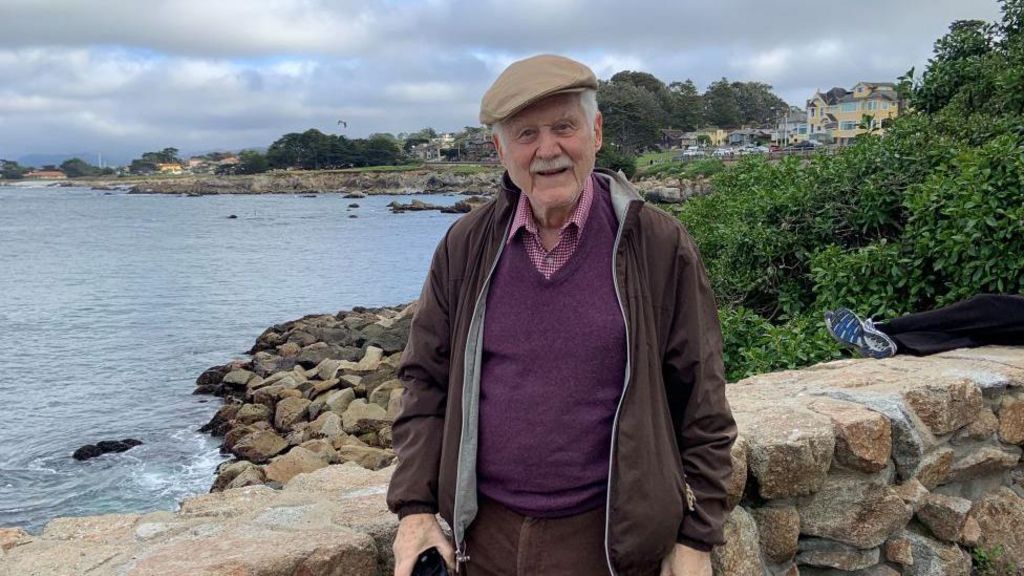
For 65 years, Arthur Rose showed up to his Michigan office every day to care for patients as an internist. But this past February, the 95-year-old locked his office door for the final time, framing his retirement as a birthday gift to himself. His decision came partly after reflecting on his brother, who died at 95 during the Covid-19 pandemic, and partly because the thrill that once defined his decades-long career had faded. “The job was really not pleasing me anymore,” he explained. “I just wasn’t getting that same kind of exhilaration.”
Rose is far from an anomaly. He is one of a rapidly growing share of Americans who continue working long after the conventional U.S. retirement age of 67, a trend that stretches from small private practices all the way to the highest office in the nation. This June, former president and 2024 presidential candidate Donald Trump will turn 80, making him the second oldest head of state in U.S. history — outranked only by Joe Biden, who left office at 82 after dropping his re-election bid last year over widespread concerns about his cognitive health. According to Pew Research Center, Trump also ranks among the oldest sitting world leaders currently in public service.
Data from Pew shows just how dramatic this shift toward late-life work has been: since the mid-1980s, the share of U.S. adults aged 65 and older who remain in the workforce has quadrupled, with roughly 19% of all seniors still holding paid positions today. These workers occupy roles across every sector, including some of the nation’s most high-stakes public offices. As of 2026, 24 sitting members of Congress are over 80 years old, led by 92-year-old Senator Chuck Grassley, the oldest currently serving lawmaker.
Aging researchers point to a mix of cultural, economic and public health factors driving this national trend. First, widespread advances in medical care have extended average life expectancies, allowing far more Americans to reach their 80s and 90s in good enough health to remain working. For many, continued work is also a financial necessity: U.S. living costs have climbed steadily in recent years, pushing many retirees back into the workforce. A 2026 survey from job search platform Indeed Flex found that nearly 30% of already retired Americans are considering returning to part-time or temporary work. More than 60% of those respondents cited rising living costs as a primary motivation, but roughly half also said they sought work for the social connection it provides.
Beyond finances and health, shifting cultural attitudes around age and capability have also broken down long-held retirement norms, according to Gordon Lithgow, a professor of aging research at the Buck Institute for Research on Aging. “I hope that people are beginning to think, it’s really who’s qualified for the job, it’s not what age they are,” Lithgow said. “There’s no question that people can function well into their 70s and potentially their 80s as well.”
That perspective is echoed by 93-year-old Harriet Newman Cohen, a high-profile matrimonial lawyer who still appears in court, recently released a memoir, and co-founded a new law firm with her daughter when she was 88. Cohen, who has represented high-profile clients including former New York Governor Andrew Cuomo in divorce cases, says her later working years have been some of the most fulfilling of her life. “Working has kept me young, vigorous, energetic, knowledgeable, fun,” she said. “I just can’t imagine living any other way.” Cohen credits her own longevity to consistent sleep of more than eight hours a night, a curious mind that keeps her reading and conversing daily, and a family legacy of working late into life — her grandmother died in her 80s while on her way to fix a tenant’s plumbing in a building she owned. “I always knew I would work forever,” she added, noting that her career has given her the financial freedom to travel and support her family.
For many older workers, the experience of continuing to work offers clear benefits: it provides a sense of purpose, keeps the mind active, and fosters social connection, all of which researchers link to better long-term health outcomes. Rose echoed that, saying he never considered early retirement because he enjoyed his work and felt a sense of obligation to his long-term patients, many of whom had been seeing him since they were teenagers. “They were still coming to see me 50 years later, which shows you what a bad job I did,” he joked. “I guess I felt that no one could do without me.”
But the trend also brings legitimate concerns, particularly for people holding high-stress, high-stakes roles: age can bring increased risk of cognitive decline, reduced stamina, and other age-related health conditions that can impair job performance. It was precisely those concerns that led Joe Biden to withdraw from the 2024 presidential race after a poor debate performance, when prominent members of his own party raised alarms about his cognitive fitness. Similar questions have been raised about Trump’s health as he approaches his 80th birthday.
During a recent congressional hearing, Democratic Representative Ted Lieu presented a series of videos that appeared to show Trump dozing off during public meetings, arguing the clips demonstrated “something very wrong” with the president’s health. Secretary of State Marco Rubio dismissed the questioning as absurd, countering that he had never seen Trump sleep during public events. “On the contrary, the guy doesn’t sleep, which is a big problem,” Rubio said. Trump’s physician has defended the president’s health, explaining that bruising often seen on Trump’s hands is caused by “minor soft tissue irritation related to frequent handshaking in the setting of aspirin use for cardiovascular prevention.” After a recent physical at Walter Reed National Military Medical Center two weeks ago, the president’s doctor declared Trump in “excellent health,” noting that his “demanding daily schedule, including multiple high-level meetings, public engagements and regular physical activity continues to support his overall well-being.”
Even for healthy older adults, researchers note that chronic stress and poor rest can have measurable negative impacts on long-term health. Lithgow explains that the effects of ongoing stress, such as consistent sleep deprivation, show up at the cellular level. “It’s actually real biological stress, and it accelerates ageing,” he said. “Chronic stressors daily can have a really ravaging effect on people.” Sleep, he added, is one of the most critical factors for long-term health, because it triggers the molecular processes that allow the body to repair and recover from daily damage.
Lithgow notes that beyond purpose and healthy habits, the biggest predictors of healthy late-life working are not genetics, but access to resources: higher income and reliable, high-quality healthcare give older workers a major advantage. Rose, who remains in good health at 95, says he cannot point to any specific secret to his longevity. “I really haven’t the faintest idea as to what I’ve done,” he said. “I don’t smoke. I have a schnapps every now and then.” Most of his patients never realized how old he was until he announced his retirement, and many were shocked to learn their longtime physician was 95. “The reason is I haven’t aged,” he said. “I don’t look any different.”
As more Americans choose to work into their 70s, 80s and beyond, the trend is forcing a national reckoning: age alone is no longer seen as a barrier to contribution, but health and capability remain critical considerations — especially for leaders tasked with guiding the nation.